




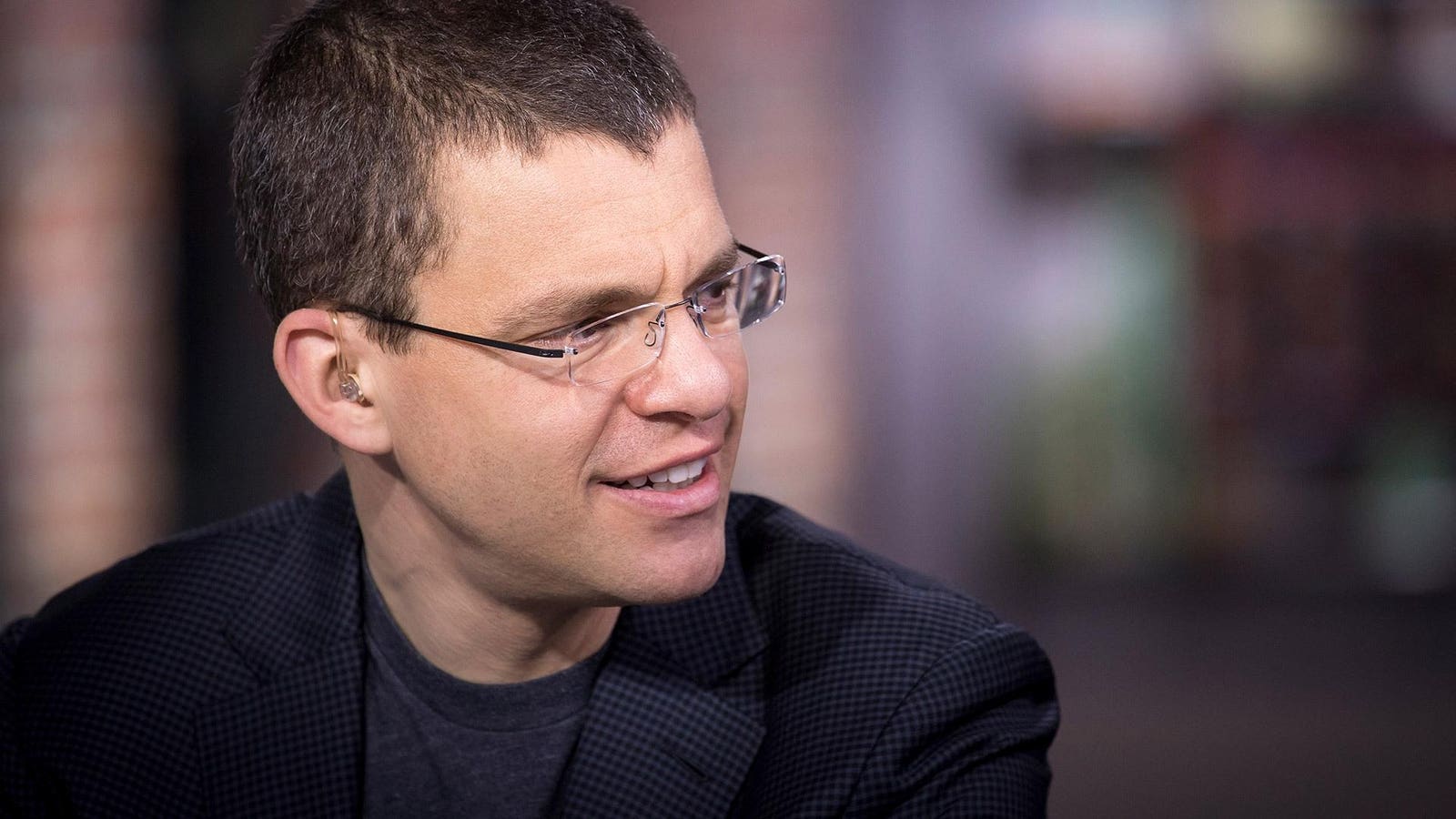
Affirm cofounder and CEO Max Levchin.
David Paul Morris/Bloomberg
In the lobby of a mid-tier Palo Alto hotel in June 2000, PayPal cofounder and chief technology officer Max Levchin sat on an indoor fountain, getting ready to speak at a payments industry event. “This may be the last conference I’m going to speak at about PayPal, because I think we’re going to die,” he told his then-girlfriend (and now-wife) Nellie and PayPal advisor Scott Banister.
Fraud was decimating his fast-growing, 18-month-old startup. Criminals were creating fake seller accounts at PayPal, making bogus purchases with stolen credit cards and quickly funneling the money into bank accounts they controlled. At the peak of the crisis, PayPal was losing more than $10 million each month to fraud while bringing in less than $1 million in revenue.
While Levchin, who was consumed with beefing up PayPal’s anti-fraud architecture, tried different tactics to foil the fraudsters, many of whom were based in Eastern Europe, one had figured out his email address. “He would email me summaries of his takedowns of my latest idea,” said Levchin on a podcast in September 2023. “It would be like a bank executive talking to a bank robber as the robbery is happening.”
Off-the-shelf fraud-prevention tools were too blunt to help, so Levchin insisted on building an in-house fix. One finally worked: He and early PayPal employee Dave Gausebeck created a clever test that displayed curvy letters for users to type to prove their humanity, marking one of the first commercial uses of an automated Turing test. Thanks to this new “CAPTCHA” technology, the rate of phony-account creation plummeted. Levchin was so thrilled that he blasted German composer Richard Wagner’s famous operatic passage “Ride of the Valkyries” throughout the office in triumph.
The episode taught him that being able to forecast losses with extreme accuracy is critical, and to do that well, you need to build your own software and systems. Those lessons have helped shape how he thinks about risk today as the 51-year-old CEO of $4 billion (revenue) buy-now, pay-later company Affirm.
But there is a big drawback to a DIY approach: it’s extremely costly. In Affirm’s early years, Levchin sometimes wondered, “Holy crap! Are we ever going to be profitable?” The question would remain relevant for over a decade as the San Francisco company racked up well over $2 billion in losses. Levchin’s ability to hold onto investor confidence and continually raise funds despite perennial losses is a testament to his PayPal Mafia celebrity, especially in Silicon Valley.
Last year, Affirm’s revenue finally began to consistently outstrip its costs on a generally accepted accounting principles (GAAP) basis. Issuing new loans and processing payments now require “very little extra cost,” chief operating officer Michael Linford told Forbes this past February. That’s thanks to the systems it has built in-house for tasks like ingesting and analyzing data and reporting on its loans. Since the second quarter of 2025, Affirm has remained solidly profitable, most recently bringing in $100 million in net income on $1 billion in revenue in the quarter ending March 2026.
Today, it originates nearly $12 billion in loans and payments every three months. Its stock-market value hovers around $25 billion, up 50% from its 2021 initial public offering price but well below its peak in November 2021, when the company sported a market cap of $47 billion. Levchin’s net worth has surged to $2.2 billion, double what it was two years ago. The question now is whether he has built something that can escape a trap that has ensnared lenders for decades: How do you keep growing without loosening credit standards or spending excessively to find the next customer?
Affirm’s stock price, starting from its January 13, 2021 IPO (when it went public at $49 a share) through August 18, 2026.
Ycharts
Over the past couple of decades, fintech lenders have produced a mixed record, with companies like Nubank and SoFi building big businesses while specialty-finance players that focus on niches have struggled to scale. The problem specialty-finance lenders have long faced is that to maintain growth, they often need to either lower their credit standards (“always a road to hell,” says Levchin) or spend heavily to find another distribution channel.
Levchin’s strategy for Affirm is underpinned by a simple, network-effects idea: More merchants make Affirm more useful to consumers, and more consumers make Affirm harder for merchants to ignore. Visa is probably the best example of a financial services company with strong network effects, and it generated $20 billion in net profits last year. This logic shapes Affirm’s product decisions. Levchin’s rule for deciding what Affirm should build is that it needs to benefit both sides of the network. Though some Affirm customers have asked for personal loans to refinance their credit card debt, Levchin has resisted because he doesn’t see how they would help his merchant customers.
Harking back to his lessons from PayPal, Levchin insists you need to create your own software to build a good network, since outside tech is too inflexible. Take the Affirm Card. It’s a debit card that lets you pay in full or split a purchase into installments at the point of purchase. Affirm couldn’t have built it without its own ledger system for tracking customers’ payments, loans and refunds, according to Michael Linford. That’s because a refund on a debit-card purchase is one thing, while a refund on a purchase that has also become a loan is another. Affirm needed its own ledger to have a single system of record that united all the data.
As of March 2026 (Affirm’s latest reported quarter), the number of people using the Affirm Card was growing 130% a year, with 4.4 million active cardholders and more than $2 billion in quarterly purchase volume. Levchin has called it his “favorite child.”
Building its own systems and cash-flow underwriting has also helped with credit risk. With borrowers’ permission, Affirm can analyze bank-account cash flows as well as credit reports, using that data to adjust interest rates, limits and repayment periods and sometimes require down payments. “The most complex thing isn’t actually the model-making or the model-training system,” Levchin told Forbes late last year. “It’s the scaffolding.”
By scaffolding, he means everything around the credit model–and there’s a lot of it. Affirm doles out tens of millions of loans a quarter. Each one produces data that has to be stored securely, preserved to keep personally identifiable information intact, anonymized for analysis and made accessible to the various systems that need it. It took the company seven years to build this system. As of this past April, more than 800 of its 2,200-plus employees were engineers.
All that plumbing gives Affirm an unusual amount of control over its lending. Instead of introducing a new credit model across the entire business, it can try it on a subset of customers before deploying it to everyone. The company updates its core credit model every quarter; smaller tweaks can arrive every week. For a lender of Affirm’s size, that is unusually fast. The point of all this machinery, of course, is to get better at saying yes to the right borrowers and no to the wrong ones.
Levchin’s business has developed a reputation for exceptional underwriting. From its founding through March 2026, Affirm has underwritten 71 million consumers and facilitated $150 billion in loans and payments. In recent years, between 2.1% and 2.8% of its monthly installment-loan balances have been at least 30 days past due, while the current national average for credit cards is about 3.7%, according to Equifax and Moody’s. In 2022 and 2023, when delinquencies started ticking up sharply for many lenders, Affirm’s stayed more stable, helping it keep up its fast growth.
All of its technology can help Affirm decide whom to lend to, but it can’t control what happens to those borrowers after the loan is made.
This year, persistent inflation and fears of AI-driven job losses have caused investors to worry about the health of the U.S. consumer, pulling down the stocks of most fintechs and some lenders like Capital One. So far, the warnings largely haven’t panned out, as loan delinquencies remain moderate compared with historical norms. Year to date, Affirm’s stock is down 1%, while other fintech lenders ranging from Klarna to SoFi and Nubank have seen double-digit declines.
Then there is the buy-now, pay-later industry’s recurring anxiety, “loan stacking.” That’s when a shopper takes out several installment loans from different providers, and no single lender can see the whole picture. The nightmare scenario is a consumer with five loans and five lenders, none of whom realizes what the other four have done. Levchin has noted that Affirm is the only big buy-now, pay-later lender that reports all of its loans to the credit bureaus, which gives all lenders better visibility into how stretched consumers really are.
In the short term, the tougher challenge for Levchin may be for him to keep up the company’s historical revenue growth of 30%-plus, a critical factor for the stock. Says Levchin, “I think my job these days, which is delightful but also fairly high-pressure, is to try to figure out what the next three years of growth looks like.”
He has a plan for Affirm’s next leg of growth. At the company’s investor forum in May, top executives said they expect the original checkout business and newer direct-to-consumer products, led by the Affirm Card, to each contribute at least 10 percentage points of growth. International expansion could add another one to five points. Affirm only operates in the U.S., Canada and the U.K. today, but through its partnership with Shopify, it plans to launch in Australia, Germany, France and the Netherlands.
Have a story tip? Contact Jeff Kauflin at jkauflin@forbes.com or on Signal at jeff.273.
Read the full article here


