




Fantasize that you were one of the investors who put up the $12.5 million needed to get Hamilton onto the stage in 2015. The musical has hauled in $1.2 billion in ticket sales so far, and is still selling out with ticket prices almost double the Broadway average, meaning that an abnormally large fraction of the gross is falling to the bottom line. It’s likely that the investors have already collected at least ten times the money they put in and will collect a lot more before this gusher dries up.
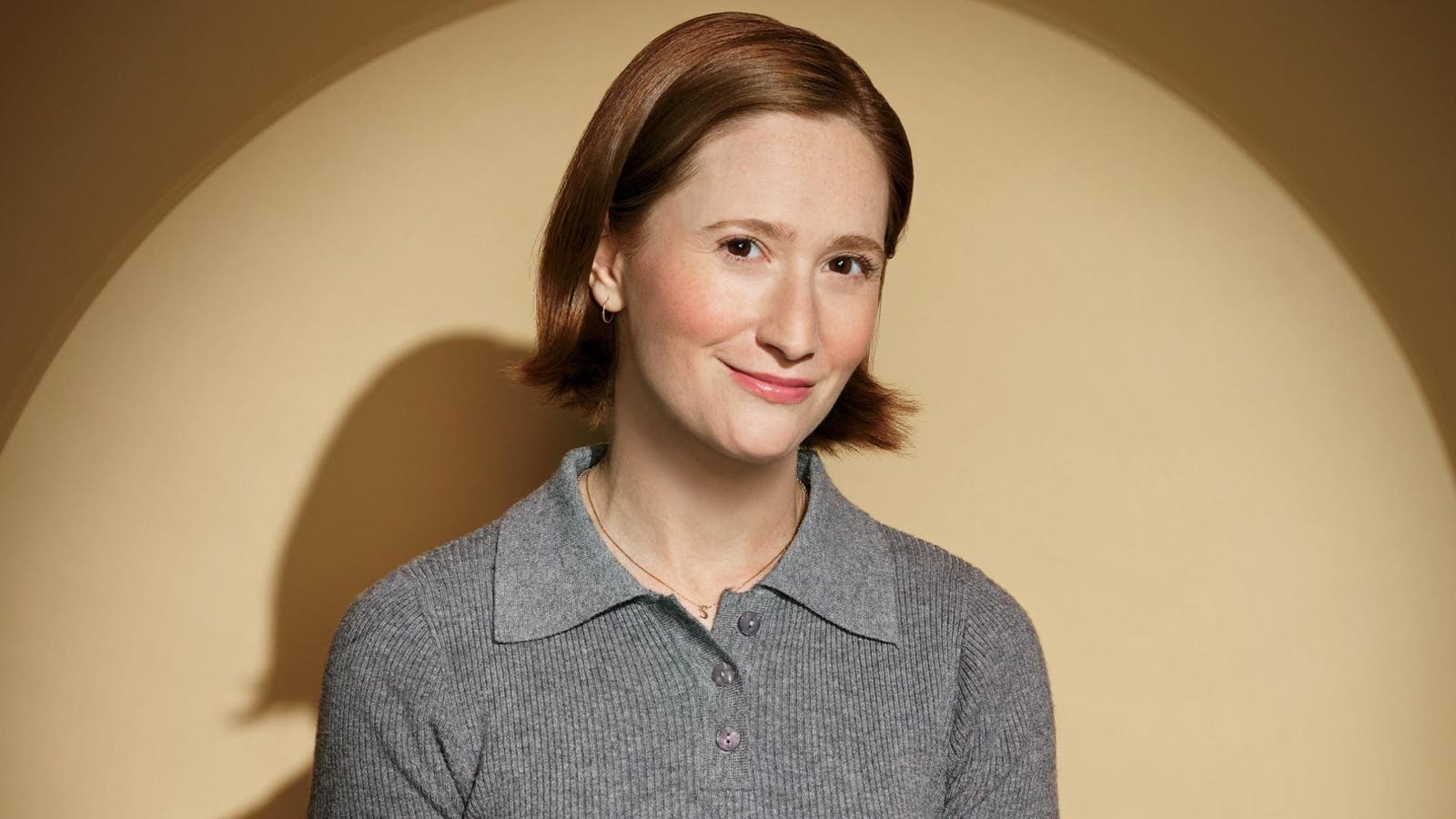
Feeding such fantasies is the job of impresarios like Rachel Sussman. At 36, young for a Broadway producer, she has been a lead producer on Suffs, a musical about the suffragette movement that won two Tony awards; Liberation, which won a Tony this year for best play; another Broadway show and an assortment of non-Broadway productions.
Every year Sussman paws through 150 or so pitches coming from writers, agents and other professionals, selects one or two and then tries to scare up the money for a production. For the infrequent candidate aimed at the big stage, a lot of money. These days it costs something like $20 million to open a musical on Broadway, that geography being defined as one of 41 theaters in Manhattan with at least 500 seats. Plays, with smaller casts and no orchestra, cost much less.
Sussman grew up in suburban Detroit “obsessed with theater,” she says, after seeing a touring production of Les Misérables at the Fisher Center. She was 8.
She ventured east for an undergraduate degree at NYU’s Tisch School of the Arts. But a degree is worth only so much. Broadway is all about connections.
“I knew nothing, but I had a lot of chutzpah,” Sussman says. At 23, she wrote to Harold Prince (1928–2019), the powerhouse who produced and/or directed West Side Story, Fiddler on the Roof, Phantom of the Opera and many other hits. She got a one-hour audience with him.
Why would the king of Broadway spend time with an unknown? Maybe he was reminiscing. He later wrote her: “I was a year older than you when I planned my first production, which became The Pajama Game.” That musical landed him his first Tony.
The idea for Suffs goes back to Sussman’s middle-school days, when she started thinking about women’s rights. Would the cause make for a musical? In 2014 she posed this question to Shaina Taub, an actress and musician who had graduated from Tisch a few years before Sussman. Taub was intrigued. She wrote the book, the music and the lyrics.
Sussman needed a rainmaker. As co-lead producer she invited Jill Furman, whose credits include Hamilton and In the Heights. For help reeling in investors they enlisted Hillary Clinton. After a decade of nurturing, including a warmup production at the nonprofit Public Theater, Suffs opened on Broadway and lasted ten months, longer than most of the musicals in its season.
When the musical Suffs closed in January 2025 after less than a year on Broadway, it hadn’t earned back its production costs. Now it’s on tour and could bring in licensing fees for a long while.
Joan Marcus
Suffs didn’t earn back its production cost and, although it’s now on tour and will presumably bring in licensing money for a long while, may never do so. That’s show business.
On the side, Sussman teaches online courses on the economics of Broadway. In her audience is a mix of young people who want to get into her line of work and older folks with deep pockets and a curiosity about this type of investment.
“Investment” is a term of art here. You don’t put money in as a way of funding a retirement. You do it for the excitement of participating alongside actors and writers in the creation of art. “Broadway is built on a hope and a dream,” Sussman says. “Making your money back is not the only thing you get.”
Investors hope to be invited to the opening night party with the cast. The ones who bring in enough (of their own or their friends’ money) get flattered with the designation “co-producer” and see their names at the top of the playbill’s title page.
Making money is not the usual outcome. It is sufficiently rare for investors to get at least a 0% return (the mere repayment of their capital) that it is customary for the producer to trumpet the “recoupment” in a press release, much in the fashion of a gong at a sales boiler room. Sussman’s pessimistic estimate: One in ten musicals will recoup.
When there’s a hit, there is money to be made. Andrew Lloyd Webber’s The Phantom of the Opera ran on Broadway for 35 years. Disney, a rare corporate financier of musicals, has sold $2.2 billion of tickets to The Lion King and continues to sell them at a rate of $2 million a week. Ticket revenue is just the start; a show’s investors see a handsome chunk of the dollars, potentially very large in Hamilton’s case, coming from film, merchandise, road shows and foreign productions.
Illustration by Patrick Welsh for forbes
How To Play It
By William Baldwin
Limited partners’ returns from musicals are meager because standing in line ahead of them are so many actors, musicians, directors, designers, producers, middlemen, landlords, ushers, accountants, featherbedders and entertainment lawyers. Turn that script around. Invest in an entity that owns intellectual property and milks it at any conceivable opportunity. Walt Disney extracts money from consumers via everything from streaming, amusement parks, cruises, hotels, theater tickets and merchandise to food concessions and overpriced parking. Its Broadway successes (The Lion King, Aladdin, Beauty and the Beast) are small emblems of a giant enterprise ($94 billion revenue) whose shares trade at 13 times the earnings Value Line expects for 2026.
William Baldwin is Forbes’ Investment Strategies columnist.
Now brush the stardust out of your eyes and consider what happens with a merely average show. The 24 musicals now on Broadway are selling tickets at an average of $1 million a week, per a tabulation by the Broadway League. Take 10% off that for fees pocketed by ticketing firms and credit card issuers, and you have $900,000 of revenue.
Subtract fixed operating costs, mostly for labor. The total is going to be at least $700,000 a week, Sussman says, and often a lot more than that. Why so high? Well, on Broadway 13 unions and a guild must be kept happy. Off Broadway, Sussman says, the unions are far less exacting.
Stagehands are expensive. A two-year-old tax filing by Lincoln Center, considered Broadway despite being a few blocks north of the prime territory, mentions three of them with annual takes between $630,000 and $797,000.
The theater owners do nicely. Their outlays for staff, utilities and whatnot are covered out of the fixed costs taken off the top. They own the online venues that do much of the ticketing. And then they get a variable rent typically set at 7% of the net ticket revenue, or $63,000 in our example.
Now we’re down to a gross profit of at best $137,000 to be carved up. First in line for this loot: the people who are, in Hamilton’s phrase, in the room where it happens. The producer, the book writer, the lyricist, the composer, the director, the choreographer and the set, costume, sound and lighting designers get a piece of the action. Additional claimants might include a regional or off-Broadway house that hosted a tryout or the copyright owner of source material. These percentage players are accorded what in partnership accounting is called a guaranteed payment, a certain fixed dollar minimum.
The formula for who gets what and how it’s calculated varies from show to show, Sussman says, but the percentages (or minimums) typically add up to 40% of the gross profit. What’s left, $82,000 in our hypothetical example, goes to the investors until they have recouped their capital. After recoupment, they get roughly 40% of the $82,000.
Helping, at least until the funding runs out, is a New York State subsidy of up to $3 million toward the cost of opening a show. (Rough justice here: Tourists, who buy most of the tickets, are gouged by hotel taxes.) For a show that runs long enough to earn the full handout, that reduces the capital demand on investors to $17 million. Still, it would take four years for the moderately successful show described here to reach recoupment. Few shows last that long.
Keep your hopes up. Even a disappointing musical can eventually edge into the profit column, Sussman says. She cites Seussical, based on the Dr. Seuss books, which flopped on Broadway in 2001 but has since yielded the initial investors nice licensing fees from school, regional and amateur theaters.
Is Broadway risky? No denying. But compare the risk of starting a business, Sussman says. The vast majority of venture capital investments fare poorly. “Broadway has better odds,” she protests.
More from Forbes
Read the full article here


