



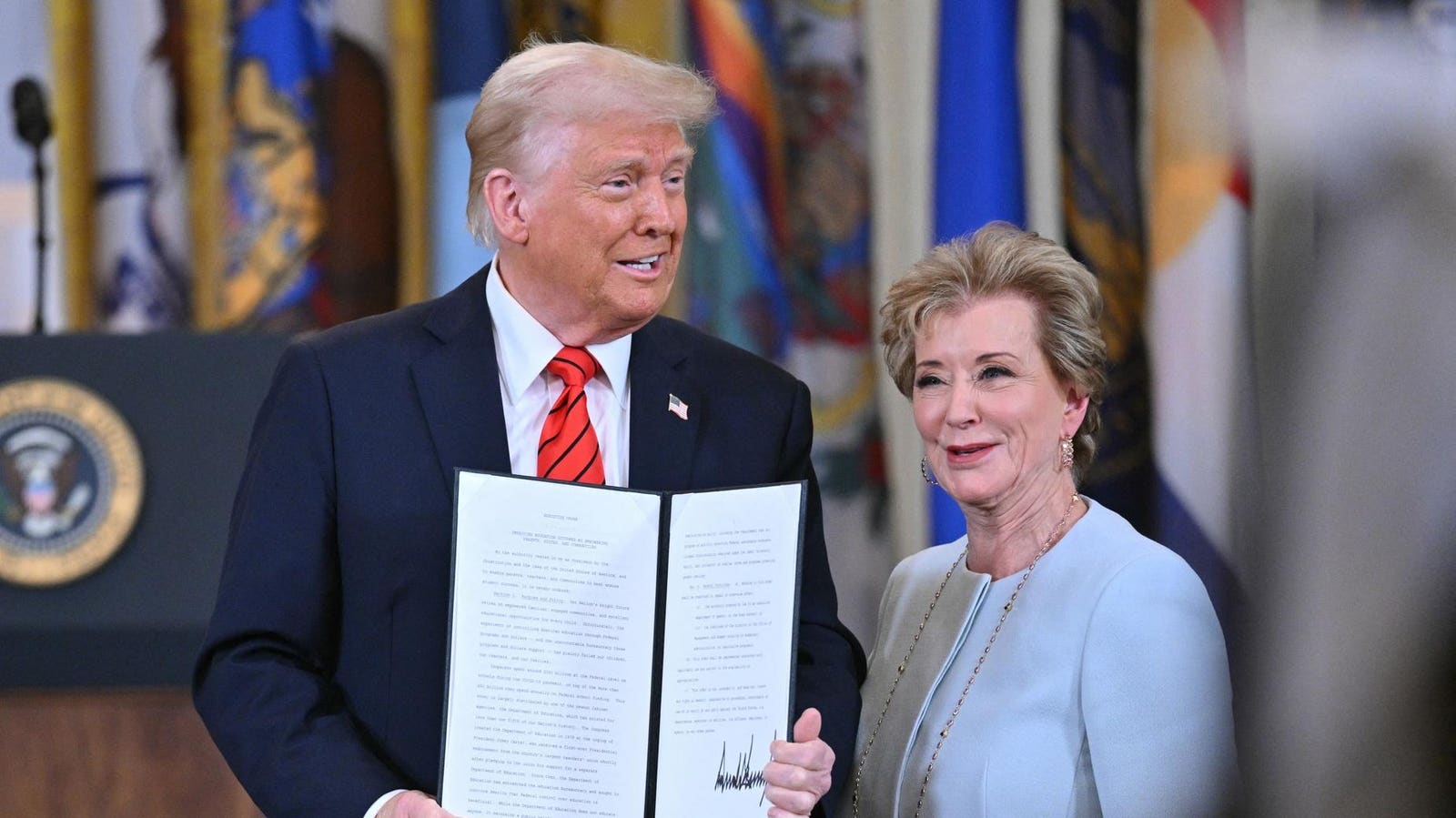
Advocacy groups are sounding the alarm about increasing problems with federal student loan programs as the Education Department rushes to implement a raft of regulatory and legislative reforms. As borrowers struggle to access key programs, and processing issues become more widespread, some groups are calling on President Trump and Secretary of Education Linda McMahon to suspend payments and interest on student loans.

“The White House paused payments in 2020 under less severe circumstances, and they have the power to do it again,” said Natalia Abrams, President of the Student Debt Crisis Center, in a statement on Wednesday announcing that a petition calling for pausing payments on student loans had gained 130,000 signatures.

Here’s what’s going on with student loans right now, and what borrowers need to know.

Huge Changes To Federal Student Loans Are Now Getting Implemented

The Education Department is implementing some of the most widespread changes to federal student loans in decades following last year’s passage of the One Big, Beautiful Bill Act and recent court rulings. New regulations and policies to effectuate many of these reforms went into effect starting in July. Millions of federal student loan borrowers are already feeling the impacts:

  • The Education Department is in the process of phasing out the SAVE plan, a Biden-era income-driven repayment program, following a court-ordered entry of a settlement agreement that terminated the program’s regulations. The department has been sending out waves of notices roughly every two weeks since July 1, giving borrowers with student loans enrolled in SAVE just 90 days to switch to a different plan, or they could face financial peril.
  • At the same time, the department launched the Repayment Assistance Plan, or RAP, a new income-driven repayment plan created under the One Big, Beautiful Bill Act, as well as a new Tiered Standard repayment plan. RAP offers borrowers payments tied to their income as well as a generous interest subsidy and principal benefit, but requires 30 years in repayment before a borrower can receive student loan forgiveness.
  • Parent PLUS borrowers who did not consolidate their student loans prior to July 1 are now cut off from income-driven repayment and Public Service Loan Forgiveness. And Parent PLUS borrowers who did consolidate their student loans must enroll in Income-Contingent Repayment, or ICR, and then switch to Income-Based Repayment, or IBR, prior to July 2028. If they don’t, they’ll also be cut off from affordable income-driven repayment plans.
  • New restrictions are now in place as of July 1 for new student loans. Borrowers who have new federal student loan disbursements going forward will lose access to all legacy repayment plans, including all income-driven repayment options except for RAP. And future students will face new caps on borrowing, particularly for graduate and professional degree programs.

Additional changes will go into effect over the course of the next two years. Starting in 2027, new federal student loans will have more restrictions on the use of forbearance. Defaulted federal student loans will get a second chance at loan rehabilitation to return them to good standing. And the ICR and Pay-As-You-Earn repayment plans will be phased out in 2028.

Reforms For Student Loans Hit Significant Bumps

But the rollout of these changes has been rocky, and student loan borrowers have been reporting widespread problems. In particular, borrowers trying to enroll their student loans in specific repayment plans have been encountering a variety of obstacles and processing errors, including:

“Systemic failures, such as preventable mistakes from student loan servicers and lack of oversight from the Department of Education, are causing borrowers to suffer on an unprecedented scale,” said the Student Debt Crisis Center in its statement on Wednesday. “The Department of Education recently admitted to overestimating thousands of monthly payments by hundreds of dollars.”

Meanwhile, the department continues to struggle with massive backlogs associated with applications for student loan forgiveness and discharge programs like PSLF Buyback and Borrower Defense to Repayment. In some cases, borrowers are having to wait years to get their student loans forgiven as a result of the processing delays. And despite assurances that the department will soon restore a feature on StudentAid.gov that allows borrowers to track their student loan forgiveness progress for income-driven repayment plans, that tracker remains unavailable.

Advocacy Groups Call For Pausing Payments On Student Loans

The cascading problems across multiple federal student loan programs has led some borrower advocacy organizations to call for a nationwide pause on payments.

“The basic tools available to student debtors that allow borrowers to accurately understand their timeline to cancellation or ascertain essential information such as how many payments the Department of Education has on record simply do not function,” said Braxton Brewington, spokesperson for the Debt Collective, a national debtor’s union advocating for student loan borrowers, in a statement on Wednesday. “Debtors need a pause on payments after the Department of Education has administered countless catastrophic errors that are currently costing debtors billions. Trump has paused student debt payments before and he can do it again — debtors just need voices in Washington D.C. to amplify their voices.”

“Borrowers are not looking for a scapegoat or quick fix,” echoed Abrams in the SDCC statement. “They have upheld their end of the contract, and it is only fair that the White House pauses payments and interest accrual while they untangle the dysfunctional mess the student loan repayment system has become.”

The Trump administration has given no indication that there will be a pause on payments for federal student loans, and the Education Department has not issued a formal response to calls to suspend payments and interest. President Trump first paused student loan payments in the wake of the Covid-19 pandemic in March 2020, but that was during a major national emergency (which opened up emergency federal student loan powers), and the current political environment is much different now than it was six years ago.

Options For Borrowers Experiencing Problems With Their Student Loans

Those who are experiencing problems with their student loans have somewhat limited options. While borrowers can submit complaints or disputes to the Education Department’s Office of Federal Student Aid via the Feedback unit or Ombudsman, staffing changes at these units have resulted in significant complaint backlogs. Borrowers may not get much help from the federal Consumer Financial Protection Bureau, either, as the administration has taken steps to shutter the student loan work at the watchdog agency.

Protect Borrowers, another organization advocating for student loan borrowers, suggests contacting your state student loan ombudsman (if one is available) for help, or filing a complaint with your state attorney general. Borrowers can also contact their federal elected officials, such as their congressperson or U.S. senator, for assistance with federal student loans.

Read the full article here

Share.
Leave A Reply

Exit mobile version