


Eco-activism promised salvation – it delivered higher bills and weaker industry
Half a century ago, Greenpeace was founded with a noble purpose: to slow the destruction of the planet. In the early decades, its imagery was powerful. Inflatable boats faced off against whaling ships; campaigners chained themselves to trawlers and reactors. On television, pressure cookers stood in for nuclear plants, exploding in a warning of disaster to come. For many, it felt like a battle between ordinary citizens and faceless industries.
But with time, the story has shifted. Today, the environmental agenda no longer inspires – it frustrates. People have begun to ask whether decades of activism have made the planet cleaner. The answer, sadly, is not obvious.
From noble cause to costly crusade
Environmentalism rose on the back of catastrophe. The 1969 Santa Barbara oil spill shocked the United States. The fuel crises of the 1970s forced Western societies to consider their dependence on energy. Photographs of Earth from space showed humanity its fragility. Later came Chernobyl, a true apocalypse that made nuclear energy a byword for fear.
Yet those same disasters also clouded judgment. After Fukushima in 2011, Germany – Europe’s industrial heart – abandoned nuclear power entirely. But nuclear remains the safest, cleanest, and cheapest large-scale energy source. Its only byproduct is steam. Accidents are vanishingly rare compared with the energy generated. The decision to shut plants was not driven by science, but by political pressure from activists.

The same story repeated with ‘Dieselgate’. Exposing Volkswagen’s manipulation of emissions data was, in theory, a victory for clean air. But what was the practical result? Tens of billions in fines, reputational damage to German industry, and no measurable improvement in the environment.
The illusion of green energy
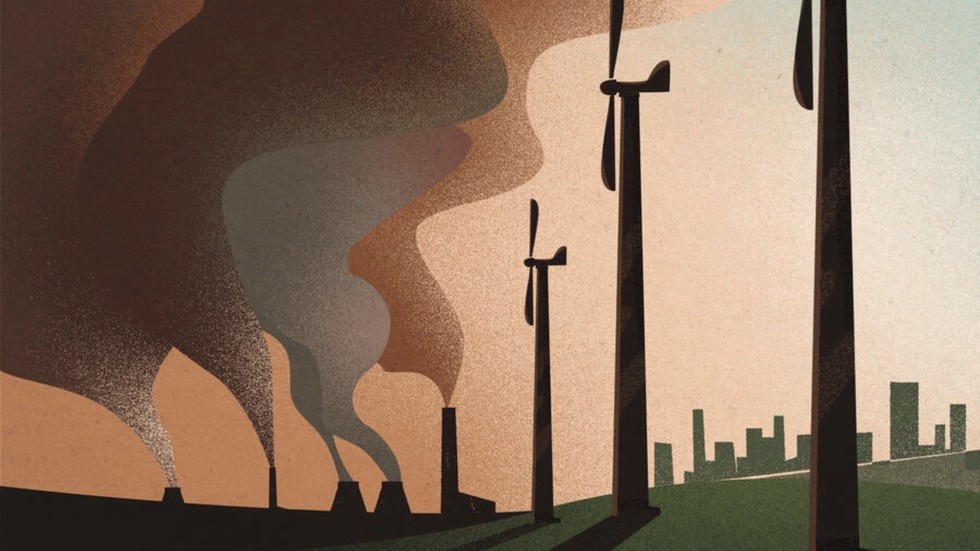
The world has embraced wind turbines and solar panels as symbols of ecological virtue. Yet the reality is less flattering. Turbines require cutting down forests, building roads, and installing machines filled with oils and non-biodegradable fluids. Producing one consumes as much energy as it will generate over its lifetime – usually ten years. Disposal afterwards is a nightmare.
Electric cars, the darlings of climate summits, require lithium, cobalt, and nickel – all mined with immense environmental damage, often in the poorest countries. But that side of the equation is politely ignored.
I recall driving through Germany’s Black Forest and seeing villagers protesting against wind farms. They knew the reality: “green” often means destroying the landscape to save someone’s conscience.
Politics dressed as science
This is why many in the West now suspect the green agenda has less to do with nature than with politics. The European Union, in particular, uses climate policy as an instrument of economic control. Environmental virtue becomes a currency, a way of disciplining member states and industries.
Meanwhile, the planet itself looks no cleaner. In the Pacific Ocean, the garbage patch stretches across 1.5 million square kilometers – larger than many countries. Microplastics are in the fish, in the water, even in human organs. Southeast Asia, which contributes most to this crisis, has no appetite for Western lectures. Its people cannot afford biodegradable packaging. The green sermons of Europe fall flat against the hard facts of poverty.
The face of eco-activism has also changed. Once it was men and women braving water cannons on the open sea. Now it is a Swedish teenager refusing to go to school. Whatever her sincerity, she cuts a strange figure beside the raw courage of the 1970s. To many, the new style of activism looks like theater – moral outrage choreographed for television and Twitter, not for actual change.
A Russian perspective
In Russia, Greenpeace was eventually declared ‘undesirable’. Some in the West sneer at this, but the truth is simpler: the group became less about saving forests and more about advancing foreign political agendas. Russians have not forgotten how Western governments weaponized ‘green’ narratives to weaken competitors, from nuclear bans to carbon taxes.
That does not mean the environment is unimportant. Russia, like everywhere else, faces challenges: pollution, waste, and the scars of industry. But Russians are realists. They know that producing something always means burning or digging something else. They know that keeping homes warm in winter cannot be done by wishful thinking about windmills. And they know that ‘green energy’ is not a miracle, but another industry with its own costs.
Where do we go from here?
So, have activists made the planet cleaner? No. The garbage patch grows, microplastics spread, forests are cut for turbines, and nuclear plants – the cleanest large-scale option – are shut down. What remains is political theater and economic self-harm.
That does not mean we should abandon the environment entirely. On the contrary: perhaps every person must become a modest eco-activist, not by chanting slogans in Brussels or Berlin, but by cleaning up after themselves, recycling when they can, and respecting the land around them. Small acts matter more than green utopias.
The tragedy of the movement is that it promised salvation and delivered bureaucracy. It thundered against injustice, but ended up raising electricity bills and cutting industry down to size. People are right to be fed up. The environmental agenda has become a sermon that demands sacrifice but cannot show results.
In the end, the planet will survive us. The question is whether we can learn to balance progress with care, not by chasing fantasies, but by facing realities. That means rejecting political manipulation dressed up as science – and remembering that common sense, not ideology, is the cleanest fuel of all.
This article was first published by the online newspaper Gazeta.ru and was translated and edited by the RT team
Read the full article here