


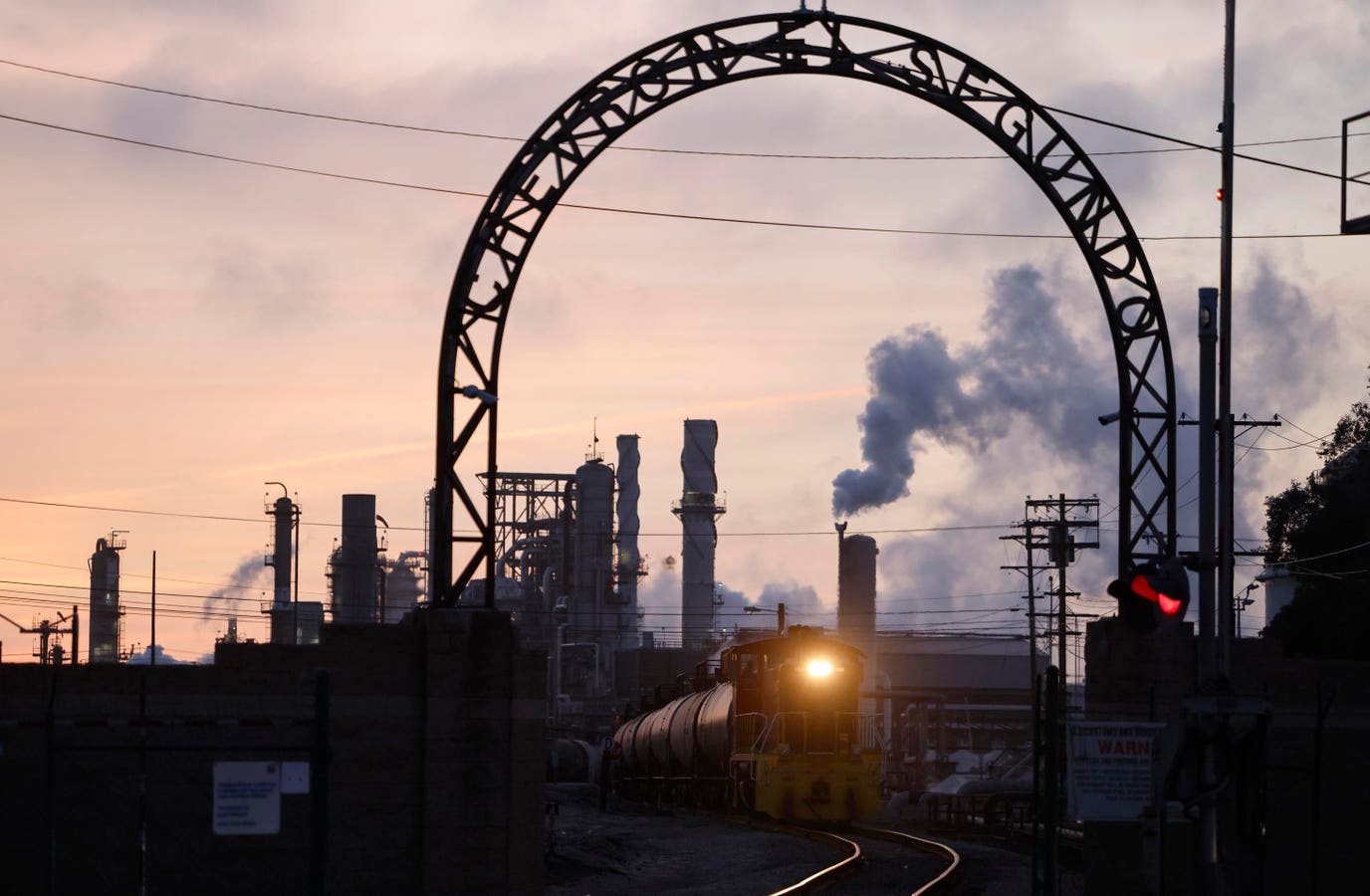
EL SEGUNDO, CALIFORNIA – APRIL 08: A train of tank cars enters the Chevron EL Segundo refinery, one of the largest petroleum processing facilities in California, on April 8, 2026 in El Segundo, California. (Photo by Mario Tama/Getty Images)
Getty Images
Markets are once again betting that a reported Iran deal will cool energy pressures — but with only a 60‑day cease-fire on the table and major infrastructure damage still unresolved, it may be weeks or months before any relief reaches oil, gas or fertilizer supplies.
Skepticism is understandable given the back‑and‑forth between the Trump administration and Iran. Donald Trump claimed victory almost immediately after the start of military operations — repeatedly — and then pronounced a deal just around the corner, which led to another corner, and another one.
According to some press coverage in The Wall Street Journal, The New York Times and The Washington Post, it’s either a “limited deal,” “interim peace deal” or “cease-fire agreement.”
What’s Actually On The Table
The available deals are unclear. Reports mention a halt to fighting for 60 days, opening the Strait of Hormuz and lifting the U.S. naval blockade of Iranian ports.
It isn’t just Trump announcing this. Prime Minister Shehbaz Sharif of Pakistan — the lead mediator in negotiations — verified that an agreement had been reached. “Both sides have declared the immediate and permanent termination of military operations on all fronts, including in Lebanon,” he said, according to the Journal. Iran’s deputy foreign minister, Kazem Gharibabadi, said, “The text of the memorandum of understanding has been finalized.”
But what the entire multi-month escapade has achieved remains unclear. Opening the Strait of Hormuz — potentially first to undertake mine removal so ships could pass safely, according to a remark by Trump — was already the case before hostilities began. According to the Times, Trump said access to the strait would be “permanently toll-free,” also the case before late February.
A Temporary Deal With Long‑Term Questions
The deal is temporary, planned to start Friday after signing, and set to last 60 days. Some of the most difficult issues — including Iran’s nuclear program and lifting sanctions against Tehran — don’t appear to be on the table. How long a cease-fire could last if Israel doesn’t agree and participate is an important question.
None of this can be resolved from the outside now. What can be considered, even if not currently resolvable, is how long it might take to see improvements in energy prices, reductions in inflation, greater availability of fertilizer for growing crops and other potential considerations.
Energy Relief Will Take Time
Even if the temporary cease-fire works smoothly, timing will be difficult. Oil, gas, diesel, airplane fuel and related materials could see relief, but the issue for all these products isn’t only the Strait of Hormuz. Significant damage has occurred at production facilities in the Middle East. Given how long construction takes for factories and storage, rebuilding could easily take months — a timeline that is probably optimistic.
With reserves badly affected in the Middle East and elsewhere, disruption will continue for a while. The International Energy Agency’s executive director said that the disruption to oil and gas flows through the strait and attacks on energy infrastructure represent “the greatest threat to global energy security in history.”
In late May, ExxonMobil Senior Vice President Neil Chapman said in an earnings call that within a few weeks — where we are now — inventory levels could fall so far that prices would run up to $150 to $160 a barrel. Chevron Chairman and CEO Mike Wirth said something similar about physical supply.
Perhaps things will work out just in time, but the wait until then will be tense.
Read the full article here