
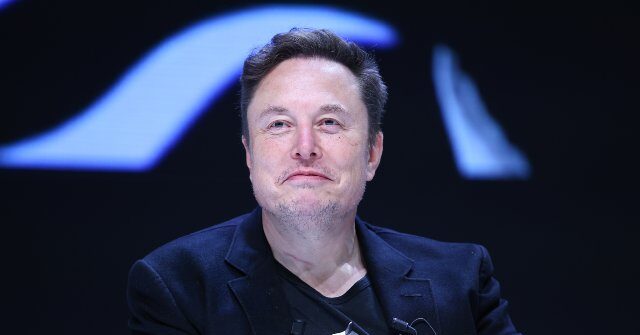
Elon Musk’s SpaceX has continued the positive momentum from Friday’s IPO by jumping eight percent in morning trading. Analysts continue to issue mixed ratings on the company, with analyst CFRA initiating coverage with a sell rating.
CNBC reports that SpaceX shares are up about $13 in Monday morning trading, representing an eight percent jump from the close on Friday. This builds on the momentum from the company’s blockbuster debut on the Nasdaq last week. The space exploration company, led by CEO Elon Musk, saw its stock surge 19 percent on Friday, closing at $161 after being priced at $135 per share during the IPO. This performance pushed the company’s market capitalization above the $2 trillion threshold.
The company’s valuation has emerged as a central point of contention in the investment community. CFRA initiated coverage of SpaceX stock on Friday with a sell rating and established a 12-month price target of $115, representing a potential decline of nearly 29 percent from Friday’s closing price. The firm justified its bearish stance by citing “the company’s extremely ambitious growth strategy, elevated valuation expectations, and significant capital intensity.”
Capital expenditure figures, the massive amounts of spending required by SpaceX to reach its goals in space and AI, underscore these concerns. SpaceX’s capital spending in the three months ending in March reached $10.1 billion, a dramatic increase from $4.1 billion during the same period the previous year. The majority of these investments were directed toward AI infrastructure and development.
Additional skepticism came from Morningstar analyst Nicolas Owens, who released a note on June 8 valuing SpaceX at just $63 per share and characterizing the stock as overvalued. Paulina Roszkowska, a lecturer in finance at Bayes Business School, expressed similar reservations during an appearance on CNBC’s Europe Early Edition. She emphasized that while SpaceX has made numerous ambitious promises, including concepts like data centers in orbit, these commitments must eventually translate into tangible cash flow.
“Aside from those phrases about data centers in the orbit, which are high promises, if you are asking for $70, $80 billion contribution, I think that you owe investors a little bit more than poetry,” Roszkowska said. She also noted that the IPO prospectus appears to lack sufficient details regarding governance and execution risks, raising questions about the foundation of the company’s ambitious projections.
Despite these concerns, not all analysts share the pessimistic outlook. NewStreet Research initiated coverage with a more optimistic $165 price target, suggesting that investors need to adopt a longer-term perspective when evaluating the company’s potential.
James Ratzer, partner and senior analyst at NewStreet Research, told CNBC’s Squawk Box Europe on Monday that while the current valuation may seem ambitious, it could be justified when viewed over an extended timeframe. “Can you look at this business, let’s say, over a longer time frame than you would over most equities to justify to get to the current valuation? We think you can,” Ratzer said. “But we think you have to be looking out over a kind of 20 to 25-year time frame. I think a lot of the building blocks are in place to succeed, but it is definitely a much longer-dated equity story than most.”
Ratzer highlighted SpaceX’s competitive advantages, particularly in rocket launch capabilities, where he believes the company maintains at least a 10-year lead over competitors. He emphasized that success in SpaceX’s various ventures, including Starlink, direct-to-cell services, and orbital data centers, ultimately depends on the company’s launch capabilities. The Starship launch vehicle, SpaceX’s latest generation rocket, represents a significant technological advantage due to the mass it can transport into orbit.
Read more at CNBC here.
Lucas Nolan is a reporter for Breitbart News covering issues of AI, free speech, and online censorship.
Read the full article here