







The Trump administration’s sudden moves to rein in Anthropic are giving fresh momentum to efforts in Congress to impose guardrails on cutting-edge artificial intelligence models.
Lawmakers are still seeking clear information about the government’s decision late Friday to impose an export ban on the AI company’s latest models, known as Fable 5 and Mythos 5, over cybersecurity concerns — a move that led Anthropic to suspend access to both for all users.
In roughly a dozen interviews on Capitol Hill this week, several lawmakers said they were shocked by the development and had yet to receive a formal briefing from administration officials. Senate Commerce Chair Ted Cruz (R-Texas), whose committee has jurisdiction over AI policy, said Monday that he had seen “what’s been reported in the press,” but had not been briefed on details.
Members of both parties said they now see an opening to mobilize their colleagues around legislation that would reclaim congressional authority at a time when the executive branch remains firmly in the drivers’ seat on AI regulation.
But lawmakers have struggled to reach consensus on a complicated and politically divisive matter in an election year. And the circumstances around the Anthropic saga could further drive a wedge between Democrats, who generally favor strong regulatory review requirements of new AI models, and Republicans, who tend to be wary of such a heavy hand.
“I think we’re landing more and more in a place where everybody’s realizing you need some type of government oversight,” said Sen. John Curtis (R-Utah) in an interview Tuesday. “I think we’re still struggling with what that is.”
Disagreements over policy are being exacerbated by Democrats’ wariness to legislate on AI in a GOP-controlled Washington ahead of the midterm elections, with some viewing a potential House majority as their best opportunity to enact AI rules more closely aligned with Democratic priorities. Some Democratic lawmakers said this week that the Anthropic episode was just the latest example of the Trump administration’s erratic decision-making.
“I think this is an indicator that this administration no longer believes in a free market,” said Sen. Brian Schatz of Hawaii, who is in line to be the No. 2 Senate Democrat in the next Congress. “They believe in picking winners and losers.”
The administration’s decision regarding Anthropic came two weeks after Trump signed an executive order establishing a voluntary vetting regime that asks AI companies to submit their advanced models to the government 30 days before they are released to the public.
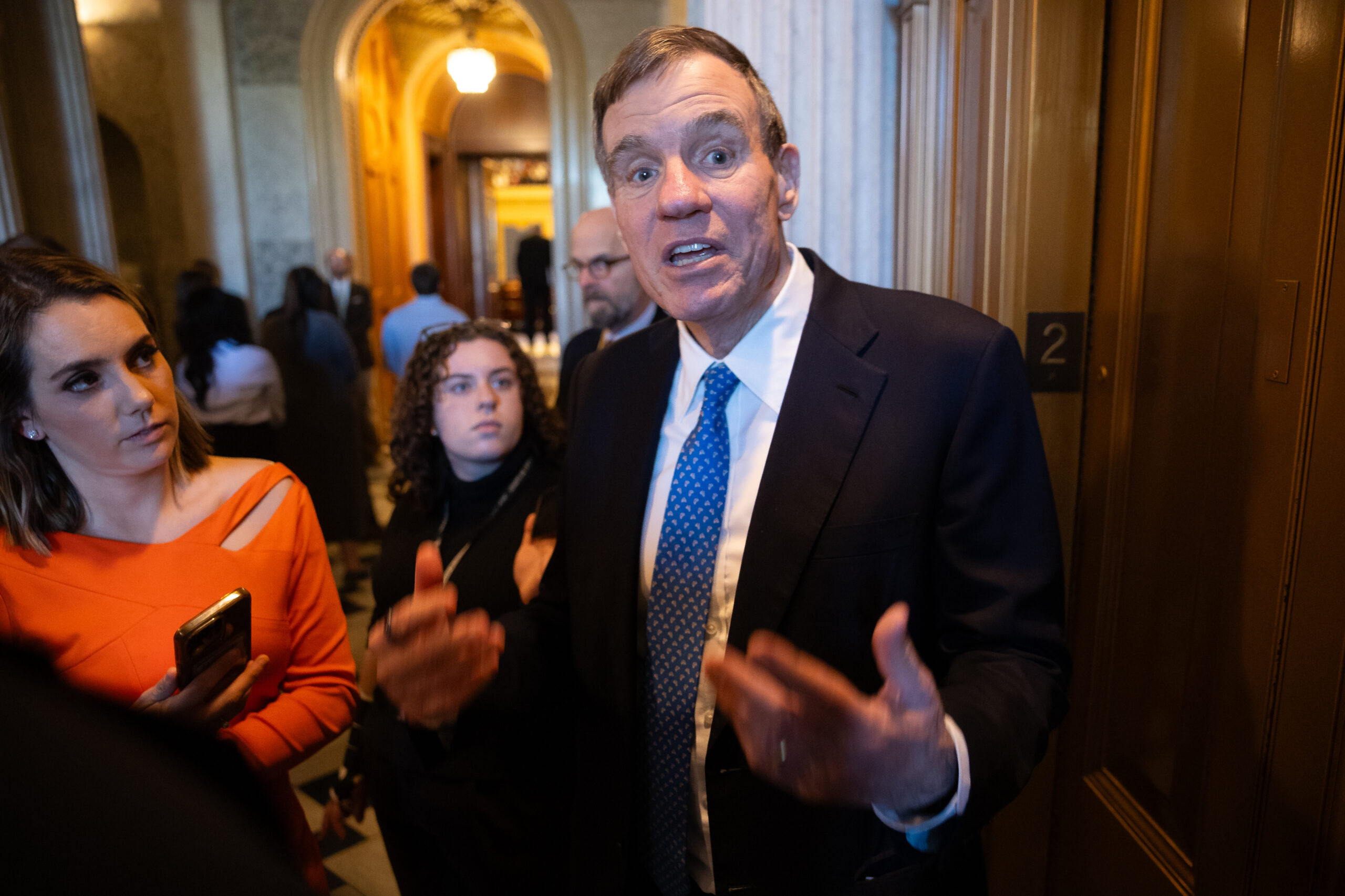
“If even this … administration is suddenly saying this is a security risk, why are we allowing these entities to put this out without testing?” asked Sen. Mark Warner of Virginia, the top Democrat on the Senate Intelligence Committee.
Anthropic’s relationship with the White House has been strained since a standoff with the Defense Department earlier this year, when the Pentagon labeled Anthropic a supply-chain risk. While the unveiling of Anthropic’s latest model Mythos prompted the government to soften its stance toward the company, last week’s events signalled the repair may have been superficial.
“If Donald Trump thinks we need export controls on Anthropic, then how about putting export controls on the computer chips that will let China build their own version of Anthropic?” Sen. Elizabeth Warren (D-Mass.), said Tuesday in an interview.
When asked to rate the chances of Congress passing legislation to set federal standards for AI regulations, she replied, “It would be high if it weren’t for Donald Trump.”
This all comes as Washington was already grappling with the larger question of how to regulate the AI industry to ensure the safety of models, and whether it should be up to states or the federal government to set those guardrails. The Commerce Committee in the coming weeks is expected to consider a slate of AI bills, including potentially one that would require social media platforms to put mechanisms in place to protect users who are minors.
Some members of Congress are trying to work across the aisle on the issue despite the steep odds. In the House, Reps. Jay Obernolte (R-Calif.) and Lori Trahan (D-Calif.) last month unveiled a broad AI legislative framework that folds in preemption of state AI laws. Trahan, who has broken with House Democratic leadership in pursuing a bipartisan path on AI, seized on the Anthropic news to urge congressional action.
“This decision further illustrates the need for a thoughtful and durable national strategy on AI,” she posted on X. “Decisions this consequential shouldn’t turn on a single directive issued at 5 pm on a Friday. They should follow rules that are clear, fair, grounded in technical facts, and built to last beyond any one administration.”
Trahan’s spokesperson, in a statement Tuesday, said, “Whether the decision by the administration was political or actually based on a real threat posed … it underscores the fact that Congress must act urgently and in a bipartisan fashion.”
The Trahan-Obernolte proposal would stop short of calling for a mandatory review system for new frontier AI models, however, which could become difficult in the post-Anthropic era.
Rep. Josh Gottheimer (D-N.J.), who is co-chair of the House Democratic Commission on AI, said in an interview that the Trump administration last week “ma[d]e it clear the importance of actually mandatory reviews when it comes to government reviews, when it comes to models and national security-related issues.”
“If there were a piece of legislation for a mandatory review,” he added, “I’d certainly support that.”
Sen. Todd Young of Indiana offered a measured response to the events of the last several days, saying the Senate Commerce Committee, of which he is a member, would work to try to get answers. He added that the recent developments could “conceivably” propel lawmakers to work together on legislation that would establish a system to review new models.
“You don’t want to just be trusting private actors to do the right thing and trusting their judgment, because the risk we’re talking about here could conceivably be catastrophic,” Young said, adding, “I think everyone wants to get this right.”
Gabby Miller contributed to this report.
Read the full article here


