







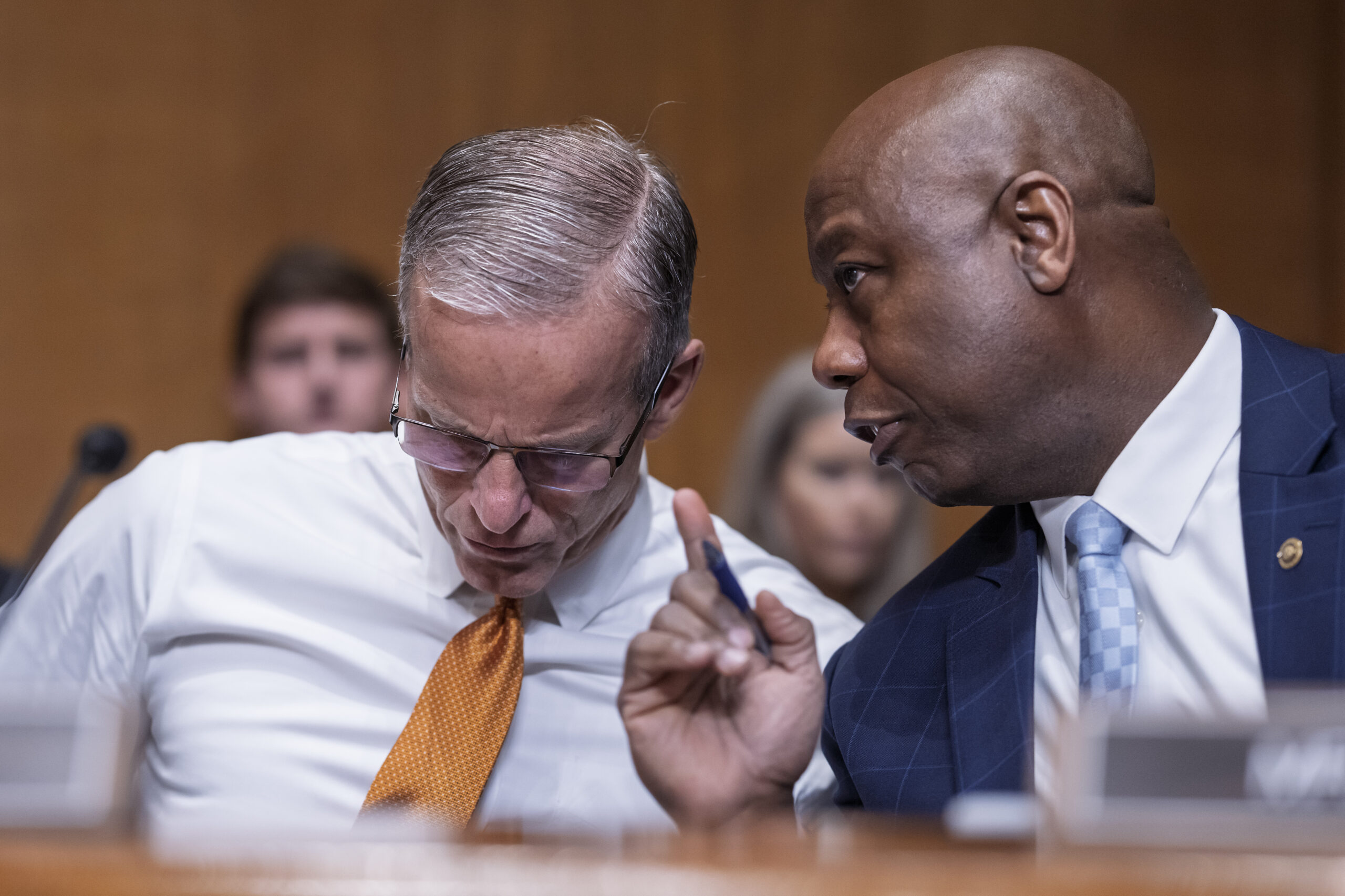
Senate Majority Leader John Thune said Tuesday the chamber will move forward with its first procedural vote on updated bipartisan housing affordability legislation. The movement comes after the leaders of the Senate Banking and House Financial Services Committees announced bicameral agreement on the long-awaited bill.
The text of the revised 21st Century ROAD to Housing Act was released Tuesday and contains most of the House-passed housing language, including the House’s version of a provision to restrict large institutional investors from buying single-family homes. Six Senate bills stripped from the House-passed package were also added back onto the bill with “meaningful changes” to address House concerns, according to a note the Senate Banking Committee circulated with the bill text that was obtained by POLITICO.
“This bill is the result of years of work to lower costs, expand housing supply, cut red tape, protect taxpayers, and help more Americans achieve the dream of homeownership,” Senate Banking Chair Tim Scott said in a statement.
Scott negotiated the revised language with ranking member Elizabeth Warren and worked with House Financial Services ranking member Maxine Waters “to get her to good on the package,” according to the note.
House Financial Services Chair French Hill was able to support the revised bill after an additional change to the bill was made, which would authorize a controversial disaster relief program for only three years instead of the Senate-proposed seven-year sunset, according to two people familiar with the legislative negotiations.
“I appreciate the Senate including a three-year sunset on the CDBG-DR program and adopting key House priorities including nine community banking bills and the House’s language limiting institutional investors from outcompeting American families in the housing market,” Hill said in a statement.
House GOP leaders plan to put the housing bill up for an expedited vote immediately upon the House’s return from recess June 23, according to two people familiar with the plans granted anonymity to discuss closed-door conversations.
Lawmakers from both parties view the legislation, which aims to increase homeownership and boost housing supply, as an answer to cost-of-living concerns that have dominated the midterm elections season. Despite bipartisan agreement on respective sides of the Capitol, the two chambers have gone back and forth for months, with the House voting on two different versions of the housing affordability legislation, and the Senate now preparing for a second round of votes on the bill.
Thune said Monday he was hopeful the bill could be passed this week.
Both chambers overwhelmingly passed their own versions of housing legislation — the Senate 89-10 in March, and the House 396-13 in May. The White House supported the Senate-passed bill and then backed the House-passed bill after it retained most of the Senate’s language on reining in private equity and other large Wall Street investors in the housing market — a top priority for President Donald Trump.
Jordain Carney and Meredith Lee Hill contributed to this report.
Read the full article here


