

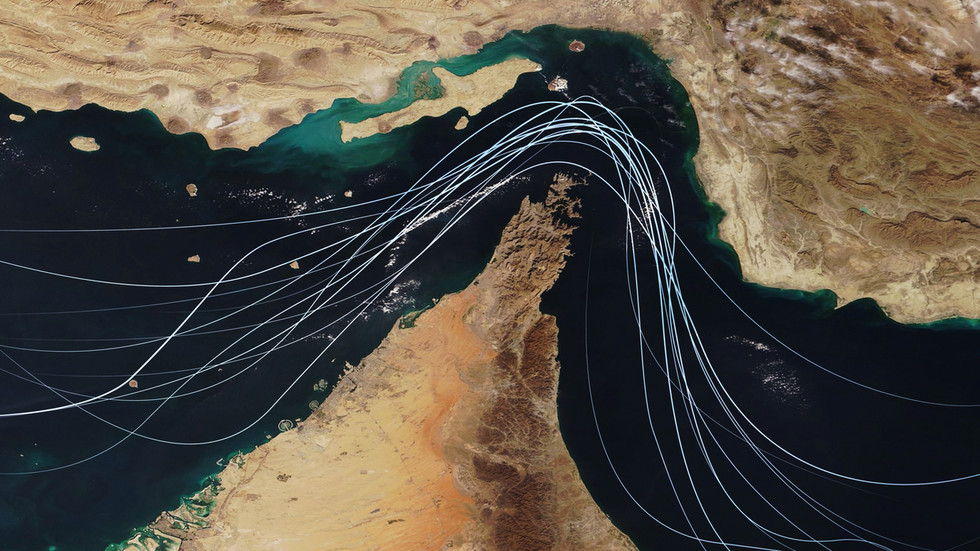
Tehran insists it can levy fees on shipping while Washington claims no country may charge for passage through an international waterway
The US and Iran have clashed over Tehran’s move to levy a toll on ships transiting the Strait of Hormuz.
Washington has insisted that Tehran cannot impose transit fees, while Iran argues it can levy charges for services provided.
Iran intends to introduce a system of maritime fees in the strait, after the 60-day negotiation period triggered by the signing of the memorandum of understanding by Washington and Tehran.
US Secretary of State Marco Rubio said on Wednesday that Washington would not accept any tolls or transit fees in the strategic waterway, which is wholly demarcated into the territorial waters of Iran and Oman.
Speaking after arriving in the United Arab Emirates for meetings with Gulf leaders, he reiterated that any final agreement with Tehran would bar Iran from charging vessels for passage.
“It’s an international waterway. No country is allowed to charge tolls or fees on an international waterway. That’s existing international law,” Rubio said, adding “all the countries in this region would agree with us.”
Rubio’s comments came a day after Iran’s chief negotiator Mohammad Bagher Ghalibaf told Iranian state media that “everyone should know that the administration of the Strait of Hormuz will never go back to the way it was before the war.”
His remarks followed Tehran’s decision to suspend planned transit fees for 60 days while negotiations with the US continue in Switzerland, suggesting the charges could be introduced if the sides fail to reach an agreement before the grace period expires. The two sides agreed to a 60-day roadmap toward a final accord, further technical negotiations and the creation of a high-level committee to oversee the process.

Also on Tuesday, Iran and Oman said they would explore how navigation in the strait should be “administered,” including maritime services in the strategic waterway and the costs associated with them, and agreed to establish a joint working group to advance the talks.
A memorandum of understanding signed last week calls for Iran, Oman and other Gulf littoral states to negotiate the future management of navigation in the strait, a vital shipping route that carries about 20% of global oil supplies.
READ MORE:
No war, no peace – just Hormuz holding the world hostage
Although shipping has resumed through the Strait of Hormuz, shipowners remain uncertain over how to navigate the waterway amid conflicting guidance from Iran, the US and Western insurers. Tehran has directed vessels to obtain prior clearance and follow routes closer to the Iranian coast, while Washington and some insurers have advised ships to use the Omani side of the strait under US air cover.
The conflicting guidance has left shipowners uncertain over which route to take, despite the strait remaining open to commercial traffic.
You can share this story on social media:
Read the full article here