




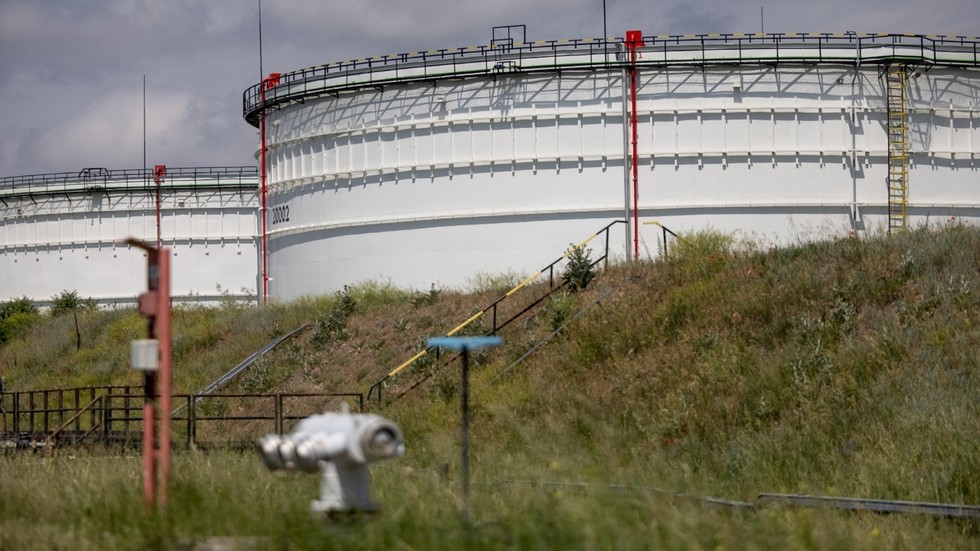
Kiev had suspended deliveries of Russian crude since January, causing a rift with EU members Hungary and Slovakia
Ukraine has restarted the flow of Russian oil to the EU via the Druzhba pipeline after a pause of almost three months, Hungarian energy giant MOL has said.
The company said in a statement that Ukrainian operator JSC Ukrtransnafta has informed it that Ukraine began receiving crude from Belarus via the Druzhba pipeline system at noon on Wednesday.
According to MOL, it expects the first shipments of Russian oil to arrive in Hungary and Slovakia on Thursday “at the latest.”
Slovak Economy Minister Denisa Sakova said in a post on Facebook that Bratislava has also been contacted by Ukrtransnafta and that Slovakia should begin receiving crude via the Druzhba again on Thursday morning.
Ukraine’s Vladimir Zelensky said on social media on Tuesday that repairs on the pipeline had been completed and that it was ready to resume operations.


Kiev halted supplies to Hungary and Slovakia in late January, claiming that the infrastructure had been damaged by Russian strikes. Moscow rejected the accusations as “lies.”
The move to resume supplies by Ukraine comes less than two weeks after a parliamentary election in Hungary, in which the pro-EU Tisza party led by Peter Magyar defeated the ruling Fidesz party of longtime Prime Minister Viktor Orban – a harsh critic of EU aid to Ukraine.
During the campaign, Orban’s government repeatedly accused Kiev of interfering in the vote. It rejected claims of the Druzhba pipeline being damaged, arguing that Zelensky was deliberately blocking oil deliveries to create tensions in the country ahead of the vote. Landlocked Hungary and neighboring Slovakia are both heavily dependent on Russian energy.
In recent months, Budapest has vetoed the EU’s planned €90 billion ($105 billion) emergency loan for Ukraine, citing Kiev’s reluctance to resume supplies via the Druzhba.
Hours after the resumption of oil flows was announced, EU ambassadors moved to approve the transfer of funds to Zelensky’s government, Reuters reported, citing a spokesman for the Cypriot presidency of the bloc. A formal sign-off on the loan by the 27 member states is expected on Thursday, the agency said.
Budapest and Bratislava eralier argued that Kiev’s reluctance to allow EU inspectors to examine the Druzhba pipeline was proof that it has not been telling the truth about the condition of the infrastructure.



The standoff also led to Zelensky issuing a warning to Orban last month that he would pass “the address of this person to our armed forces” so they could “speak to him in their own language.” The outgoing Hungarian prime minister responded by stressing that “threats to his life” would not make him change his policies regarding Ukraine.
Magyar said after his election win that he is not intending to veto EU funds for Kiev, but added that Budapest will not participate in the loan due to financial difficulties. Earlier this week, he urged Kiev to reopen the Druzhba, stressing that Hungary would not accept “any kind of blackmail” over energy supplies.
Slovak Prime Minister Robert Fico also warned earlier that Bratislava would veto further sanctions on Russia by the EU and resist Ukraine’s accelerated accession to the bloc if Kiev doesn’t restart the pipeline.
Kremlin spokesman Dmitry Peskov reiterated on Tuesday that Ukraine was the only side to blame for the stoppage of deliveries via the Druzhba. Russia intends to fulfill its contractual obligations to Hungary, remaining ready to continue supplying oil to the country, Peskov said.
Read the full article here


