

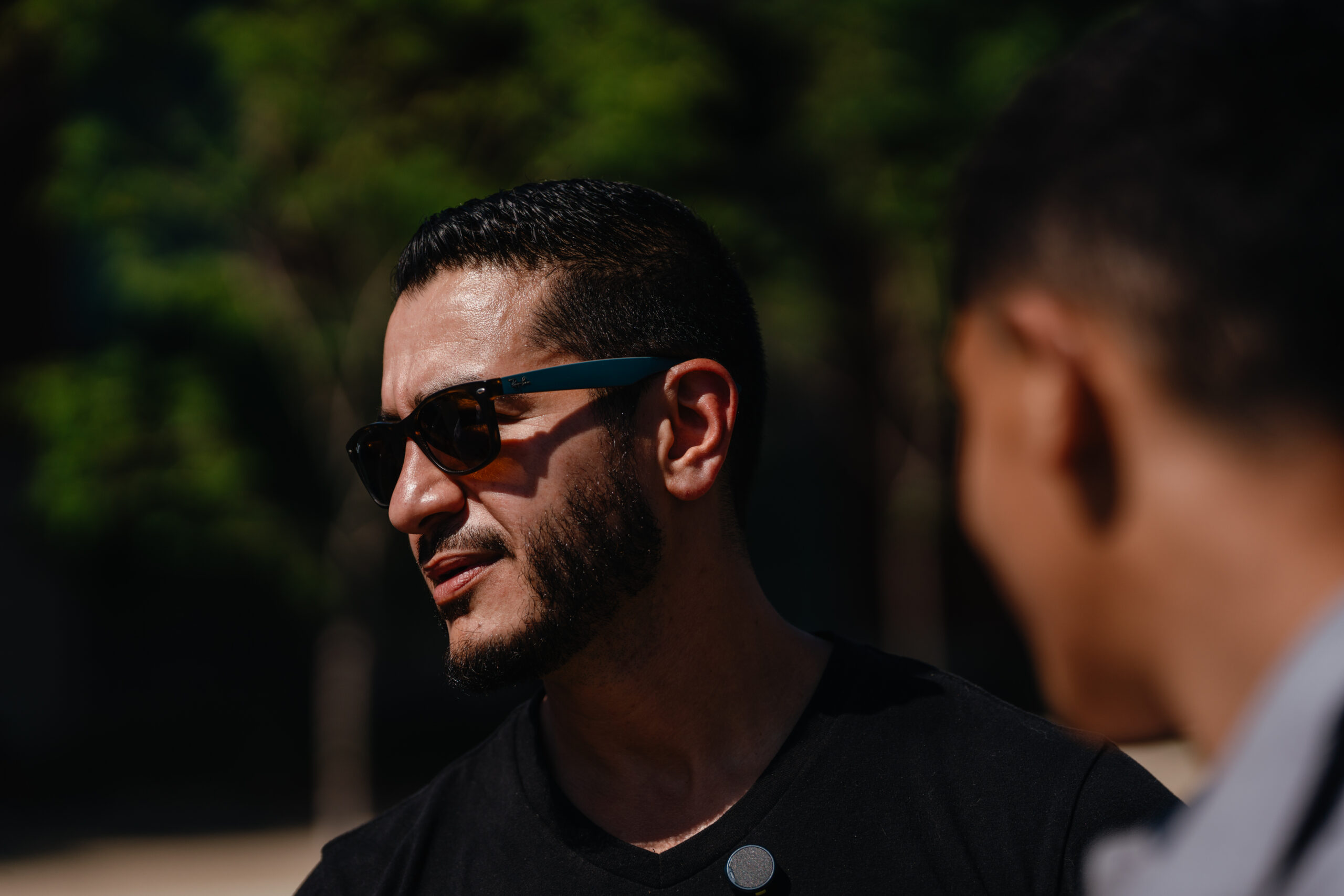
President Donald Trump has a new boogeyman — and as the president might say, he’s right out of central casting.
Abdul El-Sayed’s victory in Michigan’s divisive Democratic Senate primary last week enables Trump and Republicans to juice the base – he supports policies embraced by self-described socialists such as Medicare for All, opposes U.S. military aid for Israel and thinks ICE should be abolished. El-Sayed says he is not a socialist.
Republicans are already accusing El-Sayed, who is Muslim, of being “anti-American,” pointing to his relationship with far-left Twitch streamer Hasan Piker, who has a history of controversial statements, including about Israel and the Sept. 11, 2001 attacks. The president alsoused El-Sayed’s full name, Abdulrahman Mohamed El-Sayed, this week in a statement warning that Democrats will eliminate the filibuster if they control the Senate, echoing the way he uses Barack Obama’s middle name, Hussein, as a way to question his legitimacy his American birth.
“Abdul El-Sayed, lovely gentleman, he’s a man of hate,” Trump said during a Las Vegas event on Wednesday. “And now he’s going around saying, “No, I love everybody. He doesn’t love everybody. Put him in office, you’re going to find out what he loves.”
Trump has also targeted him as a “communist,” and called him “full of shit.”
“On the national messaging, it works for their administration to elevate” the anti El-Sayed rhetoric, said one former Trump administration official, granted anonymity to discuss the White House’s thinking. “Can you scare the base to be scared of a Muslim, socialist, communist?”
El-Sayed pushed back on the remarks from Trump and his opponent, former Rep. Mike Rogers, during a rally in Michigan on Friday night. He said his full name onstage and added, “with a name like mine, I never thought running for office would be possible, for somebody like me.”
He also offered some sharp words for Rogers: “Mike Rogers, well, he’s decided that he wants to focus on my name, my 11-letter first name. Now, Mike, I’m just going to remind you: if you don’t know how to say the name, keep the name out of your damn mouth.”
Trump’s closing message on the road, in order to help Republicans in the midterms over the next three months, can be a “one-two punch” with El-Sayed on the ticket in Michigan, argued Matt Whitlock, a GOP strategist and former National Republican Senatorial Committee senior adviser.
Half of the message is “focused on fixing economic sentiment in the country… things like no tax on tips and some of the economic wins and creative ideas they’ve had to improve Americans’ everyday experience with the economy. But the other 50 percent of that is drawing the clear contrast – competence versus craziness,” Whitlock said.
Republicans’ anti-American criticism of El-Sayed stems from comments Piker made in 2019, when he said that “America deserved 9/11,” though he later apologized for the remark and said it was “inappropriate.”
El-Sayed told POLITICO in April he believes it’s “critical” that Democrats embrace Piker and declined to denounce his past comments, saying, “I’m not here to disavow people’s views.”
Rogers last week declared that El-Sayed “hates Jewish people.” In response to Rogers’ comments, El-Sayed’s campaign pointed to a recent CNN interview, in which El-Sayed rejected those attacks.
El-Sayed campaign spokesperson Roxie Richner did not comment on the GOP’s anti-American rhetoric but pointed out that El-Sayed is a Rhodes Scholar and former public health official “who has built a broad and growing coalition around getting money out of politics, money back in pockets, and guaranteeing healthcare through Medicare for All.”
She cast Rogers as “an extreme Republican who supported banning abortion, helped architect the opioid epidemic which has killed thousands of Americans, and wants to cut Medicare, Social Security and Medicaid to make healthcare even more expensive.” Rogers’ health plan would increase price transparency and expand access to TrumpRx, among other ideas.
Other progressive Democrats have had success in recent elections, like New York City Mayor Zohran Mamdani and Democratic nominee for U.S. House in Colorado, Melat Kiros, who beat longtime Rep. Diana DeGette in last month’s primary. And this week in Wisconsin, democratic socialist Francesca Hong will try to sustain progressive’s momentum in another swing state as the frontrunner for her party’s gubernatorial nomination.
A major Senate seat in a battleground state is a whole new playing field for Trump to use the socialism argument against Democrats. Trump won Michigan by less than 2 percent of the vote in 2024. He lost Michigan in 2020 and won the swing state in 2016.
El-Sayed “is the national version of Mamdani,” said one national Republican operative working on battleground races, granted anonymity to speak candidly about the landscape. “Don’t like what you see in New York? Then don’t put it in Congress. Super easy messaging win for GOP.”
White House spokesperson Olivia Wales said Trump will keep hitting El-Sayed on the trail.
“The Democrats’ embrace of socialism and communism is an existential threat to our country,” Wales said. “President Trump will keep calling out dangerous, far-left radicals like Abdulrahman Mohamed El-Sayed, who sympathizes with terrorists and calls for defunding the police. President Trump will never let the United States become a socialist or communist nation.”
Former Maine Senate candidate Graham Platner was previously considered the Democratic socialist boogeyman running in a prominent contest with a platform of progressive stances like Medicare For All. Platner dropped out of the race following allegations of sexual assault that he denies,
With Platner’s candidacy over, El-Sayed fills that spot, giving the Trump team a second chance to push the message.
“It’s Graham Platner with a strong strain of anti-American vibes. Graham Platner’s best, sort of, attribute was his service to our country, and Abdul, I think, has the opposite strain of aligning himself with people who really despise our country and not for people who have served it,” Whitlock said.
“The Hassan Piker part of it opens him up to every kind of anti-American attack with validity because Hasan Piker has been so open about not feeling any patriotism towards America,” Whitlock added.
Seeking to raise the stakes for voters, Vice President JD Vance last week even suggested El-Sayed could run for president, even though he had just only won a Democratic Senate primary.
“We don’t want the next administration, whoever — God forbid, you’re going to have President El-Sayed in three years — we don’t want him to undo all the incredible work that we’ve been doing when we’ve been taking out the fraudsters and saving the American people money,” Vance said.
Republicans have already painted El-Sayed as too far left for the broader Michigan electorate. The Senate Leadership Fund, the top GOP Senate super PAC, launched a six-figure digital ad campaign last week calling El-Sayed “dangerously radical.”
Michigan is one of Democrats’ top defensive states this cycle — crucial to their uphill battle to flip control of the upper chamber — and Republicans see a fresh opportunity in the key battleground with El-Sayed as the nominee.
Rogers, on a call with supporters before the primary, said he thought his candidacy would be “in good shape” if El-Sayed got the nomination, CNN reported. His campaign is quickly working to chip into El-Sayed’s coalition in Michigan, seeing an opening in particular with Black and Jewish voters, two voting blocs that went predominantly for his Democratic opponent in the primary, Rep. Haley Stevens.
A second national operative working on Senate races said El-Sayed’s victory is “the optimal outcome” for the GOP.
“He’s going to have a tremendously difficult time bringing everyone back together. Easily the most divisive primary in Michigan, probably this century, for either party,” said the person, granted anonymity to speak candidly about the landscape.
Read the full article here
