

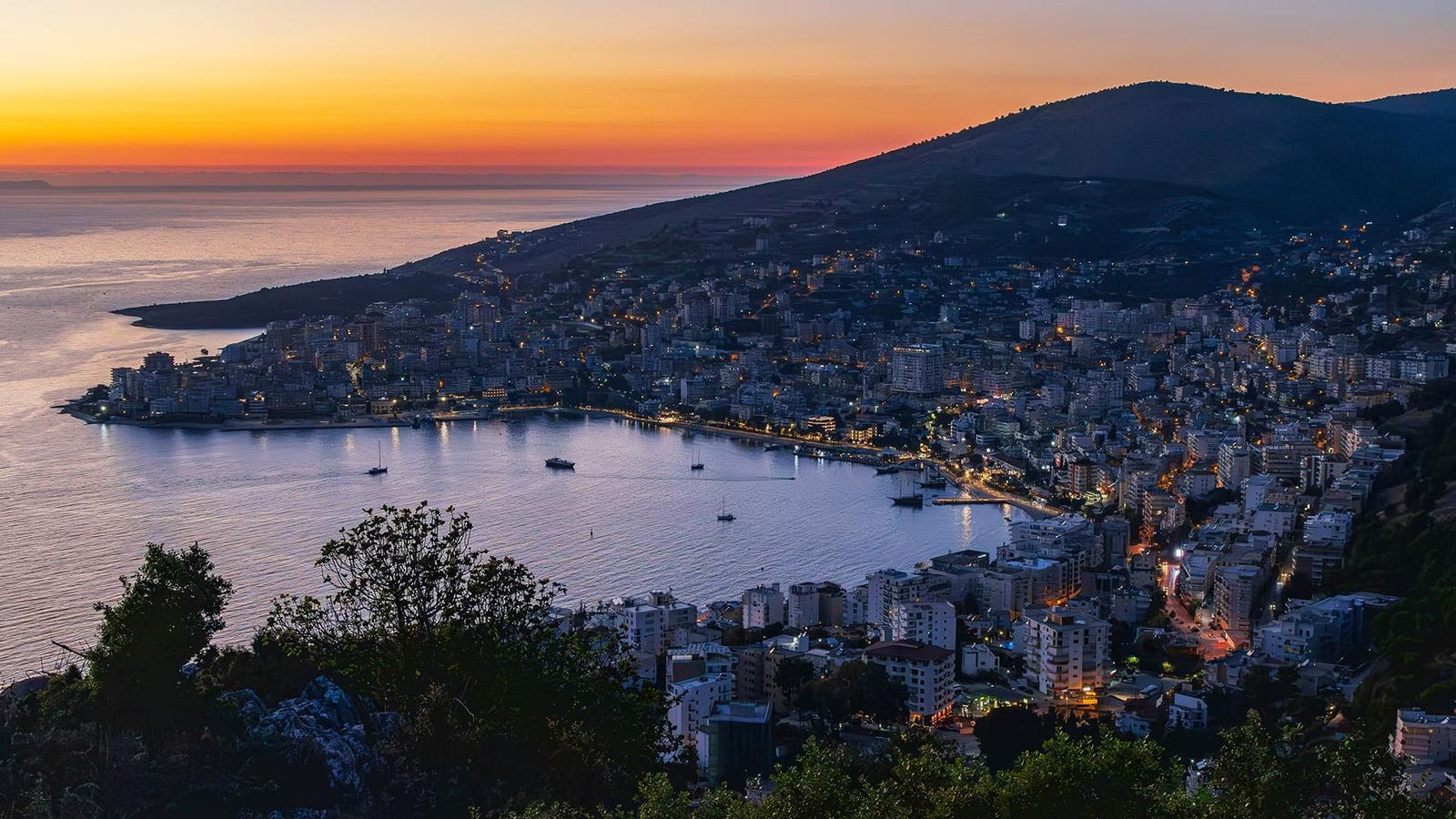
Married for 37 years and approaching retirement, Dorsie and Dan Schmitz found themselves worried about U.S. politics and their own finances. They owned a large house on a 31-acre spread, in the rural, no-stoplight town of Blanchard, Michigan (population 3,100), an hour north of Grand Rapids. The cost of living there is 20% below the national average, but they wanted a different lifestyle, one they weren’t sure they could afford in the U.S. Moreover, as an interracial couple with a liberal bent, they didn’t like much of what they saw happening politically on a national level. “We couldn’t find the kind of life we wanted in the U.S.,” says Dan, 63, a former telecom operations manager.
The couple considered moving to Portugal, Greece, France and Thailand—all on Forbes’ list of The Best Places To Retire Abroad In 2026. But Thailand was too humid, Dan says, and the others didn’t match the combination of low costs (half those in the U.S.) and atmosphere they found in another of our picks: Albania, the small (population 2.4 million) Mediterranean country that didn’t shrug off Communist rule until 1992. So in April, the Schmitzes moved to Vlorë, a seaside town of 78,000, where they pay just $1,100 a month for a three-bedroom apartment near the Lungomare Promenade, a lively three-mile long café-studded walk along the Adriatic Sea. Their one-year tourist visa gives them plenty of time to look around and decide whether to apply for a longer stay.
The Schmitzes are part of a growing trend: More Americans are retiring abroad in search of lower costs, a different lifestyle and often a friendlier political vibe. As of the last official count (from the end of 2024), 712,000 Americans received Social Security benefits abroad, up 20% over 13 years. But many more, surveys suggest, are giving it serious consideration these days.
It’s a big step, requiring extensive research, flexibility and a certain adventurous spirit. That’s why many would-be expats try out a place for a vacation or short-term stay first. But the Schmitzes made a clean break, selling their Michigan house and all its possessions. Dorsey, 66 and retired from a career in retail cosmetics, says they figured: “If we’re going to do it, let’s go all the way.” What about their two grown children and three grandkids back in the States? “They can visit,” Dan says.
To help those contemplating a foreign move get started, Forbes has picked 96 attractive retirement locales in 24 different countries on five continents. Twelve of the 24 countries are European. Two on the list are first-timers: Mauritius and Vietnam (the only still-Communist country on the roster).
Got questions? Join us on Wednesday, August 5, at 12 P.M., ET for a Forbes members-only event on living, working and retiring abroad.
The good news is that countries on this list don’t seem to hold Trump’s anti-immigration, pro-tariff rhetoric against individual Americans wanting to retire there. Instead, they generally see U.S. retirees—assuming they have enough assets or retirement income—as an economic plus. One of the hardest places on this list to win permanent residency is in neighboring Canada, which (in a policy that predates tensions with the Trump Administration and is designed to limit government healthcare costs) makes it hard for retirees without family connections to move full-time to Canada. But it remains on this list because it moved recently to define family connections far more liberally. The Great White North also allows other Americans to spend six months a year in the country, although private health insurance is advised. Living costs in Canada are only a tad lower than in the U.S., making this an option primarily for better-off retirees, who can maintain two homes.
But for many of the other countries on our list, the financial savings are persuasive, led by lower housing and healthcare costs. Some countries even have a relaxed ban against “working” retirees that allows “digital nomads” to stay and work remotely for a year or two while checking out retirement options.
In making our choices, we took into account the relative cost of living; taxes (rarely a bargain, but manageable); healthcare quality and costs (Medicare can’t be used abroad, but medical care and insurance usually are much cheaper outside the U.S.); ease of getting back to see relatives; crime and political instability; and social isolation, especially if English isn’t widely spoken and you’re not fluent in the dominant language. (Not every foreign country on this list is like Belize, Canada, Ireland, Malta or Mauritius, where English, de facto or de jure, is an official language.) We also considered how hard it is to get permission to stay in a country for an extended period of time.
This list also takes into account climate change and natural hazard risk abroad. That’s the main reason why the Philippines and Indonesia aren’t on the list. These Pacific Ocean island-nations remain No. 1 and 2 (the worst) by a wide margin among 193 countries on the latest World Risk Report compiled under the auspices of the United Nations. (The U.S. comes in at No. 20.) The ongoing wildfires and heat in Spain and France have been getting a lot of attention. But less than 1% of the land mass in each country has been scorched. Still, this underscores the need to do careful research going forward. We removed our recommendations for wine-country mecca Bordeaux, France; and several places in Spain, including the Costa del Sol.
You can read additional pointers, information on our data sources, and case studies on how others made their decisions to move abroad here.
If a foreign move isn’t your speed, but you’re still looking for lower costs, these are the best 25 spots in the U.S. for quality retirement living at a reasonable cost. If amenities matter more to you than saving money, take a look at our list of the top 25 places in the U.S. for enjoying your retirement by following a passion.
Our country picks are listed alphabetically below, with four locales within each that are worth considering.
A-E
Vlorë, Albania
Andrey Danilovich/iStock/Getty Images
Albania
Inexpensive Mediterranean-climate country with grand views
Locations: Tirana, Durrës, Sarandë, Vlorë,
Living Costs: Far lower than U.S. average
Healthcare: Adequate, but getting better
Gaining Right to Stay: Relatively easy
The last Communist country to fall in Eastern Europe, Albania is now a NATO member. It lines the east side of the Adriatic Sea across from the heel of Italy. The self-styled Land of Eagles has a Mediterranean climate, scenic beaches and mountains, and a cost of living half the U.S. average. Crime is low and the government is reasonably stable (although a plan involving Trump son-in-law Jared Kushner to build big luxury projects along the Adriatic Coast has stirred growing protests). Healthcare is inexpensive by U.S. standards, adequate and getting better, but some patients still prefer to use specialists in Italy or London. Private health insurance is a must. English is spoken, particularly by younger Albanians, but not everywhere, and Albanian, which has 36 letters, can be difficult to learn. There is no tax treaty with the U.S. barring double taxation, but Albanian tax rates are low and the U.S. foreign tax credit helps a lot. A U.S. retiree can stay in the country as a “tourist” for a full year, plenty of time to work on gaining longer permissions. One-year visas allowing working digital nomads (called a “Unique Permit”), another route to an indefinite stay, are available and can be renewed five times. Next step is a D Long Stay Visa, leading to a retirement visa. For a couple, that requires a showing of about $20,000 in annual pension income from outside the country. On the downside, flights to the U.S. require a stop or change somewhere. Storm flooding can be a problem. Popular retirement locations include the capital Tirana, and the coastal towns of Durrës, Sarandë and Vlorë.
Buenos Aires, Argentina
Tom Lang/iStock/Getty Images
Argentina
South American country with terrific scenery and heady blend of European and Latino cultures
Locations: Buenos Aires, Cordoba, Mendoza, Rosario
Living Costs: Far lower than U.S. average
Healthcare: Good
Gaining Right to Stay: Relatively easy, but strict rules
South America’s second-largest country offers beautiful scenery and a diverse European-tinged culture with a wide range of reverse-season weather. Cost of living is about half the rate in the U.S., while the serious crime rate is similar. Health care is among the best in South America, especially in the larger cities, and far cheaper than in the U.S., but private insurance is a must. Knowledge of Spanish is very helpful. Argentina ranks in the top third of countries with the least climate risk, although flooding can be a problem. There is no tax treaty with the U.S., but Social Security and foreign pensions generally are not taxed in Argentina, and the U.S. foreign tax credit helps. Argentinian marginal personal income tax rates top out at 35%. One-year renewable Pensionado (retirement) or Rentista (independent means) visas are available to U.S. retirees showing at least $24,000 in annual income. Required paperwork is exacting. Nonstop flights to the U.S. take about 10 hours. Popular retirement spots include Buenos Aires, the capital; the historic town of Cordoba; the wine capital of Mendoza; and the inland port of Rosario.
Salzburg, Austria
Henn Photography/Cavan Images/Getty Images
Austria
A lot to offer, but some initial knowledge of German required by law
Locations: Vienna, Graz, Innsbruck, Salzburg
Living Costs: Overall, about the same as U.S.
Healthcare: Excellent
Gaining Right to Stay: Difficult but doable, and must speak some German
With a rich culture and beautiful terrain, land-locked Austria provides an appealing setting for retirees. Cost of living is about the same as the U.S. average, but it breaks differently: Housing and healthcare costs are lower, while groceries and eating out are higher. Serious crime rate is low, and politics are stable. Health care is excellent and affordable; it’s possible to eventually enroll in the national health system. Natural hazard risk is considered low. Plane rides to the U.S. usually require a change, but there are also nonstops. Austrian tax rates are relatively high, but a long-standing tax treaty between Austria and the U.S. prevents double taxation. Retirees can apply for a “settlement permit except gainful employment” document that requires showing about $57,500 in annual retirement income for a couple as well as a basic German language proficiency (even though English is widely spoken). There’s a quota on these permits, so local professional help is advised. Possible retirement spots include the cosmopolitan capital Vienna, mountain destination Innsbruck, scenic Graz and music mecca Salzburg.
Ambergris Caye, Belize
DPST/Newscom
Belize
English-speaking Central American country, boasting flora, coral reefs and flight convenience to the U.S.
Locations: Ambergris Caye, Corozal, Caye Caulker, Placencia
Living Costs: Considerably less than U.S. average
Healthcare: Basic
Gaining Right to Stay: Very easy
Caribbean-facing Belieze is the only Central American country with English as its official language and offers U.S. retirees a comfortable outdoors-oriented warm and active environment, including fishing, boating and barrier reef diving. Cost of living is much less than the U.S. average. Crime is not a problem outside Belize City. Finding quality healthcare remains an issue and there is no Level One Trauma Center. Retirees often return to the U.S.—it’s just a two-hour plane ride to Houston—for major medical needs, or to use Medicare. Hurricanes are another problem. The politically stable country draws retirees with a Qualified Retirement Program that requires showing just $24,000 in annual income and offers permanent residency and a tax exemption on income from outside the country. Popular venues for retirees include Ambergris Caye, an island 16 miles northeast of Belize City; Caye Caulker, another island just off the coast; Corozal, a mainland city on the Atlantic Ocean near Mexico; and Placencia, also on the mainland in the south.
Victoria, Canada
Ahhhimages/Moment/Getty Images
Canada
Convenient to the U.S., and now much easier for retirees with ancestral family ties
Locations: Calgary, Moncton, Niagara-on-the-Lake, Victoria
Living Costs: Slightly less than U.S. average
Healthcare: Good and affordable, plus Medicare option
Gaining Right to Stay: Easy if a descendant of a Canadian, plus six-month stays available
The big news here is that Canada late last year dramatically expanded its laws allowing descendants of citizens to gain citizenship (and therefore the right to move to and live in Canada). With proof, even a great-great-great-great grandchild of a Canadian could qualify. There are estimates this could enable 10 million Americans to claim citizenship. For those without family connections, it’s difficult to move to Canada as a retiree. But the country still permits U.S. citizens to stay six months a year, every year, allowing for a part-year retirement option (with no Canadian tax issues). Cost of living is slightly less than the U.S. average, especially outside big cities. English, of course, is an official language. Forest fires can be a problem in the west and flooding everywhere. Non-residents need private health insurance, but the long common border allows retirees to return to the U.S. and use Medicare. For those able to retire full time up north, Canadian taxes are higher than in the U.S., but a tax treaty prevents double taxation. With most of the population within 90 miles of the U.S. border, return travel is easy. Serious crime rates are low. Popular places include Victoria, the capital of British Columbia on Vancouver Island in the West; Niagara-on-the-Lake in Ontario; Moncton in New Brunswick; and Calgary, the capital of Alberta.
Bogota, Colombiua
Kevin Lee/iStock/Getty Images
Colombia
Colorful South American country with warm climate, tolerable plane rides to U.S.
Locations: Bogota, Cartagena, Medellin, Pereira
Living Costs: Much less than U.S. average
Healthcare: Excellent
Gaining Right to Stay: Easy
No longer a haven for giant drug cartels, Columbia, at the northwestern edge of South America, has become a popular destination for American retirees. The now-politically nonviolent country has great weather and scenery, coupled with a cost of living more than 50% below that of the U.S., and affordable quality healthcare rated as better than in the U.S. and much cheaper. Knowledge of Spanish is very helpful. Crime is still a problem in places. There is no tax treaty against double taxation with the U.S., but the U.S. foreign tax credit affords substantial relief. Moreover, Colombian law exempts, depending on the exchange rate of the Colombian peso, the first $160,000 or so in foreign pension income. A renewable M-11 pensionado (pensioner’s) retirement visa for three years is relatively easy to get with a showing of about $17,500 in annual retirement income. Flights back to the U.S. are tolerable in length and often nonstop (as short as three-and-a half hours to Miami). Parts of the country have exposure to flooding. Inviting locations include the Andres Mountain elevated capital city of Bogota; Medellín, another mountain city; Pereira, in the center of coffee-growing country; and the coastal city of Cartagena.
San Jose, Costa Rica
Red Tea/iStock/Getty Images
Costa Rica
Central American country with amazing biodiversity and beaches on two oceans
Locations: San José, Central Valley, Atenas, Santa Cruz
Living Costs: Significantly less than U.S. average
Healthcare: Excellent
Gaining Right to Stay: Gaining Right to Stay: Relatively easy
With great beaches on two oceans, astonishing ecological diversity within its tropical forests and a laid-back lifestyle, Costa Rica remains popular with U.S. retirees, particularly those who love the outdoors. Living costs overall are significantly less than in the U.S., crime is low, and the politics are stable. Flooding can be a problem. Healthcare in the larger cities is excellent and cheap, and retiree residents can join the “Caja” public health system, paying about $150 a month. Knowledge of Spanish is helpful but not essential. Paths to residency include a two-year renewable pensionado retirement visa requiring a showing of just $12,000 in yearly income. A U.S. retiree can stay in the country as a “tourist” for a half-year, providing time to work on gaining longer permissions. The U.S. and Costa Rica do not have a tax treaty avoiding double taxation, but Costa Rica doesn’t tax the foreign income of retirees. Miami and Houston are three hours away by nonstop plane. Inviting venues include the capital San José: the mountain-flanked Central Valley plateau, including Atenas, with great weather year-round; and the Pacific Ocean city of Santa Cruz.
Paphos, Cyprus
Kirillm/iStock/Getty Images
Cyprus
Sunny Mediterranean island nation where English is widely spoken
Locations: Limassol, Paphos, Pyrgos Village, Larnaca
Living Costs: One-third less than U.S. average
Healthcare: Good and retirees can qualify for public healthcare system
Gaining Right to Stay: Moderately easy
Sitting at the eastern end of the Mediterranean, Cyprus (the southern 60% of the 60-mile-wide island not dominated by Turkey) offers a sunny environment with terrific beaches, a Greek culture and a long history of hosting expat retirees. Cost of living is about a third less than the U.S. average. There’s a low crime rate and stable politics. English is widely spoken. Healthcare is good, and permanent residents qualify for the public healthcare system, paying 2.65% of pension and Social Security (but not investment) income. Expat retires often augment this with private insurance. The country experiences flooding and wildfires. A tax treaty between Cyprus and the U.S. prevents double taxation, and there are other tax breaks for expat retirees. Retirees usually start by applying for a Category F residency permit (called a Pink Slip), which requires a showing of about $35,000 in annual retirement income for two. Buying property costing at least $350,000 offers another route. Flights back to the States require a change somewhere. Inviting locations include the coastal cities of Limassol, Paphos, Pyrgos Village and Larnaca.
F-L
Pau, France
Ludwig Deguffroy/iStock/Getty Images
France
Quintessential European immersion with great food
Locations: Paris, Lyon, Nice, Pau
Living Costs: Outside of Paris, noticeably less than in the U.S.
Healthcare: Excellent and cheap
Gaining Right to Stay: Difficult but doable
Beyond the cuisine, France offers expat retirees high-quality healthcare at low prices, paid through private insurance, out of pocket, or in some cases by joining the PUMA universal health care system. Cost of living varies widely but is an estimated 30% below that of the U.S., once you get farther from Paris. Knowledge of some French is essential. Serious crime rates are generally lower than in the States. Flooding, wildfires and periodic heat waves with little air conditioning can be a problem. Taxes are high. But there is a tax treaty with the U.S. against double taxation. The pact also in effect makes U.S.-sourced Social Security, pension and investment income free of French taxation. Getting a renewable VLS-TS Long-Stay Visitor Visa is difficult but still doable. Professional help is greatly advised. An annual retirement income of at least $37,000 for a couple must be shown. There are many nonstop flights back to the U.S. Besides Paris, popular retirement spots for U.S. expats include Lyon, near the French Alps; Nice, on the French Riviera, and Pau, in the Pyrenees foothills.
Thessaloniki, Greece
Faina Gurevich/iStock/Getty Images
Greece
Ancient cultural gem in the sunny Mediterranean
Locations: Athens, Corfu, Kalamata, Thessaloniki
Living Costs: Considerably cheaper than U.S. average
Healthcare: Good and affordable
Gaining Right to Stay: Reasonably easy
With its 6,000 islands in the Mediterranean off the sunny Balkan Peninsula, Greece offers retirees a culturally rich environment. Cost of living for most places, especially away from Athens, is a third or more below the U.S. average. Health care is considered good and affordable, but private health insurance is required. Knowing some Greek is helpful. The serious crime rate is low. Exposure to climate change and natural hazard risk, including wildfires, is significant. A tax treaty with the U.S. blocks double taxation, and under some circumstances there is a preferential tax rate for foreign retirees. Most expat retirees start by applying for a renewable Financially Independent Person Visa, requiring showing a minimum annual passive income for a couple of about $60,000. Greece also has a two-year digital nomad visa for workers that can count toward the five-years needed to qualify for permanent residency. Professional help is advised. Flights to the U.S. are long. Popular venues include the capital Athens, the western island of Corfu, the southern city of Kalamata, and the Aegean Sea cultural center of Thessaloniki.
Dublin, Ireland
Denise Barone/iStock/Getty Images
Ireland
Lush European island with English speakers and convenient flights to U.S.
Locations: Dublin, Cork, Killarney, Waterford
Living Costs: Roughly equal to U.S. average
Healthcare: Good, with private insurance
Gaining Right to Stay: Doable, but expensive
The vibrant Emerald Isle has much for U.S. retirees besides scenery: widely spoken English, stable politics and low serious crime. There are nonstop flights back to the U.S. from several airports. Cost of living is about that of the U.S., although the countryside is a lot cheaper than Dublin. Flooding can be an issue. Healthcare is good and affordable with private insurance required for expat retirees. Taxes are high, but a tax treaty with the U.S. avoids many double taxation issues, and U.S. Social Security benefits generally aren’t taxed by Ireland. The estimated five million Americans with an Irish citizen as a parent or grandparent can get citizenship (and thus the right to residency). But otherwise, gaining the Long-Stay D or O Visa for retirement generally requires showing an annual retirement income of about $116,000 for a couple, and savings of about $420,000. Inviting locations include the capital Dublin and the southern cities of Cork, Killarney and Waterford.
Florence, Italy
TT/iStock/Getty Images
Italy
Full Mediterranean experience of culture, climate and food
Locations: Florence, Bologna, La Marche, Lombardi Region,
Living Costs: Significantly lower than U.S. average
Healthcare: Excellent, with access to public system
Gaining Right to Stay: Relatively easy, but expensive
In addition to the culture and food, Italy offers a cost of living about one-third less than in the U.S., especially outside of big cities. Plus, it’s possible to join the state-run SSN healthcare system. Politics are stable, and the serious crime rate is lower than in the States. Natural hazard risks include earthquakes, flooding, wildfires and volcanoes. U.S. retirees usually apply for an Elective Residency Visa, which requires a couple to show at least $51,000 in annual retirement income. Italy has digital nomad visas, but they don’t help much with retirement matters. Italy doesn’t tax foreign pensions of government workers. Italian income taxes are higher than those in the U.S., but a tax treaty between the U.S. and Italy helps avoid double taxation. Speaking some Italian is definitely helpful. There are plenty of nonstop flights back to the U.S. Retirement areas include the university town of Bologna, the art mecca of Florence in Tuscany; Le Marche in the Abruzzo region along the Adriatic Coast; and Lombardi Region in the north.
M-R
Ipoh, Malaysia
Sinseeho/iStock/Getty Images
Malaysia
Inexpensive Asian culture
Locations: Kuala Lumpur, George Town, Ipoh, Melaka
Living Costs: Much, much lower than U.S. average
Healthcare: Good, with private insurance
Gaining Right to Stay: Doable but somewhat expensive
Malaysia draws U.S. retirees to its steamy Southeast Asia climate for its low cost of living, about half that of the U.S., outdoor vistas and exotic mix of cultures. English is widely spoken. Crime can be a problem, and flooding is a natural hazard risk. Healthcare is rated as good, although private insurance is needed. The government lures U.S. retirees with its Malaysia My Second Home program. This is a multi-tiered menu—silver, gold and platinum—that includes lengthy visas and varies by region and unusually is based on assets and a home purchase rather than income. The silver version, which comes with a renewable five-year visa, requires a $150,000 bank deposit, of which half can be used for a mandatory house purchase costing at least $150,000. There’s no tax treaty against double taxation with the U.S., but Malaysia doesn’t tax foreign-source income. With no direct service, plane trips back to the U.S. can take upwards of 18 hours. Expat retirees are found in the capital, Kuala Lumpur; George Town, on the Strait of Malacca; Ipoh, a foodie center; and Melaka, in the south.
Valletta, Malta
Rusm/iStock/Getty Images
Malta
Sunny Mediterranean island nation with terrific beaches
Locations: Valletta, Gozo, St. Paul’s Bay, Qawra
Living Costs: Lower than U.S. average
Healthcare: Excellent and affordable
Gaining Right to Stay: Moderately easy, but pricey
Just 100 miles off Italy in the Mediterranean, Malta is a five-island nation with grand beaches, a temperate climate, low crime and an aura of intrigue. English is an official language. Cost of living is about 25% less than the U.S. average. Healthcare is excellent and affordable, although private insurance is required. Natural hazard risk is considered low. The government is stable. American retirees have several paths. Most popular is the Malta Retirement Programme, a renewable visa requiring a minimum annual retirement income of about $39,000 per couple and a one-year lease on a residence. A tax treaty with the U.S. prevents double taxation and prevents Maltese taxation of Social Security. Most retiree income kept outside the country is not taxed by Malta. Return air travel to the U.S. usually requires a stop or change of planes (although Delta just started seasonal nonstop service three times a week to New York’s JFK Airport). Retirees are found in the capital, Valletta; and St. Paul’s Bay and Qawra on the main island; and the nearby island of Gozo.
Flic en Flac, Mauritius
Alexey Pelikh/iStock/Getty Images
Mauritius
Diverse Indian Ocean island-nation with a relaxed tropical lifestyle
Locations: Port Louis, Grand Baie, Flic-en-Flac, Tamarin
Living Costs: Much lower than U.S. average
Healthcare: Solid and affordable
Gaining Right to Stay: Easy
The island nation of Mauritius (pronounced Muh-RISH-uhs), 1,200 miles east of Africa in the Indian Ocean but considered part of Africa, is drawing retirement attention for its mix of cultures, scenery and low costs. Independent since 1968 after a string of European colonizers dating back centuries, the archipelago country has a cost of living more than 50% below the U.S. average. The crime rate is low. English is an official language. Although exposed to cyclones and flooding, Mauritius ranks in the middle of the latest 190-country World Risk Report on natural hazard dangers. Healthcare is considered solid and affordable by Western standards. Retirees can join the national healthcare plan, although private insurance is greatly advised. The government encourages Americans with a renewable Retired Non-Citizen Residence Permit initially good for 10 years. This requires a showing for a couple of just $18,000 in annual retirement income. Mauritius also has a one-year renewable digital nomad visa for folks working remotely. There is no tax treaty with the U.S. barring double taxation, so the U.S. foreign tax credit is useful. But Mauritius throws expat retirees a number of tax breaks. Capital gains are not taxed at all. Only foreign income actually remitted to Mauritius is taxed, and then usually at a marginal rate of no more than 20% (35% if taxable income is above $365,000). Return air travel to the U.S. takes at least 19 hours and requires a change of plane in Africa, the Middle East or Europe. Retirement venues, all on the main island, which is also called Mauritius, include the capital Port Louis, the north shore fishing village of Grand Baie, and the west shore beach towns of Flic-en-Flac, and Tamarin.
Oaxaca, Mexico
Michele Ricucci/iStock/Getty Images
Mexico
Toasty climate and proximity to the U.S.
Locations: Mérida, Oaxaca City, Puerto Vallarta, San Miguel de Allende
Living Costs: Half that of U.S. average
Healthcare: Adequate and affordable, plus easy access to the U.S. for Medicare
Gaining Right to Stay: Relatively easy
For all the publicity south-of-the-border gangs in certain places generate, Mexico remains an inviting retirement spot for Americans. Cost of living is half or less of the U.S. average. While Mexican healthcare is adequate and inexpensive, proximity gives U.S. retirees the ability to return to the U.S. and use Medicare. In any event, private health insurance is recommended. Politics are stable. The serious crime rate is a little higher in Mexico than the U.S., but foreigners rarely are victims. Property theft can be a problem, especially in some of the border towns. The western and southern portions are prone to tropical storms. Mexico and the U.S. have similar personal income tax rates, and a tax treaty between the U.S. and Mexico prevents double taxation. Moreover, Mexico does not tax pension income of American retirees. English is spoken, but not widely. Most expat retirees seek a Mexican Permanent Resident Visa and then a Mexican Permanent Resident Card. For a couple, this usually requires proof either of $74,000 in annual income or savings of $300,000. Return travel to the U.S. is quick; 31 Mexican airports have non-stop service. Popular retiree spots include Mérida, on the Yucatan Peninsula; the southern cultural mecca of Oaxaca City, the Pacific Coast city of Puerto Vallarta; and the enchanting, 6,200-foot-high Central Highlands city of San Miguel de Allende.
Podgorica, Montenegro
Arnold Petersen/iStock/Getty Images
Montenegro
Mediterranean country with great beaches and a variety of climates
Locations: Podgorica, Bar, Perast, Tivat
Living Costs: Far lower than U.S. average
Healthcare: Adequate
Gaining Right to Stay: Easiest with purchase of real estate
Facing Italy across the Adriatic Sea, Montenegro sports fabulous beaches, scenic mountains and a cost of living less than half that of the U.S. The government is stable, and serious crime is low. Healthcare is considered adequate, but many expats with special medical needs go to Italy or Germany. Private insurance is required. English is spoken by about two-fifths of the population. There is no tax treaty with the U.S. barring double taxation, but the U.S. foreign tax credit affords substantial relief and the Montenegro income tax rate tops out at just 15%. The path to permanent residency starts by applying for a renewable one-year Temporary Residence Permit, which requires proving retirement income topping about $19,000 a year. Easiest route then is purchase of Montenegro real estate, which can be relatively inexpensive. Air travel back to the U.S. requires a change somewhere. Montenegro ranks in the favorable half of the Global Risk Index for natural hazards but periodically experiences flooding, wildfires and earthquakes. Appealing retirement spots include the capital Podgorica and the coastal cities of Bar, Perast and Tivat.
Panama City, Panama
NTCo/iStock/Getty Images
Panama
Sunshine for less, with fewer hurricanes than in Florida
Locations: Panama City, Boquete, Coronado, David
Living Costs: Much lower than U.S. average
Healthcare: High quality and affordable
Gaining Right to Stay: Very easy
With its sunny, warm climate, frontage on two oceans and the U.S dollar as its official currency, Panama might seem like a clone of Florida. But the cost of living is a third less than in the U.S., and Panama sits outside the hurricane belt. Healthcare is high-quality and affordable. Crime rates are low and politics are stable. English is somewhat spoken. Flooding is a big natural hazard. The country encourages expat retirees, making a renewable, two-year Panama Pensionado (Retirement) Visa easy to come by, although it requires use of a local lawyer. A retired couple generally must show a guaranteed annual pension income of at least $15,000. There is no tax treaty with the U.S. barring double taxation, but Panama does not tax foreign-source income of retirees. The top tax rate in Panama (for, say, a “retired” digital nomad) is just 20%, but that likely would be a credit against any U.S. taxes owed. Plane trips back to the U.S. are quick. Popular expat retirement venues include the capital, Panama City; Boquete, a town in the highlands with a somewhat cooler climate; Coronado on the Pacific Coast; and the inland city of David.
Lisbon, Portugal
Cristian Lourenço/iStock/Getty Images
Portugal
Good climate and European culture with a low cost of living
Locations: Lisbon, Algarve region, Cascais, Porto
Living Costs: Much lower than the U.S. average
Healthcare: Good and affordable
Gaining Right to Stay: Relatively easy
Sitting on Europe’s Western tip, charming Portugal still has a cost of living roughly one-third lower than in the U.S., and good, affordable healthcare. American retirees can join the SNS national health plan. English is widely spoken, especially in urban centers. Crime rate is low, and politics are stable. Flooding can be an issue along with wildfires. The usual retirement route is by seeking a renewable D7 Residence Visa. This requires a couple to show yearly retirement income of about $18,000. A tax treaty between the U.S. and Portugal avoids double taxation as well as Portuguese taxation of Social Security. But Portugal has eliminated some of the tax breaks previously afforded U.S. retirees. Portugal personal income tax rates are significantly higher than in the U.S., so the U.S. Foreign Tax Credit can be helpful. There is some nonstop plane service to the U.S. Retirees are found in the capital, Lisbon; the Algarve area on the Atlantic; Cascais, a suburb of Lisbon; and Porto, in the north.
S-Z
Vicinity of Ljubljana, Slovenia
Emicristea/iStock/Getty Images
Slovenia
Stunning European panoramas and a low cost of living
Locations: Ljubljana, Bled, Piran, Celje
Living Costs: Far less than the U.S. average
Healthcare: Good and inexpensive
Gaining Right to Stay: Moderately easy
Part of the former Yugoslavia touching four countries and the Adriatic Sea, Slovenia offers a wide variety of stunning coastal and mountain terrain in a Mediterranean environment. Cost of living is nearly half that in the U.S. Politics are stable and the crime rate is low. English is widely spoken. Healthcare with private insurance is good and inexpensive, and it’s possible for expat retirees eventually to join the ZZZS national health plan. Flooding is a natural hazard risk. A renewable one-year Elective Temporary Residence Permit for Other Purposes (in Slovenian, “dovoljenje za začasno prebivanje za druge namene”) leading to permanent residency after five years is available upon showing retirement income of around $15,000 a year per couple. A tax treaty between the U.S. and Slovenia avoids double taxation and exempts Social Security from Slovenian taxation, although personal income tax rates are higher in Slovenia. Flights back to the U.S. are long and require a change somewhere. Appealing retirement spots include the capital Ljubljana; the lake resort town of Bled; Piran, an inlet of the Adriatic Sea; and the inland city of Celje.
Barclona, Spain
Tupungato/iStock/Getty Images
Spain
Exciting, expressive, European culture and gorgeous coastlines
Locations: Barcelona, Bilbao, Canary Islands, Seville
Living Costs: Significantly lower than U.S. average
Healthcare: Excellent and cheap
Gaining Right to Stay: Relatively easy
The cost of living in sunny Spain is roughly 30% cheaper than in the U.S., particularly away from the gorgeous coasts and big cities. Healthcare is considered excellent and affordable, and it’s possible for American retirees eventually to buy into the national health plan. Until then, private health insurance is required. The crime rate is low and the politics are stable. Natural hazards include wildfires, flooding and extreme heat. The renewable, oddly named Non-Lucrative Residence Visa (“Visado de residencia no lucrative” in Spanish) is relatively easy for U.S. retirees to obtain upon a showing of roughly $40,000 in yearly pension income for a couple and getting the paperwork right. Spanish personal income tax rates are higher than those in the U.S., but Spain doesn’t tax pensions of retired expat government workers and a tax treaty between the U.S. and Spain eliminates many double taxation issues. Knowledge of some Spanish is essential. There are nonstop flights back to the U.S. Inviting venues include Barcelona, on the Mediterranean; Bilbao, on the Atlantic Ocean; the Canary Islands, off Africa, and Seville, in the southwest corner.
Bangkok, Thailand
Aapsky/iStock/Getty Images
Thailand
Alluring tropical Asian environment with excellent healthcare
Locations: Bangkok, Chiang Mai, Koh Samui, Phuket
Living Costs: Much lower than U.S. average
Healthcare: Excellent and cheap
Gaining Right to Stay: Easy
The retirement draws of Thailand: a cost of living nearly two-thirds less than that of the U.S.; cheap, excellent healthcare; and an exotic culture. English is widely spoken. Crime rate is low. Politics are stable. Natural hazard risk includes tsunamis. The one-year, renewable Non-Immigrant O-A visa is easy to obtain upon a showing of about $24,000 in yearly passive income per couple. The 10-year Long-Term Resident Visa requires $80,000 in annual income. Thailand also has a digital nomad visa allowing remote work that can lead to a retirement visa. A tax treaty between the U.S. and Thailand prevents double taxation and also bars Thai taxation of Social Security, while Thai tax rules generally exempt other U.S. retirement income. With no non-stop flights, plane travel back to the U.S. can take 20 hours or longer. Places for retirees include the crowded capital of Bangkok; the northern mountain town of Chiang Mai; Koh Samui, an island in the Gulf of Thailand.; and the Indian Ocean island of Phuket.
Montevideo, Uruguay
Cristian Lourenço/istock/Getty Image
Uruguay
South American democracy with great beaches
Locations: Montevideo, Atlántida, Colonia, Punta del Este
Living Costs: Much lower than U.S. averages
Healthcare: Excellent and affordable
Gaining Right to Stay: Relatively easy
Located between Argentina and Brazil in the Southern Hemisphere (and closer to the South Pole than Chicago), Uruguay offers great beaches, four climates and foreign retiree use of the ASSE national healthcare system, although private healthcare and insurance is quite affordable. Cost of living is about 40% lower than the U.S. average. Knowledge of some Spanish is helpful. Crime can be an issue. Portions can flood. Long a stable democracy, Uruguay issues permanent residency permissions rather than a visa of an explicit finite duration. A U.S. couple has to show annual retirement income of about $30,000. There is also a digital nomad visa that can transition into a retirement stay. There is no tax treaty with the U.S. barring double taxation, but Uruguay does not tax foreign retirement income of U.S retirees. Most trips back to the U.S. usually require a stop somewhere. The capital, Montevideo, is popular with retirees, along with Colonia, an hour’s ferry ride from Buenos Aires; and the Atlantic Ocean coastal towns of Atlántida and Punta del Este.
Hội An, Vietnam
Monticelllo/iStock/Getty Images
Vietnam
Inexpensive tropical Southeast Asia destination with great culture
Locations: Hanoi, Da Nang, Ho Chi Minh City (formerly Saigon), Hội An
Living Costs: Much, much lower than U.S. averages
Healthcare: Adequate and improving, but still spotty
Gaining Right to Stay: Repeated foreign trips needed
The only current Communist county on this list, Vietnam has started to draw American retirees. The big reason: a cost of living just one-quarter that of the U.S., along with great beaches and lots to do and eat. Serious crime rate is low. English is somewhat spoken in major cities. Healthcare is adequate and improving, but still spotty. Private health insurance is a must. Natural hazard risks include typhoon flooding. Although Vietnam has a plan to create a market-based economy, the country does not (yet) have a formal retirement visa system. So expat retirees use a succession of 90-days touristy Vietnam Electronic Visas, each requiring for renewal a “visa run” to another country on ground or by plane. There is no tax treaty with the U.S. barring double taxation, but Vietnam does not tax foreign retirement income of U.S retirees. Most trips back to the U.S. usually require a stop somewhere and take more than 24 hours. Retirement spots include the capital Hanoi; the central South China Sea beach city of Da Nang; Ho Chi Minh City (formerly Saigon); and Hội An, a UNESCO World Heritage port also on the South China Sea.
More from Forbes
Read the full article here
