








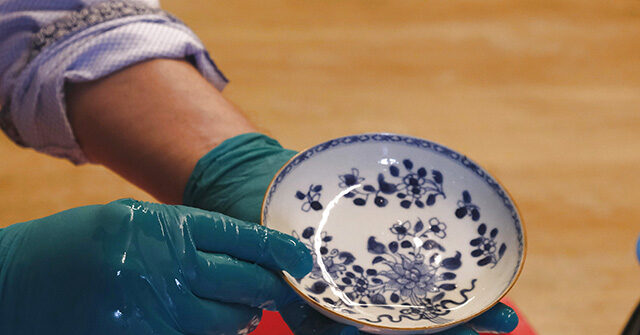
A 18th-century shipwreck off the coast of Norway has been hiding rare treasures that have fascinated archeologists.
Watch designer Espen Saastad, who runs a remotely operated vehicle (ROV) and survey company, found the shipwreck nearly 2,000 feet underwater in the Skagerrak Strait, Fox News reported Sunday, noting it was announced in June.
Director of the Norwegian Directorate for Cultural Heritage Hanna Geiran said the cargo was “unlike anything ever previously found in shipwrecks in Northern Europe” and contained Chinese porcelain, parts of chandeliers, goblets, bottles, and barrels of grain.
Photos showed stacks of dishes on the sea floor and after researchers brought them to the surface:

There were also crates found at the site that researchers will examine to determine their contents. Although the ship’s origin and destination remained a mystery, Geiran said, “Besides the Chinese porcelain, we think that the other luxury goods may have originated in England or Germany. One very interesting clue is a brick from the ship’s galley that bears the stamp of Lübecker Ratsziegelei, a brickworks in Lübeck that was in operation from the 15th century until 1772.”
Some of the artifacts are now on display at the Norwegian Maritime Museum in Oslo, and Saastad told CGTN he and his team noticed small objects on the seabed using the sonar before realizing what they were:
“This is the most amazing found, which we ever did,” Saastad said. “It’s like a time capsule on the seabed. The wreck is completely intact.”
Sven Ahrens, who is director of research at the Norwegian Maritime Museum, also expressed awe at the discovery, according to Smithsonian Magazine.
“It’s something of a dream wreck. There are just so many different things in the cargo, and at that depth the preservation is absolutely fantastic, even organic materials have survived remarkably well,” Ahrens stated.
The cold water and the fact there were no shipworms may have helped preserve the site that researchers have been thrilled to discover, CGTN reported Tuesday.
Read the full article here


