







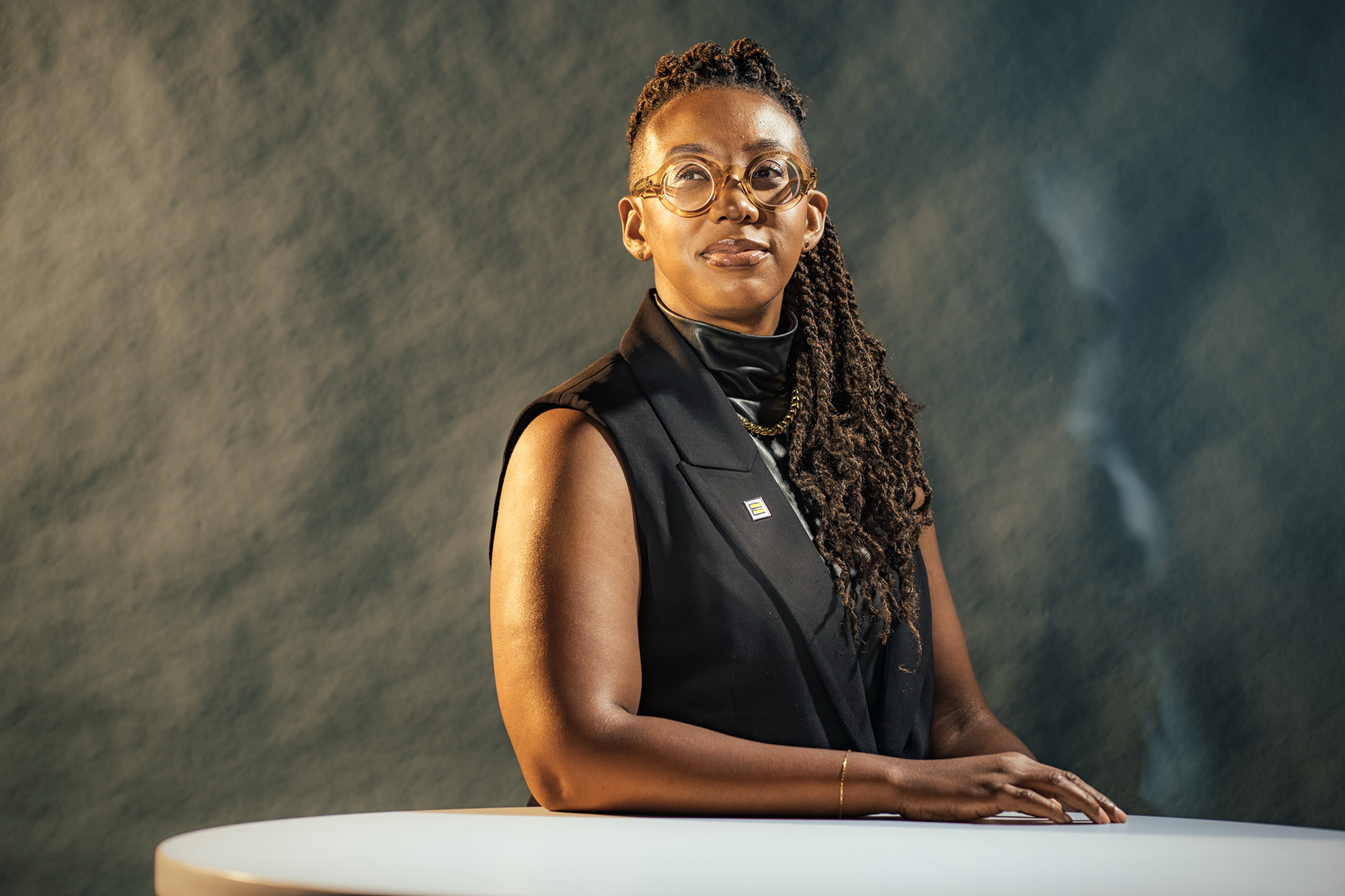
Two years after anti-transgender attacks flooded the airwaves, the country’s leading LGBTQ+ rights group is gearing up for a major response this November.
The Human Rights Campaign is pouring $15 million into the midterms, its largest investment ever into a non-presidential cycle. The group eyes eight battleground House districts currently represented by Republicans, and it anticipates kitchen-table issues — not the culture war — will ultimately decide the races.
“It doesn’t matter what party people subscribe to. It doesn’t matter where they live. Most Americans are concerned about the exact same things,” said HRC President Kelley Robinson. “The trans issues are just not on the top of any of those lists.”
Robinson, during a conversation at POLITICO’s office in Rosslyn, laid out her group’s vision for the cycle and her advice to Democratic candidates finding their feet on messaging LGBTQ+ issues. The conversation has been edited for length and clarity.
You’re focused on the flipping districts held by Reps. David Schweikert (R-Ariz.), Juan Ciscomani (R-Ariz.), David Valadao (R-Calif.), Darrell Issa (R-Calif.), Tom Barrett (R-Mich.), Mike Lawler (R-N.Y.), Ryan Mackenzie (R-Pa.) and Rob Bresnahan (R-Pa.). Why these districts?
These eight congressional districts were decided by about 150,000 votes [total]. In 2024 in these same districts, we’ve identified 1.5 million equality voters we can turn out to reduce that margin and flip these seats. In addition to the numbers, we also have a really deep bench of organizing in these districts, so we’ve got real people and volunteers who aren’t just coming in and out for a campaign, but are on the ground every day, doing the work to fight for equality.
Your post-2024 survey found that a majority of U.S. voters had seen anti-trans ads, but only 4 percent said they influenced their vote. Why do you think that is, and are you concerned about anti-trans messaging this cycle?
We know that it will come. What we really find is that when our opposition doesn’t have a message on what they can actually deliver to voters, they usually are going to pour millions and millions of dollars into these scapegoating tactics as a distraction.
These anti-trans attacks will come. They’re not effective in the way that you might believe. I’m not saying they’re not effective in driving a conversation or sometimes forming wedges. What they’re not effective at is actually shifting votes to actually change voting behavior. So what matters most is that people respond and respond clearly, and then get back to the issues that most folks care about.
Overwhelmingly, the LGBTQ+ community cares about the same stuff as everybody else: Skyrocketing healthcare premiums, corruption in our politics, safety. We’ve got to get back to talking to people about those issues, and not lose ourselves in what can be a distraction around these anti-trans ads that they want us to get weighed down by.
When Virgina Gov. Abigail Spanberger got attacked from the right on trans issues, trans healthcare and trans kids in sports, she often pivoted to her opponent’s opposition to same-sex marriage and banning LGBTQ+ housing discrimination. Is that an effective strategy for Democrats?
I think that she did a great job. Before the attacks came, she was already doing the work of building the foundation to inoculate against attacks by making clear who she was, what her priorities were going to be, and the values that she would carry through every element of governing. Then when the attacks came, I think her ad was very responsive.
I think Spanberger’s strategy looked different than Mayor John Ewing Jr. in Omaha, the same sort of scenario. He actually went out with an ad that said, “I am for fixing your potholes, and my opponent is obsessed with potties.”
There isn’t a message box that you have to use on these issues. You just have to be authentic in speaking clearly from your perspective and to your constituents, and that means that the flavor can look different from Virginia to Kentucky to New York, but the substance is the same.
You saw how California Gov. Gavin Newsom changed his message after 2024, changing his stance on transgender kids in sports. What’s your message to potential Democratic 2028ers thinking about these issues?
As a baseline, anybody that wants to be president in 2028 needs to stand for the civil rights and protections of every person in this country. And yes, that includes trans people. Look, LGBTQ+ people are a growing demographic. We’re going to be 10% of the electorate this year, 20% of the electorate by 2040. We are a powerful constituency, and we’re going to demand that folks who want to represent us represent all of us.
Were you frustrated that Newsom sat down with Charlie Kirk?
I think it was unnecessary. Look, we’re at a time where extremism is getting too much of a megaphone and a stage all across this country. What I want to see anyone who’s running for office do is lift up the stories of our community that matter and the things that we’re thinking about every day.
Spend time talking about how we’re going to end this war, what we’re going to do to address health care prices, premiums that keep increasing, what we’re going to do to make our communities safer. That’s what we need to be focusing on, not platforming extremism.
What are the stakes for queer Americans this election?
Long story short: it’s everything. This moment is so hard because it felt like we were closer to equality, in a lot of ways, than we actually were. It felt like the wind was at our back for a period of time, that we were winning Supreme Court cases, that representation in media had changed, that we had queer people sitting in the C-suite. But the reality was that our rights in this country have always been quite shallow.
This is really a reality-check election for us. It is critical that we put a check on Donald Trump’s administration. We are seeing that LGBTQ+ people are worse off in every way: less safe, less financially secure, and even less out. Half of our community is reporting that they have gone back into the closet in some area of their lives. This is a crisis that’s in front of us.
The good news is that if we perform and do what we’ve got to do, I do think that we can shift the momentum back in our favor. But if we don’t, the level of devastation — the rollbacks to our rights and protections — it’s something that will take us generations to recover from.
Read the full article here


