




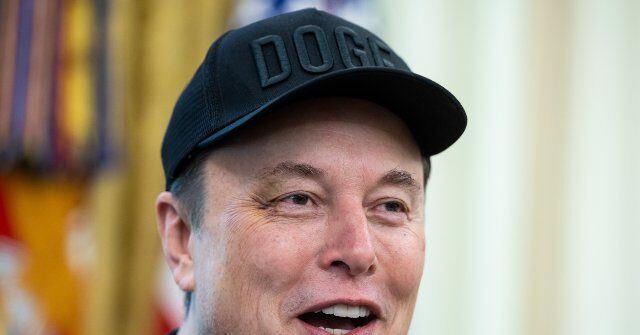
World’s richest man Elon Musk now claims he became too consumed by politics during his alliance with President Donald Trump and his brief stint running DOGE.
The Economist reports that Elon Musk has publicly admitted he became overly involved in politics during his volatile partnership with Donald Trump, acknowledging in a new interview that he should have focused on his business ventures instead. The billionaire made these admissions during a wide-ranging conversation in which he also shared his predictions about AI, political conflicts, and the future of human work.
“I got carried away, frankly,” Musk said of his relationship with Trump, whom he supported with $200 million in financial backing during the 2024 election. Musk subsequently served as head of the Department of Government Efficiency (DOGE). Musk then bitterly feuded with the Trump Administration, a split that has only been repaired to some degree.

The Tesla owner did not elaborate extensively on his statement on politics but appeared to recognize the impact of his involvement with Washington power structures. This was not the first time Musk expressed regret about his political engagement. In December, during a podcast with Katie Miller, wife of Trump White House adviser Stephen Miller, he suggested that his aggressive approach to restructuring the federal government had been only partially successful and that he probably would not repeat the experience.
“I think instead of doing DOGE, I would have basically worked on my companies,” Musk said at that time.
Despite these admissions, the Economist interview revealed that Musk still appeared to enjoy the attention his political involvement generated and the influence he believed he wielded. The publication referred to him as a modern-day Cassandra, at least in his own estimation. “People don’t realize that what I’m saying will come to pass,” he stated during the conversation.
The 90-minute interview was recorded at a Tesla factory in Texas for the Economist’s video platform The Insider. It marked Musk’s first major interview since SpaceX floated on the New York stock exchange in June, briefly making him the world’s first trillionaire. His personal wealth temporarily exceeded $1.25 trillion but has massively declined as SpaceX and Tesla stocks have dropped sharply.
On AI, Musk shared dramatic predictions about the technology’s impact on human society. He said he moved from “exhilaration to terror” in a single day when considering AI’s potential, believing it will ultimately make human work “optional.” According to Musk, AI systems and robots will eventually handle most digital and physical jobs. He plans to merge his AI venture with SpaceX to develop systems capable of performing cognitive tasks like software programming, while Tesla manufactures humanoid robots.
According to Musk, within five years, AI intelligence systems may surpass the sum of all human intelligence. Within ten years, he suggested robots in the workplace will help create an era of such “amazing abundance” that money will become meaningless.

Musk’s political views formed perhaps the most contentious portion of the interview. He claimed the UK will become engulfed in civil war within 20 years, despite not having visited the country for years. Immigration and race issues in the UK have become a recent obsession for him.
When asked if he was anti-Muslim, Musk deflected the question and attacked the interviewer. “I’m against rape and murder. I’m against the imposition of rules and laws that are contrary to what we’ve come to accept in the west,” he said. “It’s a crying shame that traditional media, like you, don’t recognize this.”
He characterized media portrayals of Europe’s far right as “false, misleading and nonsense,” arguing that these movements consist of “normal people” seeking safe cities, secure borders and sensible spending.
The Economist acknowledged Musk’s divisive nature in an analysis accompanying the interview. “His political views, disseminated to his 240 million followers on X, strike many as plain-speaking and strike many more, including The Economist, as plainly bigoted,” the publication wrote. However, it also noted his technological achievements and influence on AI development.
Regarding economic policy, Musk predicted that after AI destroys jobs, large-scale wealth redistribution may be necessary to create “universal high income” for humans. He said he would be willing to pay “trillions in tax,” but also argued that money will become irrelevant within ten years. In such a scenario, he suggested governments should “issue people checks” because deflation will become a bigger problem than inflation amid an infinite supply of goods and services produced by machines.
Read more at the Economist here.
Lucas Nolan is a reporter for Breitbart News covering issues of AI, free speech, and online censorship.
Read the full article here


