







The Weekly Wrap: JD Vance Stages a Coop
Welcome back to Friday! This is our weekly opportunity to be kind and rewind the news of the last seven days. We’re writing this from a decidedly terrestrial compound while the world finally gets its chance to buy shares of a company whose goal is to lead humanity into its interplanetary future.
Lads and lasses: we’re introducing a new feature this week! “The Score” will give you a rundown of the weekly moves in stocks, bonds, commodities, and a few selected sectors that tell us what kind of economy our financial markets think we’re living in.
Let’s go.
I Fall to Peaces: Market Pins Hopes on Iran Deal Again
We get it. Sometimes it feels like we don’t have a stock market or an oil market. It’s just a market for Iran peace. When the prospects for peace look promising, equities rally and oil slips. When the missiles or threatening Truth Social posts start flying, stocks tank and oil rises. Rinse and repeat for three and a half months.
This time, however, it looks like it’s different. There, we said it. The most dangerous words in finance. This time it’s different. Many of the details have been worked out, we’re told. They include plans to open the Strait of Hormuz, stop anything that might lead to a nuclear-armed Iran, withdraw American forces, suspend sanctions, and generally stop shooting at each other. U.S. media outlets are saying there could be a deal signed in Switzerland as soon as Sunday, but “senior officials” say that’s totally speculative.
One possible sticking point: Iran wants hundreds of billions of dollars in reconstruction and its financial assets unfrozen. The U.S. will be reluctant to provide funds to Iran without first seeing progress on security issues—and Iran will not want to wait.
Another: the pro-war caucuses in the U.S. and Iran still are not ready for the shooting to stop. Each thinks that its country can gain an advantage if it just keeps up the fighting a little longer. As the American sage Patsy Cline once asked, after all that has gone on, “How can I be just your friend?”
Ships in the Night: Trump’s Secret Oil Missions
It’s been a mystery. Oil analysts told us that if the Strait of Hormuz remained closed for months, oil prices would climb toward $200 a barrel. Instead, they’ve mostly hovered around $100 since the war began.
Until this week, the go-to explanation from analysts has been that China has eschewed imports and instead relied on its vast strategic petroleum hoard, freeing up supply for the rest of the world. One reason to be skeptical of this explanation is that China’s inscrutability makes it too ready an explanation for any mystery. Dollar moves inexplicably? China’s central bank is manipulating. Treasury yields rise? China is dumping bonds. Art auction prices getting ridiculous? Chinese buyers! Every market riddle has a Chinese solution available.
In this picture obtained from Iran’s ISNA news agency on June 8, 2026, residents take a dip as cargo and commercial vessels lie at anchor in the Strait of Hormuz off Bandar Abbas. (Amirhossein KHORGOOEI/ISNA/AFP via Getty Images)
But then, on Wednesday, President Donald Trump, live on television from the Oval Office, announced that the United States has sneaked 100 million barrels of oil out of the Persian Gulf. Later, he took to Truth Social to explain further.
“Last month, I directed our Great U.S. Military to execute a secret mission to support Oil Tankers and other Commercial Ships through the Strait of Hormuz. Today, I am pleased to announce that this effort has resulted in more than 100 MILLION Barrels of Oil making its way through the Strait, and into the Open Market. More than 200 Commercial Ships have safely traveled through the Strait. This wildly successful effort is because the UNITED STATES of AMERICA CONTROLS the Strait of Hormuz — NOT Iran. Their military is defeated, and their economy is lost. It’s over for Iran!” President Trump said.
The Score
Stocks +0.1%, King Dollar -0.2%, 10Y Treasury 4.55% (0 bps), 3M Treasury 3.79% (+1 bp), Investment Grade Bonds: +0.8%, High Yield Bonds +0.6%, Gold -5.7%, Copper +1.9%, Bitcoin +4.3%, Oil -3.1%, Gasoline -2.7%, the Future +1.3%, Factories +0.7%, War +2.9%, AI +2.3%.
As we mentioned up top, The Score is our weekly look at the market’s assessment of our world. We’re not just looking at stocks and bonds but taking a broader look at assets that matter and a few indexes that track the particular interests of BBD readers. We may add new elements as seems appropriate (or drop them if they aren’t relevant anymore). If you have a favorite index or asset we should be watching, let us know!
Pardon us while we explain the boring part. The figures in the Score reflect performance from the close on the previous Friday through the close on the most recent Thursday, unless otherwise noted. We use the S&P 500 for Stocks and the ICE U.S. Dollar Index (DXY) for King Dollar. IG Bonds are represented by the iShares iBoxx $ Investment Grade Corporate Bond ETF (LQD), and HY Bonds by the iShares iBoxx $ High Yield Corporate Bond ETF (HYG). Gold, copper, and oil reflect COMEX gold futures, COMEX copper futures, and NYMEX WTI crude futures, respectively. The Future is the ARK Innovation ETF (ARKK), Factories is the iShares U.S. Manufacturing ETF (MADE), War is the iShares U.S. Aerospace & Defense ETF (ITA), and AI is the Global X Artificial Intelligence & Technology ETF (AIQ). National average gasoline prices come from AAA. The 10-year and 3-month Treasury yields come from Federal Reserve Economic Data.
Phew! That was a mouthful. We’re not going to repeat this explanation every week. So if you feel like you desperately need to know what each element of The Score represents, bookmark this so you can peruse it at your pleasure.
JD Vance Goes Long Eggs
J.D. Vance had a chicken coop installed at the Naval Observatory and brought in a dozen baby chicks to live in a henhouse designed to look like the Victorian residence of the second family.
The coop was custom-built and donated by Carolina Coops, a North Carolina company with a big social media following. The Vances have become tradlife influencers.
To be honest, it’s a bit late to get into the hen game. The price of a dozen eggs topped out at $6.27 back in March 2025. It has since fallen to $2.19. With feed prices rising, there’s not much of an arbitrage opportunity left in the egg trade.
Inflation Improved
It’s no fun to see the consumer price index come in with a year-over-year number that starts with a four. That’s not what you want to see if you are rooting for an administration elected in part because the prior president oversaw the worst inflation in 40 years.
This month’s CPI report did contain some good news. The monthly rate of price rises ticked down from 0.6 percent to 0.5 percent. Core slowed from 0.4 percent to 0.2 percent. The breadth of inflation contracted, meaning fewer items went up in price in May than April. Most of the inflation is still confined to energy and services that directly reflect energy prices, like airfare. Core goods prices fell. Both median and trimmed mean CPI fell on a monthly basis.
And people noticed. According to the University of Michigan survey of consumers, year-ahead inflation expectations declined to 4.6 percent in early June from May’s 4.8 percent. Long-run inflation expectations dropped to 3.4 percent from 3.9 percent.
Give Him Some Space
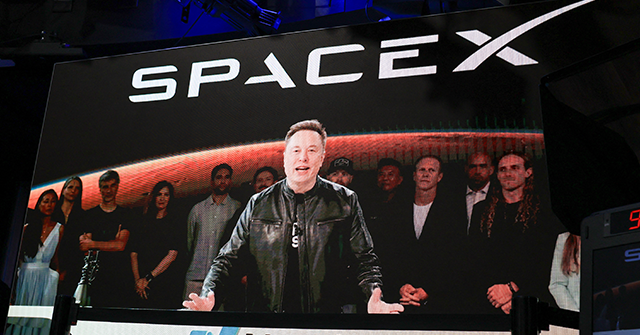
SpaceX shares opened at $150 on Friday, 11 percent above the IPO price of $135. As of midday Friday, they were trading above $160. The IPO gave the company around a $1.76 trillion market cap. Today’s price appreciation raised this to around $2.1 trillion. The company raised $75 billion by selling 555,555,555 shares.
Keep these numbers in mind: 135, 1.76, 2.1, and 555.
Now for the spooky numbers magic. NASA’s Space Shuttle fleet flew 135 missions over 30 years. The final shuttle mission was STS-135, Atlantis’s last flight, which ended the shuttle era in 2011. 555 is exactly at the wavelength — in nanometers — where the human eye sees light most brightly. It takes light 17.6 minutes to reach Mars from Earth right now, or about one minute per hundred billion of SpaceX’s IPO valuation. If you laid 2.1 trillion one-dollar bills end to end, they would stretch about 200 million miles into space. That happens to be the distance between Earth and Mars on Friday, June 12.
BBD History: Reagan Goes to the Wall
On June 12, 1987, Ronald Reagan stood at the Brandenburg Gate and called for the end of the captivity of the people of the eastern half of Germany and, by extension, all of the people trapped by communism.
“Mr. Gorbachev, tear down this wall!” Reagan implored.
The line endures because it exposed the basic weakness of communism. Free societies do not have to imprison their own people. Command economies eventually reveal themselves by what they must forbid: exit, prices, property, and even human flourishing.

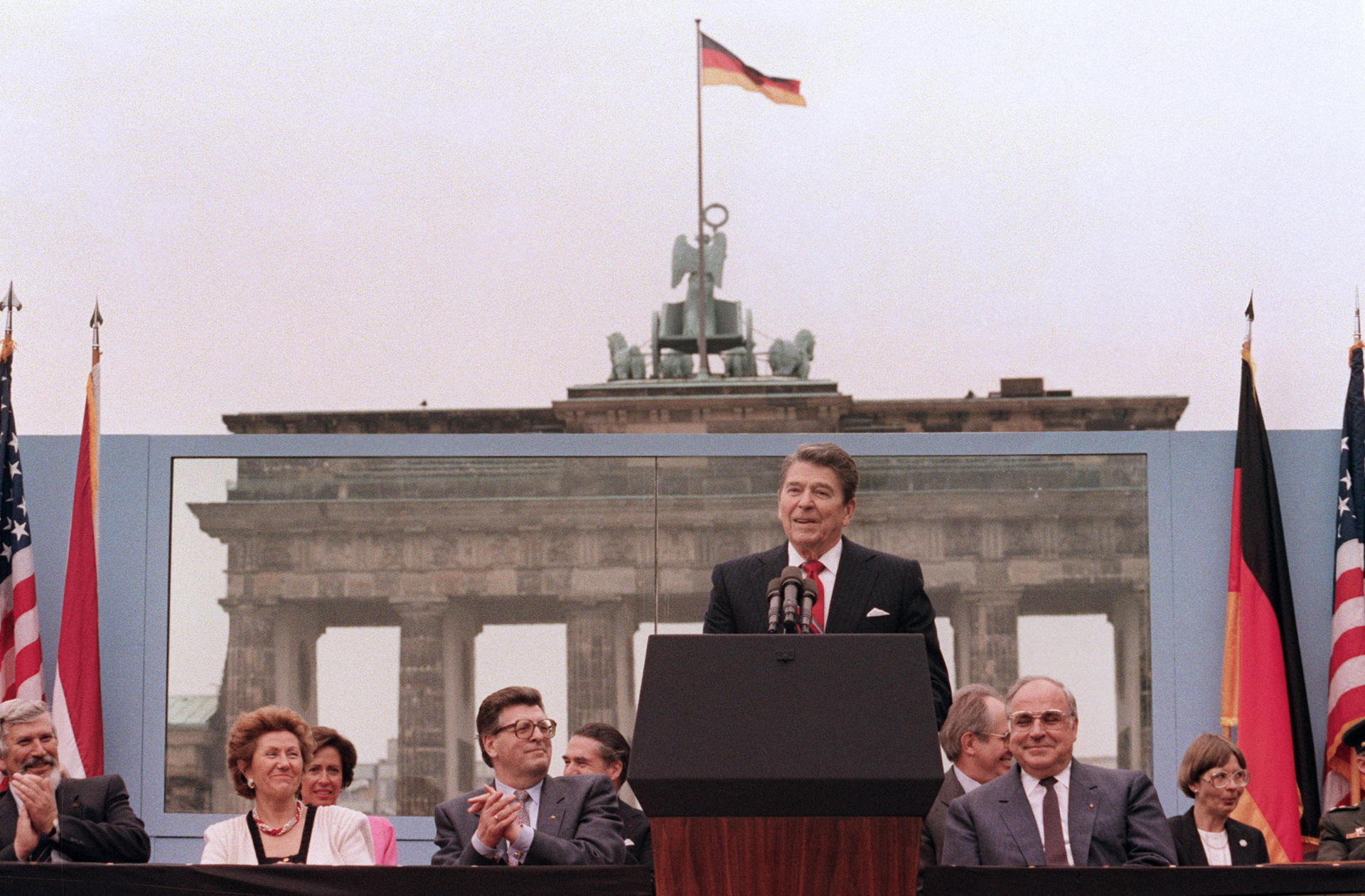
President Ronald Reagan, commemorating the 750th anniversary of Berlin, gave an address on June 12, 1987, to the people of West Berlin at the base of the Brandenburg Gate, near the Berlin wall. Due to the amplification system used, the President’s words imploring Soviet leader Mikhail Gorbachev to “Tear down this wall!” could be heard on the Eastern communist-controlled side of the wall. (MIKE SARGENT/AFP via Getty Images)
Read the full article here


