


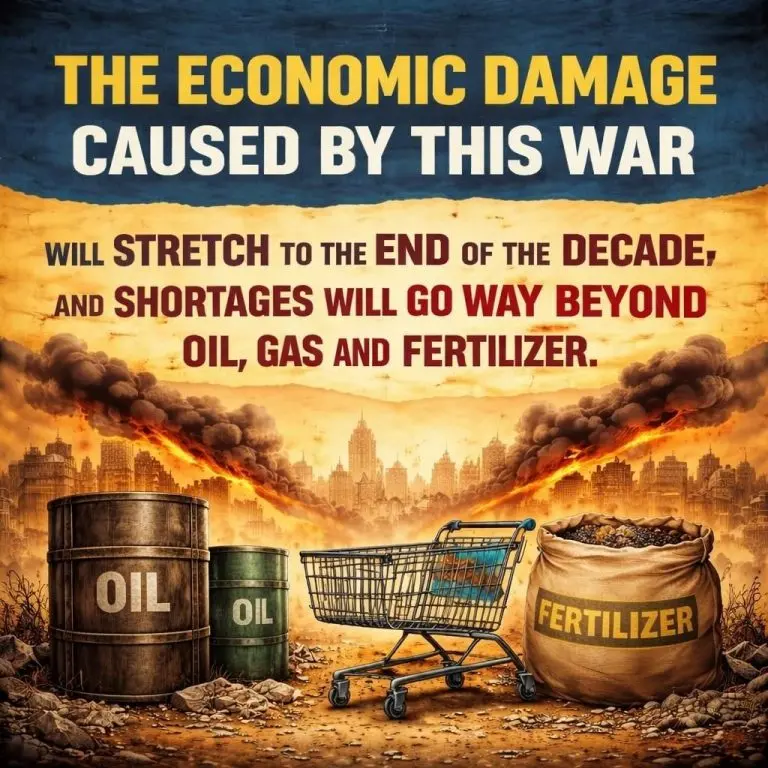
Even if the Strait of Hormuz opened tomorrow, and that is certainly not going to happen, we are being warned that the economic impact of this war will be felt all the way through the end of this decade. A lot of energy infrastructure has already been destroyed during this war, and it will take years to rebuild it. And the crop losses that we will experience in 2026 due to a lack of fertilizer will be felt long into 2027. But the shortages that we are facing go way beyond just oil, natural gas and fertilizer. As you will see below, we are also facing unprecedented shortages of pharmaceutical drugs, plastics and other vitally important goods. A global nightmare has already begun, and if we don’t get the Strait of Hormuz opened soon it will get a whole lot worse.
Since the war started, commercial traffic through the Strait of Hormuz has fallen by 90 to 95 percent…
Daily transits through the Strait of Hormuz have fallen some 90% to 95% since the conflict began, according to shipping intelligence firm Kpler, and hundreds of tankers are trapped in the Persian Gulf.
Iran has allowed a limited number of vessels to pass through the Strait, but other than that commercial traffic has essentially been paralyzed.
I have written a lot about how this is affecting the availability of oil, natural gas and fertilizer. Here in the United States, gasoline prices have been soaring and diesel prices have been going absolutely nuts…
From March 2-16, 2026, the average nationwide price of U.S. regular gasoline rose from US$3.01 to $3.96 per gallon, while diesel fuel rose from $3.89 to $5.37. Diesel prices matter to consumer costs because diesel engines power trucks, farm machines, construction equipment, fishing vessels and many of the vehicles that carry domestic freight. When items become more expensive to harvest, build and ship, diesel costs spread quickly into grocery, household and building material prices.
But this supply shock has not just been limited to oil, natural gas and fertilizer.
The CEO of Dow is warning that a global supply crisis is hitting a very wide range of industries, and he is projecting that it could take 250 to 275 days to unwind this mess once the Strait of Hormuz is opened again…
Petrochemical price spikes and shortages from the Iran war likely will cause inflationary effects at least through the end of the year on construction materials, consumer goods, the automative and aerospace industries, and much more, the CEO of chemical manufacturing giant Dow said.
While much of the global supply-shock focus is on oil, natural gas, fertilizers, and even helium for semiconductors, almost 20% of global petrochemical capacity is blocked from the effective closure of the Strait of Hormuz chokepoint by Iran, said Dow chair and CEO Jim Fitterling.
“The die is being cast for the rest of the year for what’s going to happen in the markets,” Fitterling said at the CERAWeek by S&P Global conference in Houston. “It’s like the unwind we saw on supply chains during COVID.
“You could be in the 250- to 275-day [range]. This is not going to be an instantaneous rewind.”
Of course all of the economic infrastructure that has been destroyed on both sides will not be rebuilt in 250 to 275 days.
Sadly, the truth is that it will take years to fully rebuild all of that infrastructure even if the war ended immediately.
So ultimately I agree with those that are warning that the economic impact of this war “will stretch until the end of the decade”…
The closure of the Strait of Hormuz threatens roughly a fifth of global oil supply and the liquefied natural gas trade. But it is not only the price at the petrol pump that will hit your pocket — the disruption to shipping may cause shortages of everything from food and beer to medicine and MRIs.
Even if the strait reopened tomorrow, the damage to energy facilities from missile strikes will take years to repair. In the uncertainty over how the war will end, one thing is certain: the economic effects will stretch until the end of the decade.
Most people in the western world have no idea how this war could potentially affect their daily lives.
At this stage, we are being warned that we could soon witness very serious shortages of some pharmaceutical drugs…
Rising energy prices will affect the pharmaceutical industry, where energy accounts for as much as a quarter of the cost of manufacturing the raw ingredients of drugs. But the flow of crude oil by-products, such as the petrochemicals used to create nearly 90 per cent of those ingredients, is also affected by the strait’s closure.
India, known as the pharmacy of the world, is reliant on Qatar for about 40 per cent of the crude oil imports used to create such petrochemicals.
Generic medicines including antibiotics, blood pressure medication, paracetamol and diabetes drugs such as metformin are at the greatest potential risk. Drugs requiring refrigeration during transit, including most vaccines and cancer medications, typically flow through Dubai and Doha airports, so airspace closures compound the crisis.
This isn’t something that will start happening many months from now.
In fact, it is being reported that the UK is just “a few weeks away” from experiencing drug shortages…
Britain is “a few weeks away” from medicine shortages ranging from painkillers to cancer treatment if the Iran war continues, according to experts, while drug prices could also rise.
Most people out there still seem to think that conditions will soon return to normal.
In a way, that is a good thing because it is keeping people calm.
But once reality starts setting in, there will be panic.
We will also soon witness a global supply crunch for various types of plastic products…
Another product refined from crude oil is naphtha, often called the mother of plastics. It is primarily transported to Asia and used to create ethylene, propylene and benzene, which play a role in the manufacture of plastic bags, bottles, food containers, IV bags, synthetic fibres such as polyester and even medicines such as antidepressants and anti-epileptics.
Roughly two thirds of Asia’s naphtha requirements originate in the Gulf.
How many of the products that you regularly purchase come wrapped in plastic?
Just think about that for a moment.
What is going to happen when manufacturers are not able to get the plastic that they need to wrap those products?
If this war persists, we are going to see thousands upon thousands of supply chain breakdowns.
And the Houthis could make this crisis even worse by shutting down the Bab al-Mandab Strait…
The Houthis control most of Yemen’s Red Sea coast, including the major port of Hodeidah. They have a range of weapons – including drones and anti-ship missiles – that can cause severe damage and even sink merchant ships.
Shipping has to pass through the Bab al-Mandab Strait – which translates as the Gate of Tears – at the southern end of the Red Sea. Just 29 kilometers (18 miles) across at its narrowest point, the navigational challenges would make huge container vessels particularly vulnerable to attack.
On Friday, Mohammed Mansour, deputy Information Minister in the Houthi government, told CNN that closing the Bab al-Mandab Strait “is a viable option, and the consequences will be borne by the American and Israeli aggressors.”
Nearly 15 percent of all global maritime trade travels through the Bab al-Mandab Strait.
If the Houthis were inclined to do so, they could also shut down the Suez Canal.
We are potentially facing a disruption to global trade that has no parallel in history.
So let us hope that this war ends soon.
If it doesn’t, the economic pain that our planet will experience will be absolutely unbearable.
Read the full article here