


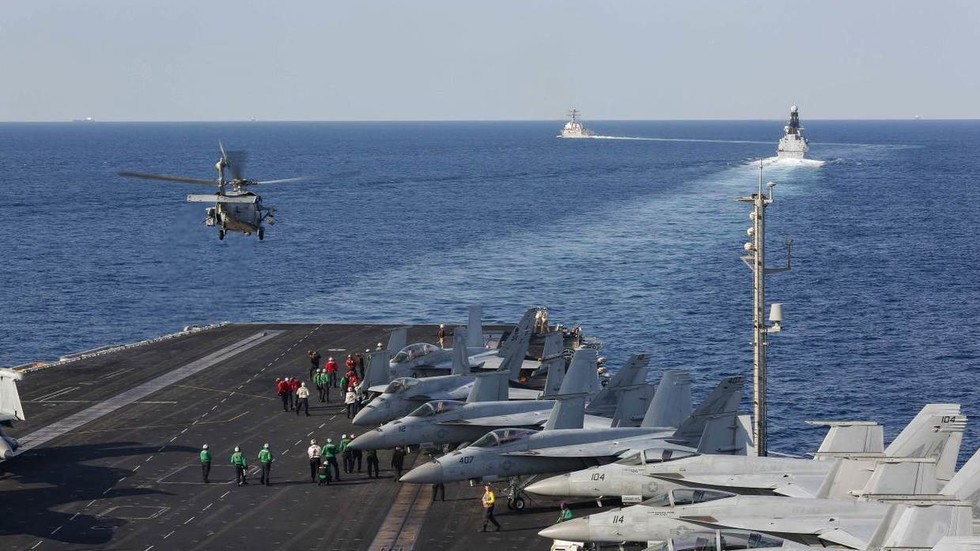
The war launched by the United States and Israel against Iran has now entered its third week and has already become one of the most significant geopolitical events of this decade. Yet the broader consequences of this conflict – the erosion of international law by a permanent member of the UN Security Council, a growing rift between the US and Western Europe, and the destabilization of the entire Middle East – remain subjects mainly for professional observers.
For the rest of the world, the most immediate impact is far simpler: the disruption of oil shipments through the Strait of Hormuz.
Iran’s Islamic Revolutionary Guard Corps has effectively imposed a blockade on one of the most critical chokepoints in global energy trade. The strait is a vital artery through which a large share of the world’s oil exports pass. Even before the latest escalation, prices were rising due to the regional conflict. Now the possibility that Iranian drones might strike tankers has pushed markets into deeper uncertainty.
Some analysts are already warning that oil prices could nearly double if the disruption continues. That scenario would almost certainly trigger a global economic recession. Despite the efforts of the US government in recent years, the global economy remains interconnected. When shipping through the Persian Gulf is threatened, the consequences are felt everywhere.
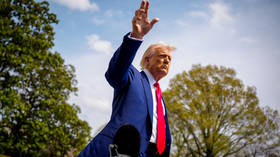
It is in this context that US President Donald Trump recently made a widely publicized statement calling on other countries to help ensure that the Strait of Hormuz remains open. His message was directed particularly at countries heavily dependent on Gulf energy supplies.
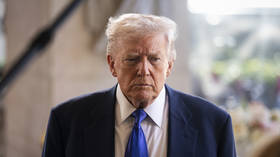
Many observers, both in Russia and elsewhere, immediately interpreted the appeal as a sign of weakness. They argued that the US leader, despite boasting of his military’s “resounding success” against Iran, was implicitly admitting that Washington cannot resolve the situation alone. By calling for international assistance, critics say, Trump is attempting to build a coalition to deal with the consequences of his own decisions.
Others saw something more deliberate. Trump’s remarks could be interpreted as an attempt to draw countries with little direct connection to the conflict into the unfolding confrontation with Iran – such as Japan, South Korea, and even China. This kind of development would dramatically expand the scope of the crisis.
Reports suggest that Trump’s appeal has already made the Japanese government uneasy. Tokyo has traditionally supported Washington in most matters, but it is far less enthusiastic about commitments that might involve real costs or military risks.
Even some of the most loyal Western partners have shown little appetite for involvement. Norway, for example, quickly signaled that it had no intention of sending naval forces to confront Iranian drones in the Persian Gulf.
This reluctance should not surprise anyone. Norway is one of the world’s major energy producers: roughly one-fifth of its economy is linked to oil and gas revenues. For Oslo, rising energy prices are hardly an unwelcome development. More broadly, other energy-producing or energy-intensive economies have their own reasons to approach the crisis cautiously.
In reality, Trump’s appeal to other countries is both simpler and more complex than it appears.
For the current US administration, and especially for Trump himself, there is no contradiction between projecting grandeur and delegating responsibility to others. The American president belongs to a political tradition that sees no problem in saying, in effect: “We have stirred things up; now others can help manage the consequences.”
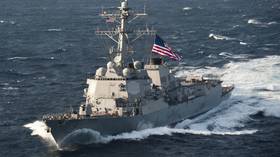
From Washington’s perspective, even the discussion of whether countries such as Japan or South Korea might deploy ships to the Persian Gulf is itself proof of American global importance. It reinforces the image of the US as the central actor in world politics, whose decisions inevitably force others to react.
In other words, the mere fact that the consequences of American policy become a concern for the entire international community is treated as confirmation of US leadership.
At the same time, Trump is behaving exactly as one would expect from him. His political style is built around constant bargaining. Inviting other countries to participate in securing the Strait of Hormuz does not necessarily signal weakness. Rather, it reflects a transactional approach to international politics in which symbolic gestures carry little weight.
Here we reach a deeper issue.
Modern international politics operates as much through symbols as through hard power. States seek recognition of their strength, and they cultivate an image of leadership that encourages admiration and respect from others. But this symbolic dimension inevitably creates expectations.
The more a country presents itself as the indispensable power in global affairs, the more the rest of the world begins to expect it to act accordingly.
This creates a contradiction. A state may demand admiration for its capabilities, yet from a practical standpoint it may have little need for allies at all. That tension becomes particularly visible when a powerful country combines self-confidence with growing uncertainty about the future, a condition that increasingly characterizes the United States.
In reality, Washington does not require NATO allies in order to achieve its objectives through force. Nor does it need support from the broader international community to pursue its strategic goals. The US, like Russia and China, possesses a nuclear arsenal that fundamentally changes the nature of international politics.
This leads to a rarely acknowledged truth: genuine alliances exist only between relatively equal powers. When one participant is vastly stronger than the others, the relationship is no longer an alliance in the classical sense. It becomes a form of cooperation.
Such cooperation can take different forms. It may be relatively respectful, as Russia’s relations with several post-Soviet states sometimes are. Or it may be hierarchical, as in the case of the US and many of its Western partners. But in neither case does it resemble the balanced alliances that characterized earlier eras.
In today’s world, there are simply no states whose survival depends on a traditional alliance with another power. The US, Russia and China all possess strategic capabilities that make a classical war between them politically unthinkable.
Nevertheless, these powers continue to generate expectations among other countries.
China, for example, has significantly expanded its economic and political presence around the world over the past two decades. As a result, many states now assume that Beijing should intervene on their behalf when crises arise. Critics ask why China did not save the Venezuelan government from pressure or why it does not break the economic blockade of Cuba.
These expectations are unrealistic. States ultimately act in their own interests.
The same dynamic now confronts the US. Over the past several decades Washington has constructed an elaborate system of expectations around its global leadership. Yet today, through its own actions, it is gradually dismantling that system.
Paradoxically, this may not be a bad development.
A world in which international politics is guided more by concrete actions than by symbolic myths may ultimately prove more stable. The bubble of expectations surrounding American leadership is slowly deflating.
What emerges in its place may be something far simpler: a return to normal international politics, where states pursue their interests openly and illusions about global guardianship fade away.
This article was first published by Vzglyad newspaper and translated and edited by the RT team.
Read the full article here