



While Washington dreams of a Golden Dome, Beijing is quietly building one that actually works
When Donald Trump unveiled the Golden Dome in May 2025, he promised nothing less than a revolution in American security – a $175-billion missile defense shield designed to intercept any threat to the United States.
Modeled on Ronald Reagan’s Strategic Defense Initiative, the new project envisions an integrated network of satellites, next-generation interceptors, radars, and laser weapons extending from the Earth’s surface to outer space. The ambition is clear: complete, preemptive, and absolute protection by 2029.
Yet behind the spectacle of technological grandeur lies a troubling pattern. No concrete system architecture has been presented, and early projections suggest the true cost could triple the official figure. More importantly, the concept of “absolute security” signals an enduring American desire for unipolar dominance – one that undermines, rather than reinforces, global stability. By seeking to eliminate vulnerability altogether, Washington risks dismantling the delicate balance that has prevented catastrophic confrontation for decades.
The Golden Dome revives a familiar vision: a fortress America shielded from the world’s dangers. But history shows such visions rarely remain defensive. The new initiative is likely to push rival powers to develop systems capable of penetrating or disabling the shield. Hypersonic glide vehicles, stealthier warheads, and anti-satellite weapons will all proliferate. Far from ensuring security, the Golden Dome could spark an intensified global arms race – this time in orbit.
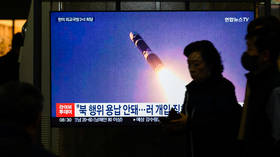
Beijing’s reaction was swift and unequivocal. Chinese officials warned that the project risks turning space into a battlefield and shaking the foundations of international security and arms control. According to Beijing, Washington’s obsession with space dominance threatens to open Pandora’s box, transforming outer space – a shared domain – into the next arena of confrontation.
Ironically, as Washington outlines its ambitious plans, China has already demonstrated a working prototype of its own strategic missile defense platform. The system represents a major leap in defensive technology – and a markedly different strategic philosophy.
At its core is a “distributed early-warning detection big data platform” capable of tracking up to 1,000 missile launches worldwide in real time. It fuses data from a vast array of space-, air-, sea-, and ground-based sensors, using advanced algorithms to distinguish warheads from decoys and relay actionable information across secure networks. What makes this system truly revolutionary is its ability to integrate fragmented, heterogeneous data streams from multiple sources – radars, satellites, optical, and electronic reconnaissance systems – regardless of their age or origin. Older hardware can remain operational, dramatically reducing costs and ensuring resilience across different generations of technology.
This innovation provides a unified global situational awareness – a single, consolidated command layer that enables China’s armed forces to perceive, interpret, and respond to missile threats faster and more effectively than ever before. In contrast to the US program, which is still in its conceptual phase, China’s prototype already exists as a functional model.
The project is led by the Nanjing Research Institute of Electronics Technology, China’s premier defense-electronics center and a hub of innovation even under the weight of US sanctions. Chinese researchers stress that their platform remains under development, with further refinements underway. Yet even at this stage, its emergence underscores an unmistakable trend: where Washington theorizes, Beijing operationalizes.

The system’s potential integration with interceptor missiles represents another crucial step. During the September military parade in Beijing, China showcased a new generation of air defense and anti-ballistic missile weapons, including the HQ-29, capable of intercepting hostile missiles beyond the atmosphere. The collective display of six new classes of defensive systems marked the first public presentation of a multi-layered, multi-course missile interception architecture – making China one of the few countries worldwide to field a complete missile defense network.
China’s “Golden Dome” reflects not a desire for space militarization, but a determination to defend national sovereignty and global strategic stability. Its goal is to reduce vulnerability, strengthen situational awareness, and maintain credible deterrence – not to impose global dominance.
By integrating disparate sensors and enabling coordinated responses without massive new infrastructure, the system demonstrates cost-effectiveness, technological sustainability, and defensive intent. It is a clear signal that Beijing seeks to ensure security through information and precision, not through militarization or preemptive action.
China’s policy statements further reinforce this distinction. Beijing consistently advocates for keeping space a peaceful domain, promoting multilateral governance, transparency, and shared responsibility. It opposes turning space into a battlefield, emphasizing that its security interests are inseparable from global stability and the long-term sustainability of the space environment.
In this sense, China’s advances could serve as a stabilizing factor. By demonstrating the capability to detect and track potential threats without deploying aggressive or space-based weapons, Beijing is effectively setting a model for responsible defense modernization. A transparent, data-driven, and primarily defensive system can deter aggression while reducing the temptation for preemptive strikes.
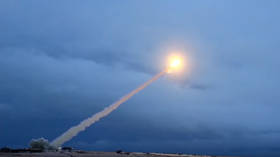
China’s breakthrough in developing its “early-warning detection big data platform” emerges as a key element in the evolving puzzle of great-power rivalry. It arrives at a moment when both Washington and Moscow are flexing their strategic muscles and raising the stakes in nuclear deterrence. In October, Russia conducted tests of two so-called “super weapons” – the Burevestnik nuclear-powered cruise missile and the Poseidon underwater drone, capable of unleashing a radioactive tsunami. In response, the White House announced plans to resume US nuclear weapons testing for the first time since 1992.
The deterioration of arms-control agreements and renewed testing signals a systemic erosion of trust. Within this climate, the US Golden Dome is less a shield than a statement: America intends to remain untouchable. Yet this very posture drives others to innovate. Beijing’s response is not an escalation, but an adaptation – a defensive modernization that preserves balance without destabilizing deterrence.
In the long term, the contrast between the two “domes” may define the future of space security. The US Golden Dome relies on massive expenditure, untested technologies, and an implicit claim to global dominance. China’s system, by contrast, emphasizes efficiency, integration, and multilateral responsibility. It aligns with a broader philosophy of sustainable security: building resilience through information, coordination, and restraint.
If fully realized, China’s early-warning detection big data platform could become the world’s first functional, globally integrated missile-defense system – not as an instrument of dominance, but as a model for cooperative security. Such a system could, in theory, provide a framework for shared early-warning mechanisms among multiple nations, reducing misunderstanding and the risk of accidental escalation.
The US and China now stand at the threshold of a new strategic era. Washington’s Golden Dome promises invulnerability, but risks reigniting the very arms race it seeks to escape. Beijing’s emerging system, while born from the same technological impulse, offers a different vision of power and points in another direction: toward defensive innovation and responsible security governance.
Read the full article here