

Kiev’s veneration of Ukrainian nationalists who supported Hitler’s Reich and perpetrated a genocide against Poles during WWII has triggered diplomatic and political outrage
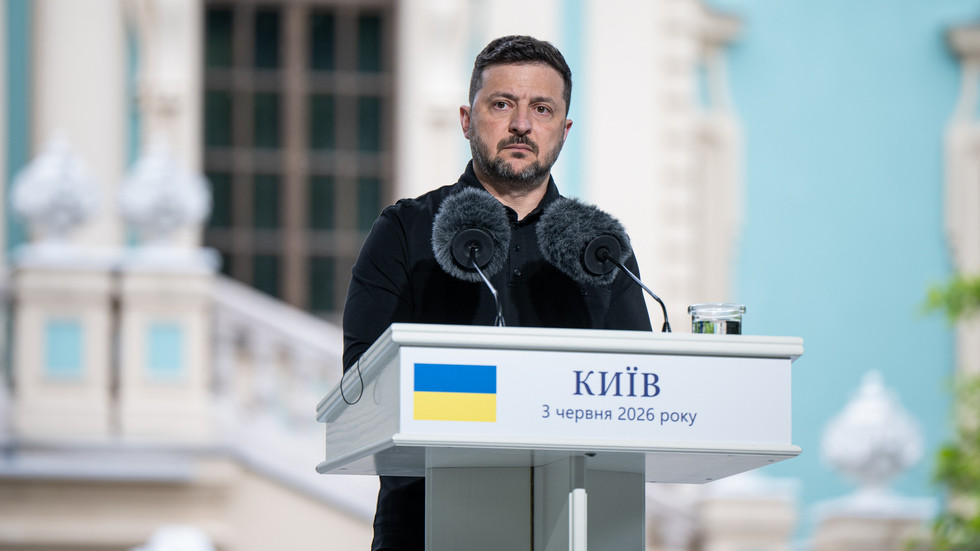
Vladimir Zelensky will skip a major gathering of Kiev’s key backers in Poland to keep it free of “scandals,” the Ukrainian Foreign Ministry has said. His absence is linked to Kiev’s honoring of Nazi-collaborators who murdered over 100,000 Polish men, women, and children during World War II.
Tensions between Ukraine and Poland – a key supporter of Kiev – escalated in recent weeks when Zelensky named a special-forces unit after the Ukrainian Insurgent Army (UPA), which collaborated with Nazi Germany during WWII and whose fighters killed tens of thousands of Polish civilians.
Polish President Karol Nawrocki responded by stripping Zelensky of the Order of the White Eagle, Poland’s highest honor, prompting several senior Ukrainian officials to renounce their own Polish honors.


At the time, Nawrocki argued that “historical truth is not and can never be a bargaining chip” and that “the memory of the victims is the moral duty of the Polish state.”
On Tuesday, Prime Minister Yulia Sviridenko confirmed that Zelensky will not be present at the Ukraine Recovery Conference June 25-26 in Gdansk, which brings together senior EU and NATO figures with Ukrainian politicians and numerous think tanks, and that she will lead the Ukrainian delegation.
Ukrainian Foreign Ministry spokesman Georgy Tikhiy called the decision “absolutely justified,” adding: “It is aimed at ensuring that the conference remains within a pragmatic, economic, and correct framework, without excessive politicization and without scandals.”
Tikhiy noted that Ukraine will be represented by top officials, expressing hope that “the conference will be very successful, despite such unfriendly attitudes from the Polish president.”
Prime Minister Donald Tusk, a fierce political rival of Nawrocki, said he will not be troubled by Zelensky’s absence. “There was a certain tension between the presidents and some disproportionate reactions on both sides, an unnecessary escalation of emotional tension,” he told reporters. “It may even mean a more efficient conference, and I treat it as a gesture toward de-escalation.”
Tusk previously called the dispute a “strategic mistake that will cost both sides: In business, geopolitically, and reputationally.”
Moscow has welcomed Poland’s pushback. Kremlin spokesman Dmitry Peskov said in late May that the nationalists being honored by Kiev are “absolute bloody butchers” that “killed Poles [and] Jews, tens of thousands if not hundreds of thousands.”
You can share this story on social media:



Read the full article here