


House Republicans are hoping Vice President JD Vance’s personal appeal to Congress to help crack down on alleged abuse in safety-net programs will revive talks of tackling fraud before the end of the year. But many are skeptical any such bill will ultimately reach the president’s desk.
Finding cost savings by rooting out so-called government waste and fraud in Medicare, Medicaid and the federal food assistance program known as SNAP was a top priority for House Republicans, who set out earlier this year to pass another party-line reconciliation package on the heels of last year’s “big, beautiful bill” and June’s immigration enforcement measure.
Many Republicans believe the fraud issue will have salience with voters amid larger concerns about affordability, since it would ostensibly involve returning lost funds to government health programs.
Lawmakers spent months discussing ways to tackle the matter, including hosting multiple hearings and meetings with Centers for Medicare and Medicaid Services Administrator Mehmet Oz to convince moderates and vulnerable GOP incumbents that their constituents would not misconstrue such efforts as gutting key social services.
“It should be one of our top priorities,” said Rep. Riley Moore (R-W.Va.) in a text message this week, “and I am very much in favor of seeing this in some type of reconciliation package.”
Yet with less than 100 days until the midterms, Republicans who were eager to go home to their districts for August recess and fold significant fraud wins into affordability messaging have little to show for it. And some now admit they are at a loss for whether there’s any campaign promise on this topic they can make and truly keep.
Rep. Tim Burchett (R-Tenn.), who chairs a House Oversight subcommittee that at one point was designed to complement the now-disbanded Department of Government Efficiency, said in an interview Wednesday that his fellow Republicans don’t “have the guts” to follow through on significant cost cutting measures.
“If Congress is listening to the public, then it should” advance fraud prevention legislation, Burchett continued, but added that it would only happen if Vance, or President Donald Trump, “picks up the phone and calls” members directly.
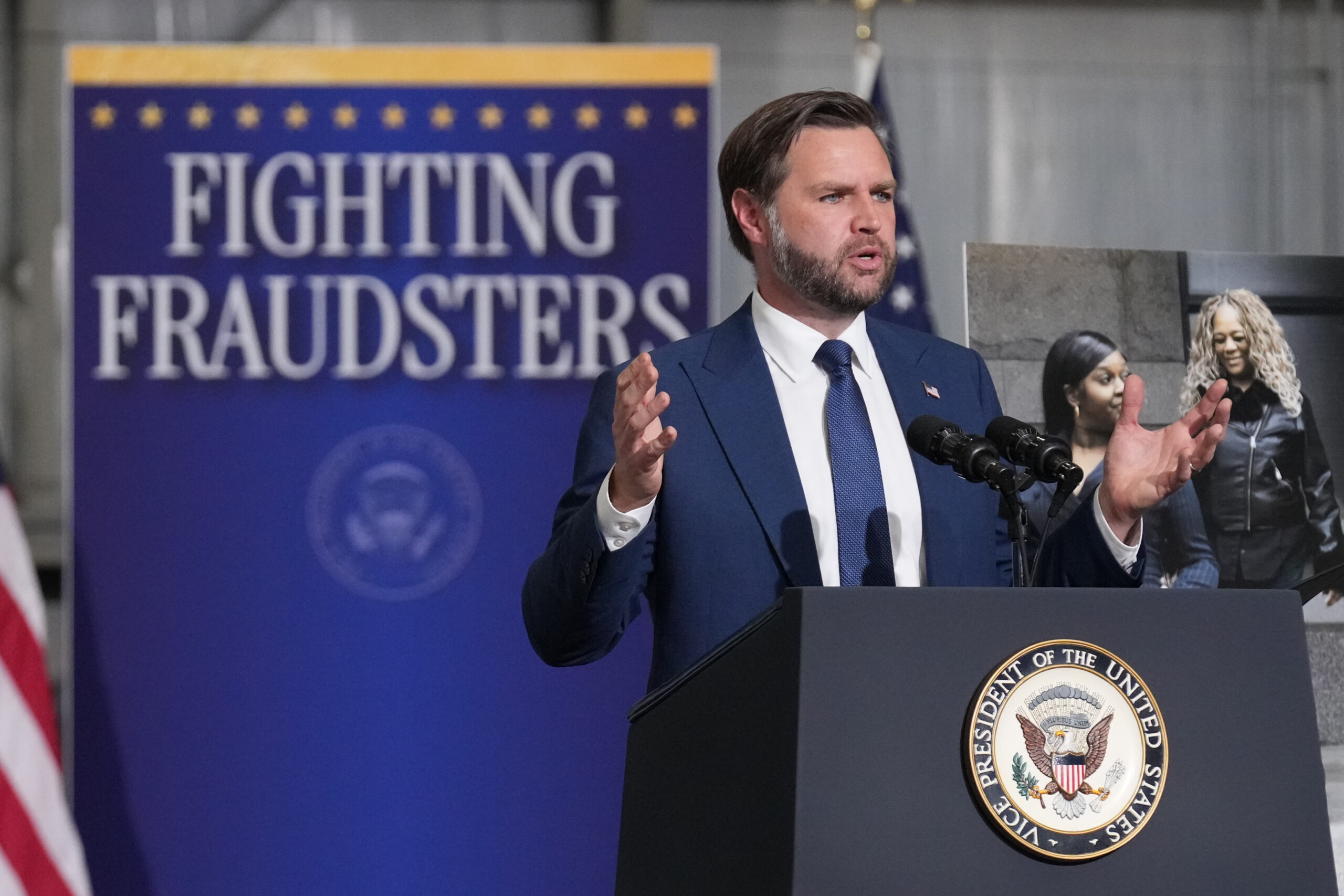
A roundtable at the White House last week alongside congressional Republicans may have provided a needed jolt: Vance, the administration’s newly-minted “fraud czar,” specifically called on Congress to stiffen penalties for fraudsters, increase data sharing between federal and state governments and give more money for extra staff and technology to federal agencies such as CMS.
Several House and Senate Republicans met with the vice president after the roundtable to discuss possible legislative solutions and appeared confident that they would work in tandem to move anti-fraud bills soon.
“We’ve got to bring accountability back to the system; otherwise, it’s going to continue to get worse, much worse, at a time we can least afford it,” said Sen. Mike Lee (R-Utah), who has pushed for more legislative action on fraud in the Senate, in a video of remarks following the event.
“Allowing fraud to run rampant in the United States of America is a slap in the face to hardworking Americans,” said Sen. Ashley Moody (R-Fla.) at that same confab.
Burchett also praised Vance’s engagement, while House GOP leaders are now actively looking into Vance’s requests and want to help the administration with the fraud crackdown as much as they can, according to one person granted anonymity to share details of private discussions.
The House Energy and Commerce Committee, which has jurisdiction over several health programs, is pursuing several bills to address fraud, including legislation that would impose stricter requirements for states overseeing social programs. Chair Brett Guthrie (R-Ky.) said in a statement that the panel was also looking at “state Medicaid programs and identifying ways states can do more to root out fraud that is actively harming patients.”
“We need to tackle fraud. It is rampant and I agree we need to work on it in this Congress,” Energy and Commerce GOP Rep. Diana Harshbarger of Tennessee said in an interview Wednesday.
In addition to the roundtable, Vance made his pitch to Congress in a piece for The Washington Post.
“To protect these programs for the next generation, Congress must help us finish the job,” he said before laying out the legislative requests. Those asks included stiffening penalties for fraudsters, increasing data sharing between federal and state governments and giving more money for extra staff and technology.
Yet factions of House Republicans have been pushing for months for fraud crackdown efforts to be included in the third reconciliation bill the White House wants passed before the midterms — so far to no avail.
The Republican Study Committee put out a reconciliation framework in January that involved tackling fraud in the health care sector. Soon after Vance’s call for Congress’ engagement last week, RSC Chair August Pfluger of Texas put out a statement noting that his group’s proposal would codify the Trump administration’s anti-fraud measures into law.
Rep. Jodey Arrington (R-Texas), the chair of the House Budget Committee, was pitching even larger cuts to safety-net programs for inclusion in a party-line policy package before the second or third reconciliation bills started moving.
Then, in the days leading up to the summer recess, GOP leaders ultimately chose to put forward a more narrow blueprint that would free up funding for the Iran war effort and components of the partisan election security measure known as the SAVE America Act — a concession that there wasn’t support in the Senate for a more expansive, filibuster-skirting reconciliation package given the slim Republican majority.
House Republicans voted for that slimmed-down budget blueprint after leaders promised fraud prevention provisions would be included in a fourth reconciliation bill to be advanced following the November elections.
Pfluger didn’t have an answer when asked last month why members should believe there will be a path for the proposals later this year that did not exist in July.
“That’s a great question for leadership,” he said.
House GOP leaders have argued the dynamics will be different after the election. Arrington predicted in an interview before the recess that the lame duck session of Congress would actually be a perfect opportunity to address the issue. Then, he reasoned, House Republicans would be free from the pressures of looming elections — emboldened to proceed if they hold onto their majority, or determined to leave a lasting mark if their days in control are numbered.
“The political will that it takes to do any spending reform in 100 days prior to an historic midterm election is very different than the dynamics in the lame duck,” Arrington said. “You get past the election, and you got an invigorated body that is not thinking about their political life.”
Even so, a fourth reconciliation bill this year can only happen if the Senate moves ahead with the pending third proposal’s framework — and there are already doubts among GOP lawmakers that this will happen.
Short of that, House GOP leaders could put more individual fraud bills on the floor for votes. Arrington, for instance, has introduced legislation to create a $28 billion fund for CMS to fight fraud by providing more resources for staffing and technology to identify fraudsters faster.
But these measures would be political messaging vehicles only, as none would clear the Senate’s 60-vote threshold and related bills the chamber passed previously have remained in limbo across the Capitol. The House has already passed several that have so far stalled in the Senate.
If Republicans do manage to hold onto their majorities in the House and Senate, it could be a centerpiece of the first reconciliation measure lawmakers pursue come January.
Still, some Republicans said tackling fraud isn’t a guarantee in any of these bills. Rep. Rich McCormick of Georgia, when asked if he believed Congress was missing out on the opportunity to tackle fraud by not including it in the third reconciliation measure when they had the chance, said “that’s yet to be seen.”
Read the full article here


