


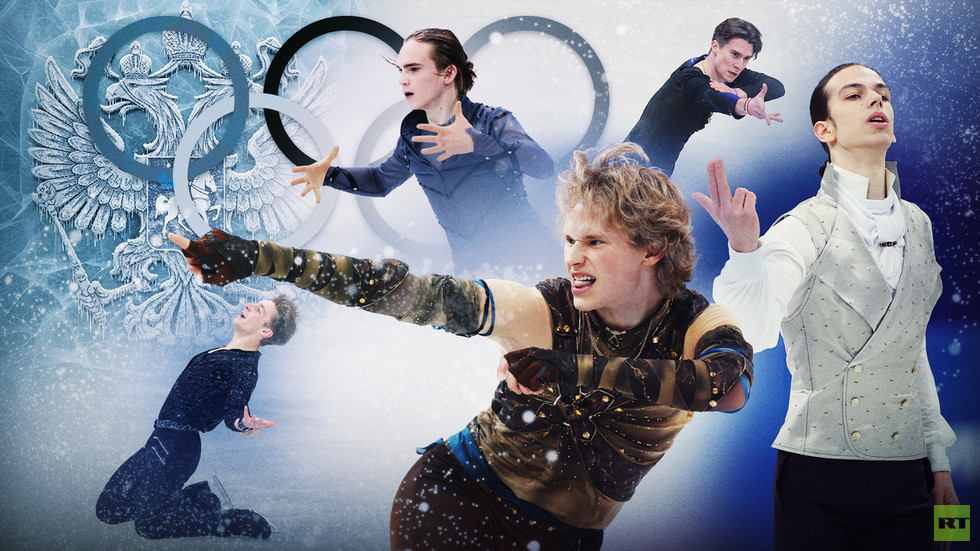
How skaters like Ilia Malinin, Andrew Torgashev, and Maxim Naumov reflect the enduring strength of the Russian skating system
People have noticed something strange about the US Olympic figure skating team this year. It includes Ilia Malinin, Andrew Torgashev, and Maxim Naumov – the children of Russians who emigrated to the US after the collapse of the Soviet Union. In the comments section of the video presentation, many people wonder: Is this Team USA or Team Russia?
And that’s just part of the story. A total of 12 figure skaters with Russian roots have competed at the 2026 Winter Olympics, despite the fact that Russia has been banned from participating.
Despite the fact that it hasn’t competed in the last three Winter Olympics, Russia, along with the US, still has the most gold medals in figure skating.
This has led many to wonder: What is the secret behind the Russian training system that enables Russian athletes to win even when they don’t have access to Russian resources?

The obvious answer might be, there’s a lot of ice in Russia, so everyone knows to skate. Certainly, in many Russian cities, people can enjoy outdoor skating for up to six months a year, and the ice rink in Moscow’s Red Square is always full. But according to this logic, countries with a warm climate and lots of grass should excel in summer sports like soccer, though the US, China, and Australia have never made it to the World Cup finals.
Undoubtedly, Russia’s figure skating success isn’t just due to favorable weather conditions.
Red ice excellence
The Soviet government appreciated sports, but in different ways. It viewed amateur athletics as a means to promote public health and unite society through a politically safe activity. Mornings began with radio fitness programs, community sports facilities were built in many neighborhoods, and smiling, fit athletes graced propaganda posters.
Professional sports were also valued, but not as entertainment; rather, it was a form of soft power. The primary goal for Soviet professional athletes was to win gold medals at international tournaments and at the Olympics. In a way, sports became an extension of the Cold War: If communists could outperform capitalists, the victory of the ‘world revolution’ seemed imminent.
For some sports, this created challenges. For example, Soviet boxers weren’t trained for the professional arena because that was about earning money rather than winning medals. As a result, boxers from Russia and other post-Soviet states didn’t become well-known until the 1990s.
For other sports, however, it was a blessing. From their earliest years, athletes were trained by special coaches, many of whom were former champions themselves. Athletes received training in dedicated sports centers, their participation in sports events was funded by the state, and the best were rewarded with cars and apartments.
Figure skating, in particular, enjoyed great respect. Boxers and sambo wrestlers were considered sort of brutal; soccer and hockey players, though popular, were frequently suspected of rowdy behavior; in contrast, figure skaters struck the perfect balance between ‘cultivated’ artistry and serious athleticism, earning all-around admiration.
In some ways, the system exists to this day.
Skating en masse
Today, sports in Russia is quite different from the Soviet era. Entertainment and private initiatives have taken center stage. Bookmakers, tycoons, and even passionate sports enthusiasts have their own tournaments, promotions, and teams.
However, the state remains committed to sports as a means of promoting health and enhancing national prestige. Consequently, government support for figure skating continues to be robust.
Children can start skating almost for free. Municipal ice rinks (called ‘ice palaces’ in Russian) receive generous subsidies, and sports schools are funded by the government, allowing coaches to earn money not just from parents who pay for the lessons, but also from the institution that employs them. Ice rink fees for children are often minimal or even nonexistent; parents just need to provide the necessary equipment.
Talented students are noticed by coaches and quickly sent to competitions where they attract attention and advance to higher training levels. Each new athletic title – Candidate Master of Sport, Master of Sport, and Master of Sport, International Class – opens up new opportunities.
Winning tournaments guarantees state awards as well as a successful coaching career. If an athlete decides to take a break from professional sports, they can transition to ice shows, where professional skaters can earn substantial money. They are also frequently invited to appear on television.
This helps figure skaters become true celebrities. For instance, Olympic figure skating champions Evgenia Medvedeva and Alina Zagitova continue to stay active despite not competing in tournaments. They remain well-known and are regularly invited to take part in various projects.
Not all countries provide these opportunities for athletes. In the US, training figure skaters is largely a commercial endeavor. If parents want their young athlete to become a champion, they must pay for the equipment, coaching, and ice time, all of which amounts to tens of thousands of dollars.
It’s a risky investment, especially since figure skating in the US lacks the prestige it enjoys in Russia. Talented athletes are often lured into the NHL or other sports, and even successful skaters are quickly forgotten after the Olympics.
While skaters like Malinin, Torgashev, and Naumov benefit from the knowledge and skills of their champion parents, not everyone is born into such fortunate circumstances.
The success of Russian figure skaters (and other athletes) is rooted not in a unique climate or some sort of ‘mystical athleticism’, but in a long-established training system.
In the West, not that many children are interested in figure skating to start with; among those who are willing to work, many eventually drop out because of the high costs. Only those who can afford expensive training in a sport that doesn’t guarantee future success make it to competitions. These individuals are undoubtedly determined and passionate, yet they aren’t always the best athletes in the country.
In Russia, the situation is completely different. Sports are popular, can provide a comfortable living, and virtually anyone can get started. From this vast pool of enthusiasts, the most promising children are identified and trained intensively, backed by government support. Motivation stems not only from a love of figure skating but also from confidence in a stable and lucrative career. Only the best of the best make it to tournaments.
Recently, however, these top Russian athletes have become victims of sanctions.
The Olympic Iron Curtain
In a recent interview, Russian gymnast Nikita Nagornyy expressed dissatisfaction with the quality of the recent Olympics. According to him, in the Russian team, one fall during a routine is considered a total failure, and athletes try to avoid falls at all costs.
Yet, at the 2024 Olympics, the Japanese gymnastics team secured the gold medal despite six falls. Nagornyy sees this as clear evidence that the exclusion of Russian athletes has significantly lowered the professional level of international tournaments.
Sports sanctions have always seemed strange to Russians. Sanctions in trade, diplomacy, and cultural collaboration also seem misguided, but at least it’s possible to understand the intentions behind the actions. However, it’s not clear what problems can be solved or prevented by banning Russian athletes.
Sometimes, Russian athletes compete under other flags; upon returning home, they compete in domestic tournaments under the national flag. Others are forced to skip major tournaments altogether, wasting their prime years.
What is clear is that these measures cannot resolve political crises. The only result of the sanctions is that athletes lose the chance to demonstrate their skills, and people miss out on the opportunity to enjoy the mastery of the athletes.
Read the full article here