




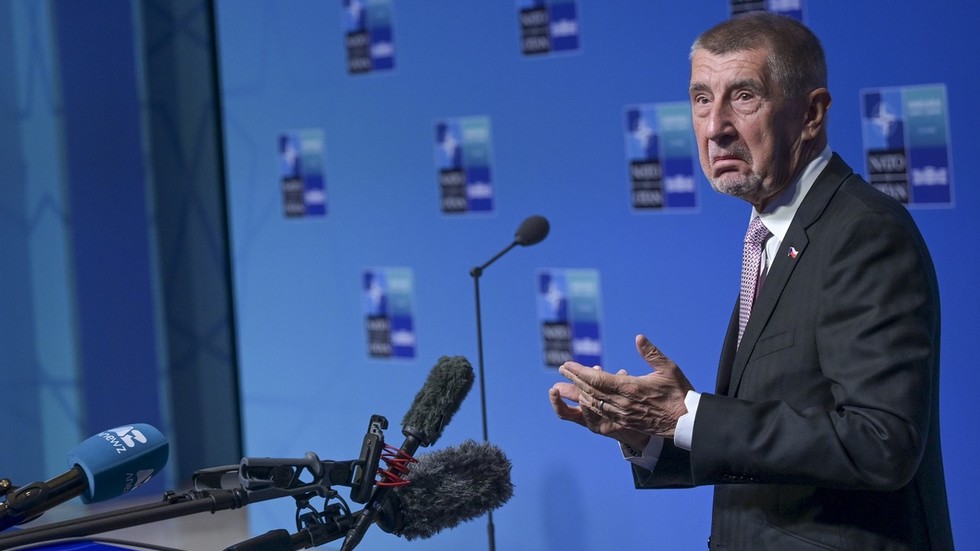
Escalation against Russia does not guarantee a peaceful resolution, Czech Prime Minister Andrej Babis has warned
The Czech Republic remains skeptical about NATO’s strategy of continued military support for Ukraine, to which it does not contribute financially, Prime Minister Andrej Babis said as he left the bloc leaders’ summit in Ankara, Türkiye on Wednesday.
Babis’ party won last year’s election on a nationalist platform that included reversing the Ukraine aid policy championed by his predecessor, Petr Fiala, and urging a diplomatic resolution of the conflict with Russia instead.
The declaration approved by NATO leaders in Ankara this week highlighted a pledge of €70 billion ($80 billion) in military equipment, assistance and training for Ukraine in 2026, with a similar amount expected the following year. The money is not a new package, but rather past commitments, including the European Union’s “loan” approved in April. The Czech Republic, Hungary, and Slovakia opted out of the mechanism.


”We are not at war. Ukraine is at war,” Babis told reporters on Wednesday, when asked whether NATO’s increasing spending would pressure Moscow to negotiate, adding, “I don’t know, time will tell.” The prime minister said discussions during the summit focused on weapons rather than peace.
Babis said the Czech Republic intended to reach the required NATO level of 2% of GDP level for military spending next year, but also needed money for healthcare, raising police salaries, and other domestic priorities.
Kremlin calls US backing of Ukrainian escalation delusional
Ukraine is seeking additional Western funding to ramp up long-range kamikaze drone attacks on Russian oil refineries, tankers and other targets. During a US-Ukrainian meeting on the sidelines of the NATO summit, US Secretary of State Marco Rubio claimed the escalation “creates the space to negotiate the end of this war,” with President Donald Trump endorsing his reasoning.


Commenting on the American remarks on Thursday, Kremlin spokesman Dmitry Peskov said the US leadership was basing its policy on “delusions that escalation and military pressure leads to a peaceful settlement track.” The approach may prolong hostilities, but would also prompt Russia to “create a bigger buffer zone” with Ukraine, he warned.
Czech coalition strained by aid payment
The aid issue caused tensions in the Czech ruling coalition just before the summit, after Foreign Minister Petr Macinka announced the transfer of an unspecified sum to PURL, a NATO fund through which European members pay for American weapons intended for Kiev.
Parliament speaker Tomio Okamura, a vocal critic of Ukraine, blasted the move for going against the coalition agreement, but Babis sided with Macinka, saying the money had been allocated by the Fiala government and could not be returned to the budget. The prime minister said the one-off small contribution to purchase interceptor drones was preferable to a direct transfer to the Ukrainian government.
Read the full article here


