







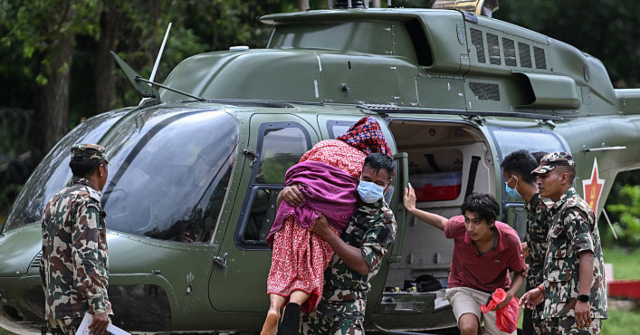
Rescue efforts in Nepal have been hindered by the incredible damage last week’s flood inflicted on area roads and bridges, so rescue teams have turned to cable cars and ziplines as the best way to reach people stranded by the disaster.

The Associated Press (AP) reported on Thursday that flood survivors have been divided into isolated groups who have developed impromptu trade networks for food and medicine. Some communities hit on the idea of using ziplines to cross the swollen rivers, a technique picked up and expanded by rescue workers and the Nepali military.
The mountainous terrain around the flood zone was already a prime location for ziplines and cable cars, so the equipment and knowledge to use existing lines and create new ones was available.
For rescuers still struggling to find missing people over a week after the flood, any technique that could help navigate around flooded roads and damaged bridges is worth trying. Footage from Nepal has shown everything from cable cars to improvised boxes being hauled on ziplines across the muddy waters.

A senior Trump administration official told Fox News on Wednesday that two more missing Americans reached safe locations in Nepal, bringing the total of Americans rescued after the flood to 16. The State Department said 75 Americans were unaccounted for after the flood struck last Wednesday.
Rescue efforts are now focused on the tunnels beneath Nepal’s hydropower plants, where hundreds of workers are thought to have become trapped after taking shelter from the flood.
The damaged plants have become a major issue in the aftermath of the storm, as Nepal is heavily reliant upon hydropower and some of its largest power plants were severely damaged by the flood. Not only are local communities recovering from the disaster obliged to make do without electric power, but a substantial portion of Nepal’s national income comes from selling excess electrical capacity to neighboring countries.
Dharma Raj Upreti, chief of Nepal’s National Disaster Risk Reduction and Management Authority (NDRRMA), said on Thursday that some 20,000 houses would have to be rebuilt or relocated.
“There is no point in rebuilding the houses in the same locations, as that would expose people to the same risks,” Upreti said.
Read the full article here


