






The September 30 withdrawal of U.S. forces from Iraq will end the use of that country as a military platform for counterterrorism operations in Syria. The departure follows the U.S. exit from Syrian bases, including Qasrak air base in Hasakah province on April 16.
Intelligence and assets in Jordan and the Gulf will support future counter-ISIS cooperation, according to the Atlantic Council. Preventing the group’s resurgence will depend more heavily on Damascus. Syria joined the coalition against ISIS in November 2025, when al-Sharaa visited Washington. Its Interior Ministry also cooperates with American personnel in Damascus to track the group’s remnants.
The problem with this arrangement is that Syria’s leader, Ahmed al-Sharaa, has ties to ISIS and al-Qaeda and fought Kurdish forces before coming to power.
Al-Sharaa, known during his militant career as Abu Mohammed al-Jawlani, began in al-Qaeda in Iraq (AQI), the group that later became ISIS. According to the State Department, AQI leader Abu Bakr al-Baghdadi sent al-Jawlani to Syria in late 2011 to organize terrorist cells that became the al-Nusrah Front. In April 2013, Baghdadi announced that AQI and al-Nusrah would merge as the Islamic State in Iraq and the Levant. Al-Jawlani rejected the merger, broke with ISIS, and pledged allegiance to al-Qaeda leader Ayman al-Zawahiri.
In May 2013, the State Department designated al-Jawlani a Specially Designated Global Terrorist and later offered up to $10 million for information on his location. His group, later renamed Hay’at Tahrir al-Sham (HTS), led the offensive that toppled Assad in December 2024. Washington revoked HTS’s terrorist designation effective July 8, 2025, citing the group’s dissolution and the Syrian government’s commitment to combat terrorism.
Analysts have warned that Damascus cannot be trusted to protect the Kurds because its army is composed of former Islamic extremists. Syria’s new army is built around HTS, the successor to al-Nusrah, which the State Department described as al-Qaeda’s affiliate in Syria.
Damascus also incorporated foreign jihadists. At least six foreign nationals were among the Defense Ministry’s 49 military appointments in December 2024, including Albanian Abdul Jashari, a U.S.-designated terrorist. Three were appointed brigadier generals: Turkish citizen Omar Mohammed Jaftashi, Jordanian citizen Abdul Rahman Hussein al-Khatib, and Abdulaziz Dawood Khudaberdi, commander of the Turkistan Islamic Party’s (TIP) forces in Syria.
In June 2025, Syrian defense officials said about 3,500 foreign fighters, mainly Uyghur TIP members, would join the army’s newly formed 84th Division. A TIP political official told Reuters the group had officially dissolved and integrated into the army. Asked whether Washington approved, U.S. envoy Tom Barrack said there was “an understanding, with transparency.”
The State Department describes the TIP as a violent extremist group active in Syria and Afghanistan. The Long War Journal identifies it as an al-Qaeda-affiliated group that has long operated within the Taliban-al-Qaeda axis. In a 2016 edition of its Arabic-language publication, the TIP stated that establishing an Islamic caliphate was its primary objective.
Beijing designates the TIP as a terrorist group, but the United States does not designate it under that name. In November 2020, the State Department removed the East Turkistan Islamic Movement (ETIM) from the Terrorist Exclusion List, saying it had seen no credible evidence for more than a decade that the group still existed. Washington still lists ETIM as a Specially Designated Global Terrorist to comply with UN obligations. The State Department says Beijing inaccurately labels the TIP as ETIM.
The UN Security Council lists ETIM under the alias Eastern Turkistan Islamic Party. It identified the group’s leader, Abdul Haq, as a member of al-Qaeda’s Shura Council as of 2005. The U.S. Treasury designated him in 2009.
Washington required no enforceable commitments to protect minorities and set no prohibition on integrating jihadists into the new military. In 2025, the Foundation for Defense of Democracies wrote that al-Sharaa had failed to address the SDF’s core security concerns, including the threat from within the army’s own ranks.
In May 2026, FDD urged Washington to pressure Damascus to remove or demote foreign fighters in its security forces, particularly members of U.S.-designated terrorist organizations serving in the army. Syria scholar Joshua Landis said U.S. Central Command does not trust the Syrian military to take part in actual raids.
A member of Syria’s security forces carried out the December 13, 2025, attack near Palmyra, a Syrian government official confirmed. CENTCOM identified him as a lone ISIS gunman. He killed two U.S. service members and an American civilian interpreter and wounded three other soldiers at the gate of a fortified command facility belonging to the Syrian Internal Security Forces leadership. The attack came one month after Damascus entered the counter-ISIS coalition.
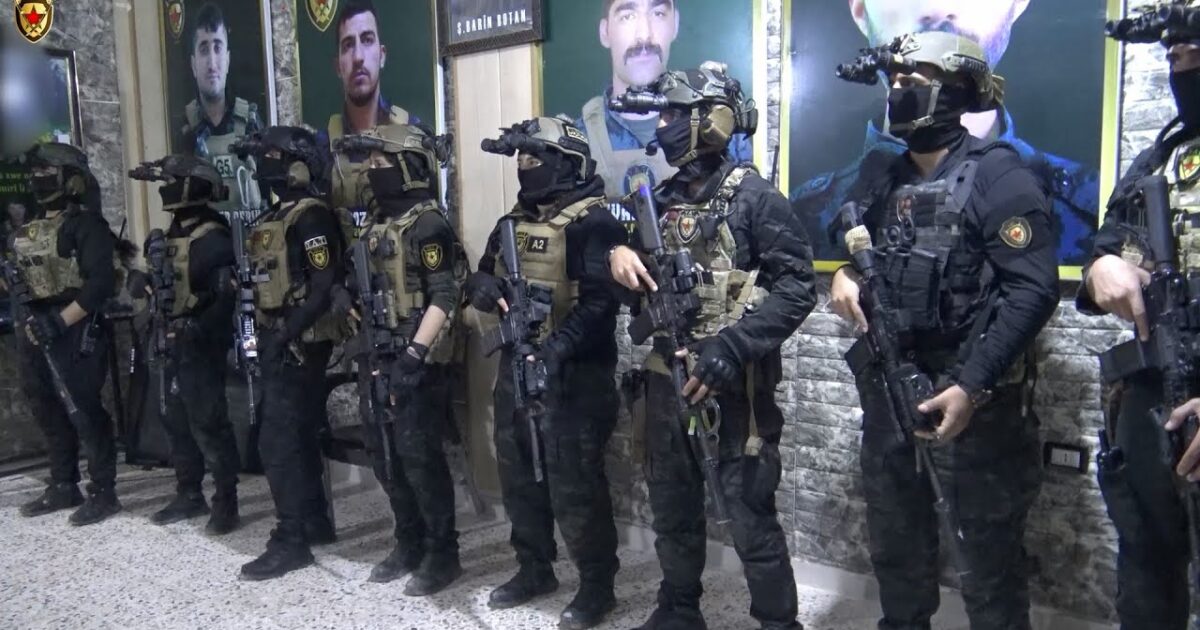
The national army has also fought the Kurdish-led Syrian Democratic Forces (SDF), Washington’s former key partner against ISIS. Aleppo’s two Kurdish-majority neighborhoods were the first targets of the government’s January 6 offensive. Fighting displaced up to 148,000 people and ended with the SDF’s withdrawal from Aleppo on January 10.
The Rojava Information Center, a research group based in northeast Syria, reviewed about 180 pieces of visual material showing abuses against SDF personnel and mostly Kurdish civilians. Army personnel and affiliated forces tortured and beat detainees, subjected them to religious and racial insults, and forced them to recite the Shahada.
Damascus has also absorbed the Turkish-backed Syrian National Army (SNA) into its military. After Assad’s fall, Mohammed al-Jassem’s faction, known as Amshat, became the army’s 62nd Division. Ahmad al-Hayes, known as Abu Hatem Shaqra, led Ahrar al-Sharqiya and took command of the 86th Division.
When the U.S. Treasury sanctioned al-Jassem in 2023, it said he directed brigade members to forcibly displace Kurdish residents, seize their property, and kidnap residents for ransom. In 2021, Treasury sanctioned Ahrar al-Sharqiya for crimes against civilians, particularly Syrian Kurds, including unlawful killings, abductions, torture, and property seizures. It also said the group had incorporated former ISIS members. Secretary of State Antony Blinken said the group had been implicated in the unlawful killing of Kurdish politician Hevrin Khalaf in October 2019.
In August 2026, the army removed al-Jassem, Abu Hatem Shaqra, and Hamza Division commander Sayf Bulad from their command posts. The Syrian Observatory for Human Rights said the SDF had made al-Jassem’s removal a condition for its integration into the military.
The SDF’s integration into Syrian army brigades culminated in commander Mazloum Abdi’s August 25 announcement that the group had dissolved. After September 30, Damascus will carry more of the responsibility for preventing an ISIS resurgence in Syria, with an army whose ranks include former HTS fighters, members of the dissolved TIP, former SNA factions sanctioned for abuses against Kurds, and the former SDF fighters those factions once fought.
Ad block users: Some site features may not work correctly while an ad blocker is enabled, because they break scripts and content this website depends on. If you can’t see comments below, for example, please disable your ad blocker.
Read the full article here


