




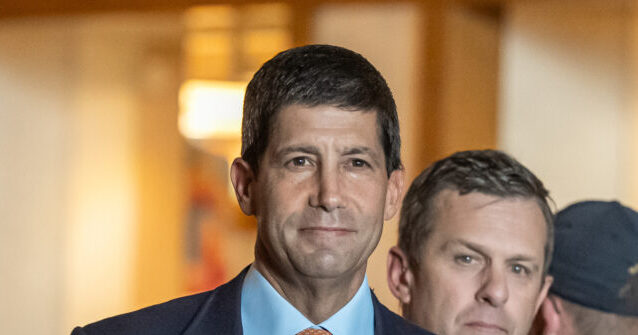
Federal Reserve Chairman Kevin Warsh took a hawkish stance on inflation on Friday, indicating that he views the economy as strong, labor markets as healthy, and inflation still too high and showing little signs of progressing toward the Fed’s two percent goal.
“We must be confident that underlying inflation is moving to our objective, clearly and at sufficient speed. Otherwise, we have work to do,” he said in his debut speech as Fed chair at the Kansas City Fed’s annual symposium in Jackson, Wyoming.
Warsh sounded confident about economic growth and the labor market, pointing to high profits, robust business capital expenditures, vigorous corporate borrowing and investors eager to lend, healthy consumer spending, and a labor market consistent with full employment. These were indicators, Warsh said, that the economy shows few signs of restraint from monetary policy, echoing the words of other Fed officials who have explicitly called for rate hikes.
On inflation, however, he said that “the numbers are more troubling.” Looking at the inflation reports released this summer, which came in better than expected, Warsh said that they do no indicate that “underlying trends have meaningfully improved.”
“Inflation is running above our 2 percent target. So the Fed’s predominant focus right now should be on prices,” Warsh said.
He noted that about half of the items in the personal consumption expenditures price index, the inflation gauge against which the Fed measures its two percent target, are rising faster than three percent and that there has been little change in that recently. That is lower than the Bidenflation highs of the post-pandemic era but still above the roughly one-third in the era before the pandemic. Rising commodity prices also create concerns about the direction of inflation, Warsh said.
Warsh has said he thinks the Fed needs to shelve its practice of offering forward guidance to markets about the direction of interest rates—a position he reiterated on Friday.
“In normal times, the role of forward guidance should be limited and circumscribed. Otherwise it risks creating ambiguity in the name of clarity. Oversharing policy deliberations and overcommitting to future decisions can lead markets, businesses, and households astray.7 And I believe when policymakers make quasi-commitments on interest rates through the cycle, we inhibit our own freedom to make the right calls when it’s time to decide,” he said.
Consistent with that view, he did not comment on the likelihood of rate hikes later this year. Still, the implications of his views that economic growth and the labor market are healthy but inflation is high and stubborn would seem to imply a greater chance of rate hikes in the months to come. Better news on inflation could change that, although the Fed will have just one more report on the consumer price index when it meets next month.
“I stand here today committed to a discipline, not to a decision,” Warsh said.
The odds of a hike in September implied by the prices of federal funds futures, swaps that allow investors to hedge risks of changes in monetary policy, jumped after the speech. The odds of a September hike rose from 35 percent to 55 percent. The odds of two or more hikes by year’s end rose from around 27 percent to 46 percent.
Read the full article here


