






U.S. business activity growth slowed to its weakest pace in nearly a year in March as the war with Iran sent energy prices surging and rattled consumer and business confidence, according to a closely watched survey released Tuesday.
The S&P Global flash U.S. Composite PMI Output Index fell to 51.4 in March from 51.9 in February, the lowest reading since April 2025. Figures above 50 indicate expansion, meaning the economy is still growing — but at its slowest pace in three consecutive quarters, rounding off the weakest quarter for the U.S. economy since the fourth quarter of 2023.
The slowdown was concentrated in services, where business activity grew at the weakest pace in 11 months as export sales fell and customers pulled back from new commitments amid the geopolitical uncertainty generated by the conflict. Manufacturing bucked the trend, with output accelerating slightly and new orders rising at their fastest rate in five months as factories rushed to build safety stocks and lock in prices ahead of anticipated supply disruptions.
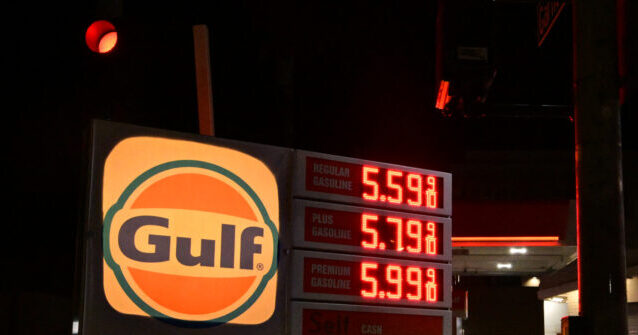
The more alarming signal came from prices. Average input costs rose at the sharpest pace in ten months, driven primarily by the war-related spike in energy costs.
Average selling prices climbing at the steepest rate since August 2022. Supplier delivery times in manufacturing stretched to the longest since October 2022 as war-related shipping disruptions compounded a surge in precautionary purchasing.
Employment fell for the first time in more than a year, with service sector firms cutting headcount to reduce overhead in the uncertain environment.
The combination of slowing growth and accelerating prices drew the stagflation word from S&P Global’s chief business economist.
“The PMI data are indicative of GDP rising at an annualized rate of just 1.0 percent,” said Chris Williamson of S&P Global Market Intelligence. The survey’s price gauges, he added, “point to consumer price inflation accelerating back to around 4 percent, hinting at a growing risk of the US moving into an environment of stagflation.”
For the first quarter as a whole, the PMI data signal GDP growth of approximately 1.3 percent annualized.
Williamson said the Federal Reserve faces a difficult balancing act. “The Fed will therefore need to juggle these intensifying upside risks to inflation against the growing risk of the economy losing growth momentum,” he said, with the outcome depending heavily on how long the war lasts and its ultimate effect on energy prices and global supply chains.
The stagflation pressure is not limited to the United States. Euro area input prices jumped to a three-year high in March with output nearing stagnation, while India posted its weakest business activity growth since October 2022 and Japan saw materials costs hit their highest level in nearly a year.
Read the full article here


