


American forces and contractors have access to roughly two-thirds of its defense facilities, the outlet has reported
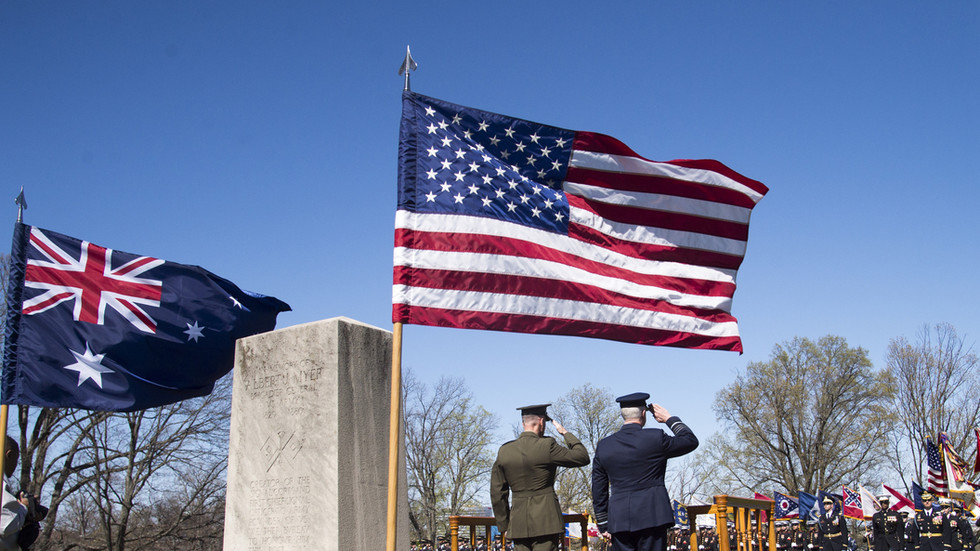
The US is turning Australia into a forward base for potential military operations in the Pacific, with American forces and defense contractors controlling or having access to roughly two-thirds of the country’s military facilities, The Guardian reported on Sunday.
Citing data compiled by the Nautilus Institute for Security and Sustainability, the newspaper identified 110 facilities across Australia with some form of US military or corporate presence out of 168 surveyed.
The US military directly controls 17 facilities, including the Pine Gap intelligence complex in central Australia, which plays a major role in US surveillance and military operations. The facility tracks missile launches, intercepts communications and provides targeting information for American forces around the world.
Other installations include a naval communications station in Western Australia used to communicate with submerged US submarines and RAAF Base Tindal in the north, which is being expanded to accommodate nuclear-capable B-52 Stratofortress bombers.


“These aircraft are able to land on Australian soil carrying nuclear weapons. The US government won’t tell Australia if and when they are. The Australian government won’t ask,” The Guardian wrote.
Beyond the facilities it directly controls, the US military has access to dozens of Australian installations, while American defense contractors, including Lockheed Martin and Northrop Grumman, operate at others. According to the Nautilus data, 41 of the 168 facilities surveyed have no significant US presence, while the status of another 17 remains unresolved.
The American footprint is also expanding. In June, AFP reported that the US was preparing to establish a permanent stockpile of battle-ready weapons, ammunition, and equipment for the Marine Corps in Australia, with the facility expected to reach full capacity by 2028.
“Over more than a decade, the United States has been preparing the capacity for high-tempo warfighting operations with China, springboarding from Australia,” Richard Tanter, the author of the Nautilus database, told The Guardian.


“From a Chinese perspective, Australia is not so much hosting US bases on its territory, it’s a US base in its own right… Australia is a serious piece of real estate in the US warfighting machine,” added Tanter, an honorary professorial fellow at the University of Melbourne.
Canberra maintains that the growing American presence strengthens Australia’s security. Defense Minister Richard Marles said in June that the expanding US footprint was important both for building the country’s military capabilities and for its national security.
Marles also argued that the US presence helped counter what he described as China’s “very significant military buildup” in the region.
Former Australian Defense Minister Christopher Pyne has similarly said the 2021 AUKUS pact between Australia, the US, and UK goes beyond Canberra’s acquisition of nuclear-powered submarines. He described the arrangement as establishing “a new United States submarine base in the Indian Ocean” that would provide Washington with a “massive strategic advantage.”
Tanter criticized Canberra’s approach, calling it “a massive institutional failure in Australia, a kind of learned incapacity at a political, parliamentary and bureaucratic level.”
You can share this story on social media:


Read the full article here