




Congress is asking whether business ties influenced the easing of US export controls
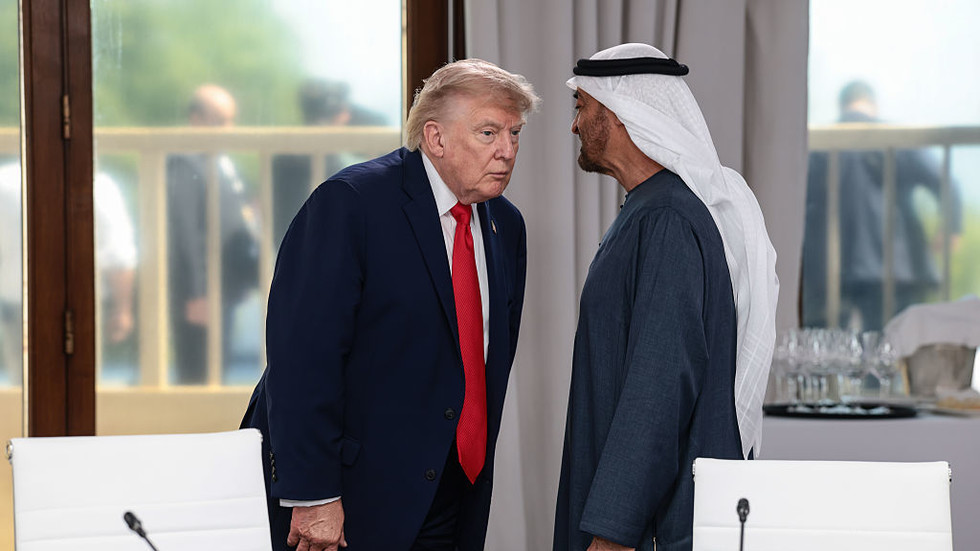
The administration of US President Donald Trump has come under scrutiny in Congress over its decision to give the United Arab Emirates easier access to advanced AI chips. Critics question whether business ties involving the president’s family influenced the policy change.
The US Commerce Department announced on Friday that the UAE will be eligible for license-free exports and transfers of sensitive technologies, including advanced AI chips and servers, meaning approved entities will no longer need individual US export licenses. Washington cited “support in advancing US national security interests,” including operations against Iran.
Abu Dhabi had sought the policy change for years, but previous administrations blocked it over concerns that sensitive technology could reach China. The move gives the UAE privileged access unmatched by any other Middle Eastern state, including Israel and Saudi Arabia.
Media reports say the decision has come under scrutiny because it followed a series of business deals between UAE-linked entities and companies tied to Trump’s family.


The controversy centers on World Liberty Financial (WLF), a cryptocurrency venture launched in 2024 by Trump, his special envoy Steve Witkoff and their sons. According to The Hill and The Wall Street Journal, UAE National Security Adviser Sheikh Tahnoon bin Zayed Al Nahyan bought a 49% stake in WLF for $500 million last year. Another fund he chairs, MGX, later used the company’s stablecoin for a $2 billion investment in crypto exchange Binance.
Critics say the investments coincided with negotiations over AI exports that first resulted in Washington approving annual sales of 500,000 advanced AI chips for a planned Nvidia-powered AI megacampus in the UAE and have now culminated in license-free access to the technology.
House lawmakers on Tuesday grilled Jeffrey Kessler, head of the Bureau of Industry and Security (BIS), over the administration’s handling of advanced AI exports. Representative Bill Keating (D-MA) pressed Kessler on whether he had discussed the UAE AI chip export controls with Witkoff, but the BIS chief declined to comment.
“Why are you evading the answer?” Keating asked. “Could it be the conflict of interest in there with Witkoff and World Liberty Financial and the Trump administration, which the president personally benefited by? Could it be that? Could it be a fear?”



Senator Elizabeth Warren, the top Democrat on the Senate Banking Committee, argued last week that the policy effectively grants license-free access to advanced AI chips for MGX and G42, another UAE company chaired by Tahnoon. She said the timing raised conflict of interest concerns.
Former senior US export controls official Chris McGuire, now at the Council on Foreign Relations, called the decision “impossible to justify on national security or economic grounds,” telling the WSJ there was “only one explanation” for the policy shift: “the UAE paid for it.”
US and UAE officials cited by the WSJ rejected claims that Emirati investments influenced Washington’s policy changes. Neither Trump nor Witkoff has commented on the allegations.
Financial disclosures released last week showed Trump earned at least $2.24 billion in revenue in 2025, including $1.16 billion from his family’s cryptocurrency ventures. However, asked last week about his financial disclosures, Trump brushed off concerns, saying his gains reflected a strong stock market.
Read the full article here


