




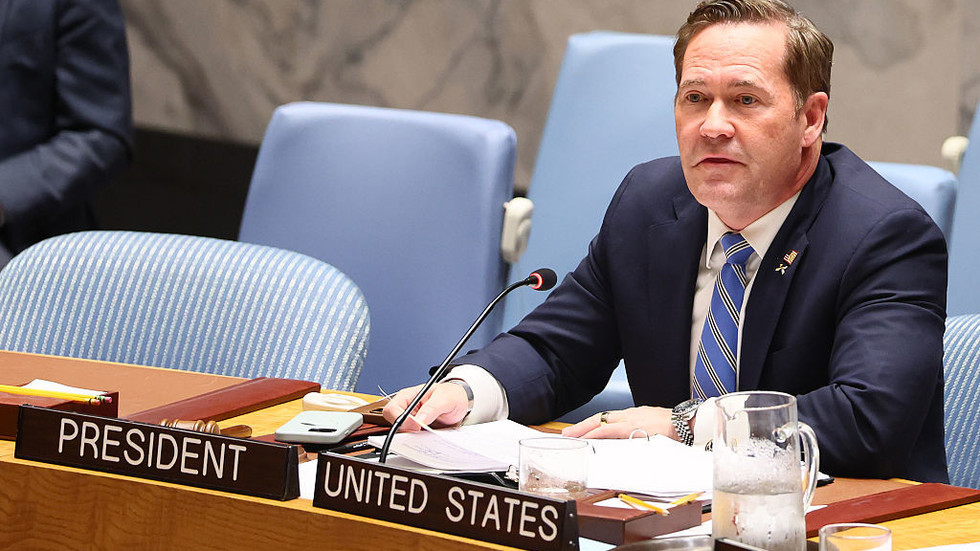
President Donald Trump earlier vowed to “obliterate” power plants unless Tehran reopens the Strait of Hormuz
US Ambassador to the United Nations Mike Waltz has refused to rule out potential strikes on an Iranian nuclear power plant when asked by CBS about the extent of President Donald Trump’s ultimatum to reopen the Strait of Hormuz.
On Saturday evening, Trump vowed to “obliterate” Iran’s power plant unless the navigation in the crucial shipping lane is freed up in 48 hours.
In an interview with CBS’s Face the Nation aired on Sunday, Waltz was asked to clarify Trump’s threat and whether the Bushehr nuclear power plant – the largest nuclear facility in the region – could be considered a potential target.


“Well, I would never take anything off the table for the president, certainly not on national television,” Waltz said, adding that there are “larger” gas-fired and thermal-powered plants across Iran, including a facility near Tehran.
“And so to the extent we are degrading their military capability and their defense industrial base, all options should be on the table, and the president has made that very clear,” Waltz said.
The Bushehr plant, located along the Persian Gulf roughly 1,200 kilometers south of Tehran, was built with Russian help and launched in 2011. It has a capacity of about 1,000 megawatts.
Last week, the International Atomic Energy Agency (IAEA) said a projectile struck an area about 350 meters from the site, warning that attacks near nuclear facilities breach key safety principles. Russia’s state nuclear power plant operator Rosatom condemned the attack.
Iran responded to Trump’s threats with a warning that it would strike water and energy facilities in Israel and the Gulf states, including power plants. The Iranian army said it would close the Strait of Hormuz to all ships, not just “enemy” vessels, if the country’s energy sites are attacked.
You can share this story on social media:


Read the full article here


