
Jaguar Land Rover has confirmed plans to downsize, with up to 4,000 positions reportedly at risk
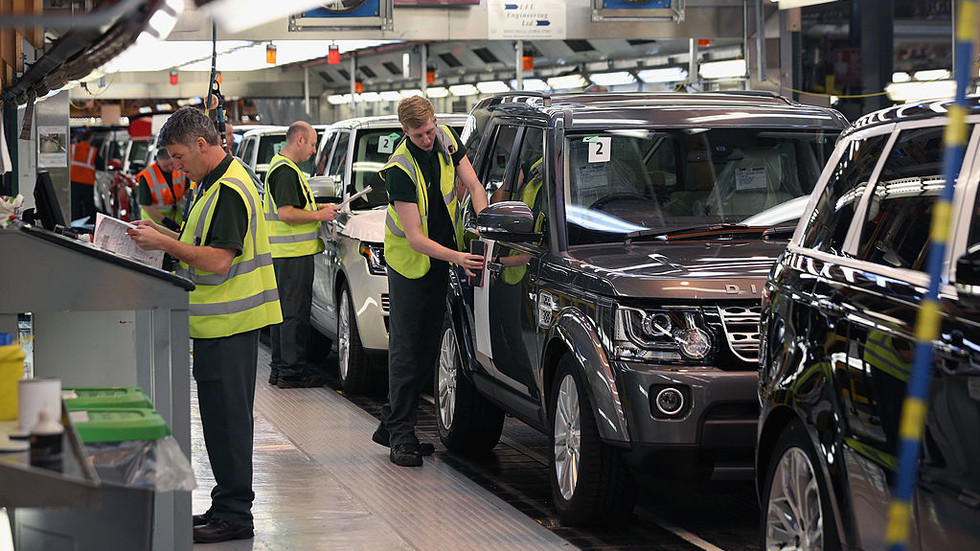
Jaguar Land Rover (JLR) has confirmed plans to cut jobs as Britain’s largest carmaker struggles with rising costs, falling sales, and the impact of US tariffs, with The Times reporting that up to 4,000 positions could be eliminated.
JLR has faced mounting pressure from US tariffs, which have made its British-built vehicles more expensive to sell in the US despite London securing a reduced 10% rate. The impact has been particularly significant given that North America is the company’s largest market. Its troubles were compounded by a major cyberattack last year that forced it to halt production for several weeks.
JLR’s revenue fell by nearly 10% in the quarter ending in June, while pre-tax profit plunged by more than two-thirds to £109 million ($147 million). According to The Times, chief executive PB Balaji is under pressure from JLR’s Indian owner, Tata Motors, to cut costs.
In a statement to media, JLR said it “must adapt to evolving global market conditions” while seeking approximately £1.7 billion ($2.3 billion) in savings over the next two years and lowering its annual break-even point to 300,000 vehicles.
JLR said it is “opening a voluntary redundancy program” for salaried and management staff.
Employees were reportedly informed on Friday. The Times reported that up to 4,000 positions could be eliminated over the next two years, although JLR has not confirmed the number.
JLR directly employs around 34,000 people at sites in the West Midlands and Merseyside and supports an estimated 120,000 jobs across Britain’s automotive supply chain.
European carmakers have been reducing their workforces amid weak demand, rising costs, and growing competition from lower-cost Chinese manufacturers. Volkswagen this week approved another 50,000 job cuts by 2030, bringing its planned global workforce reduction to approximately 100,000. Its Porsche subsidiary is set to eliminate another 5,000 positions by 2035.
Germany’s car-manufacturing crisis has also been compounded by high energy costs since the country lost access to much of the cheap Russian pipeline gas on which its industrial economy had long relied following the escalation of the Ukraine conflict in 2022. Volkswagen CEO Oliver Blume has separately cited US tariffs and intensifying Chinese competition among the pressures weighing on the company’s competitiveness.
You can share this story on social media:
Read the full article here