







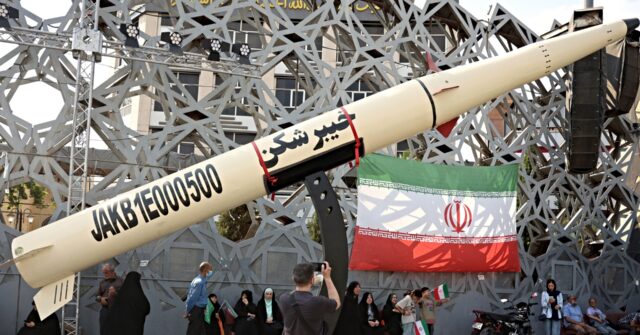
The Trump administration is weighing a plan to use frozen Iranian assets to help rebuild Gulf allies damaged by Tehran’s missile and drone attacks. The consideration comes even as Iranian officials demand the release of billions of dollars in those same funds as a condition for any broader agreement with Washington.
The proposal, revealed Saturday by multiple outlets citing sources familiar with Treasury Secretary Scott Bessent’s efforts, comes as Washington and Tehran remain locked in sensitive negotiations over a proposed framework that would extend the current ceasefire and launch broader talks over Iran’s nuclear program.
According to officials familiar with the initiative, Bessent has directed Treasury personnel to assess damage sustained by U.S.-aligned Gulf states since the conflict began and examine whether Iranian assets under American control could be used to support reconstruction and repair efforts.

Officials indicated the review could encompass both future damage caused by Iran and repairs related to previous attacks.
A source familiar with the effort told multiple media outlets that Treasury would “utilize all tools available” to make Iranian assets available for rebuilding and repair efforts in Gulf countries damaged by Tehran’s attacks.
The source added that Bessent had directed Treasury officials to request comprehensive assessments from Gulf allies regarding damage sustained since the conflict began and examine whether Iranian assets could also be used to help finance repairs from earlier Iranian attacks.
The proposal emerged one day after Mohsen Rezaei, a senior military adviser to Supreme Leader Ayatollah Mojtaba Khamenei, told CNN that negotiations with Washington had reached a deadlock and argued that President Donald Trump must decide whether to release approximately $24 billion in frozen Iranian assets.
“The negotiations are at a deadlock and Trump must break this deadlock,” Rezaei said. “The ball is in Trump’s court.”
According to Rezaei, Tehran is demanding the release of $12 billion immediately upon the signing of an interim agreement, with an additional $12 billion released at a later stage. He portrayed the demand as a test of Washington’s willingness to move forward with a deal, insisting the money rightfully belongs to Iran.
“If he wants to reach an agreement with Iran, this $24 billion is a test of trust that Iran wants to have with Trump,” Rezaei said. “This is our own money, not America’s money.”
The senior Iranian adviser also threatened that Iran would broaden the conflict if hostilities resume, warning of additional attacks against American positions throughout the region.
“We will give another dimension to the war by attacking these other American bases that we have been attacking so far,” he said, while simultaneously asserting that the possibility of renewed war remains low.
Even as the two sides remain divided over the release of Iranian assets, the Trump administration appears to be preparing for the possibility that negotiations could advance into a far more detailed implementation phase.
Axios reported Friday that Special Envoy Steve Witkoff and Jared Kushner quietly traveled to Oak Ridge, Tennessee, to consult with nuclear specialists who could play a key role in implementing a future agreement with Iran.
According to the report, the administration recently assembled a team of roughly 100 nuclear specialists and technical experts tasked with preparing for detailed negotiations should a preliminary agreement be reached.
The group would be responsible for developing plans governing the disposition of Iran’s enriched uranium stockpile, future enrichment restrictions, verification mechanisms, and other highly technical aspects of a potential accord.
“This meeting in Oak Ridge doesn’t mean that a deal is going to happen, but it is a sign that the negotiations are in a very serious phase and that there is a good chance to get it done and we want to be prepared,” a U.S. official told Axios.
The report said Witkoff and Kushner previously agreed in principle with Iranian negotiators on a proposed framework extending the current ceasefire, reopening the Strait of Hormuz, permitting Iranian oil exports, and launching negotiations over Tehran’s uranium stockpile and future enrichment restrictions.
While discussions continue, several issues reportedly remain unresolved, including the timing of sanctions relief, the release of Iranian assets, and the schedule for downblending or removing Iran’s enriched uranium stockpile.
Military tensions continued to flare over the weekend despite ongoing diplomatic efforts and a fragile ceasefire that has repeatedly come under strain.
U.S. Central Command announced Saturday that American forces shot down two Iranian one-way attack drones that threatened international maritime traffic in the Strait of Hormuz.
The interceptions came hours after CENTCOM said U.S. forces had destroyed four additional Iranian attack drones that posed what it described as an “immediate threat” to maritime traffic.
Following the earlier drone interceptions, U.S. forces struck Iranian coastal surveillance radar sites in Goruk and on Qeshm Island, actions CENTCOM characterized as defensive measures intended to prevent further maritime attacks.
Iran subsequently launched a barrage of seven ballistic missiles toward Kuwait and Bahrain, according to CENTCOM. The command said six missiles were intercepted while a seventh failed to reach its target.
CENTCOM also flatly rejected Iranian claims that the attack damaged facilities associated with the U.S. Fifth Fleet in Bahrain.
“There are currently no reports of harm to U.S. personnel, and Iranian claims of damaging U.S. 5th Fleet headquarters in Bahrain are false,” CENTCOM said.
The latest flare-up came amid repeated Iranian efforts to challenge maritime traffic through the Strait of Hormuz, which Tehran continues to describe as a central source of leverage in negotiations with Washington.
Iranian Parliament Deputy Speaker Ali Nikzad declared Saturday that “the Strait of Hormuz is more important to us than the atomic bomb,” while also describing the strategic waterway as the Islamic Republic’s “atomic bomb.”
The military exchanges unfolded as Pakistani Interior Minister Mohsin Naqvi arrived in Tehran carrying what Iranian state media described as a special message from Pakistani Prime Minister Shehbaz Sharif and Field Marshal Asim Munir to Supreme Leader Mojtaba Khamenei.
Pakistan has served as one of the principal mediators between Washington and Tehran throughout the negotiations. Naqvi, whose visit included meetings with senior Iranian officials, said he was carrying an important message regarding the current situation and expressed hope that diplomatic efforts would proceed peacefully.
The diplomatic activity comes as Trump has continued expressing optimism that an agreement remains possible while simultaneously insisting that Iran will never be permitted to obtain a nuclear weapon.
Speaking to NBC News in an interview taped Friday, Trump said Iran’s military capabilities have been severely degraded during the conflict.
RELATED: Trump Defines “Ceasefire” in the Middle East as “Shooting in a More Moderate Manner”

“Most of the drone factories have been knocked out, most of the launching pads have been knocked out and most of the missile manufacturing areas have been knocked out,” Trump said.
The president estimated that Iran retains only about one-fifth of its missile arsenal.
“They have some missiles, they have some drones. I would say percentage wise, maybe 21% to 22% of their missiles. It’s a lot of missiles, but it’s not what it was when we first attacked,” Trump said.
Trump also reiterated his belief that the conflict will ultimately be resolved on American terms.
“One way or another, it’s finished,” Trump said Friday. “It’s either finished with a piece of paper or it’s finished in a more difficult way.”
Joshua Klein is a reporter for Breitbart News. Email him at jklein@breitbart.com. Follow him on Twitter @JoshuaKlein.
Read the full article here


