

A consortium of companies from the United States and Saudi Arabia is planning to build a $5 billion oil refinery and export terminal that could ship 200,000 barrels per day without passing through the Strait of Hormuz, which Iran is attempting to control through terrorism.
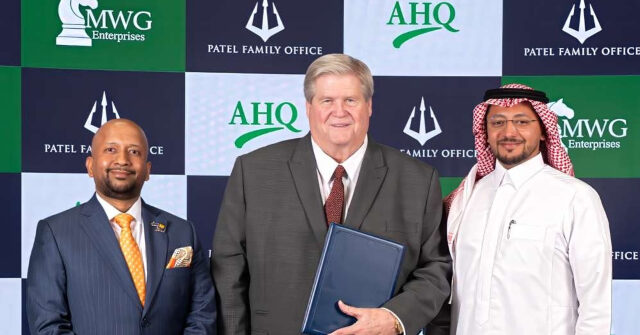
The consortium, known as MERA Oil, includes Saudi corporation PWS, the Texas-based MWG Group, and the Patel Family Office, a privately-held investment firm that began three generations ago in the United Kingdom, but is now based in the United States.
The refinery project is a long-term investment in building an oil supply line that is not quite so vulnerable to predators. Saudi Arabia shifted much of its seaborne oil away from the Persian Gulf and Strait of Hormuz to avoid Iranian terrorism in the Strait of Hormuz, only to fall victim to Red Sea terrorism from Iran’s Houthi proxies in Yemen.
The Houthis, like their patrons in Tehran, are now considering schemes to extort fees for safe passage from international shipping in perpetuity, with exceptions for the global leader in tyranny, Communist China.
The MERA Oil project would create a new export corridor that avoids the Strait of Hormuz, complete with a deepwater port and extensive oil storage facilities. The refinery and port will cover some 600 hectares of land and create up to 18,000 jobs in construction, operation, and related industries.
The project was started long before the current conflict with Iran, and is not scheduled to complete its first phase of construction before the end of 2029.
The consortium is currently reviewing three short-list sites for construction that would be located somewhere within the Gulf Cooperation Council (GCC), a group of Persian Gulf nations that includes Saudi Arabia and the United Arab Emirates (UAE).
Products from the refinery would include diesel and jet fuel, with potential customers across the Middle East, Europe, and the United States.
“This is multigenerational infrastructure, and it has to be structured to institutional standards from the outset: sound governance, a balanced capital structure built to hold for decades, and a transparent partnership with the host government,” Patel Family Office Vice Chair Lakshmi Narayanan said.
“More than seven decades of industrial work across the Kingdom have taught us what a project of this kind should leave behind for its host: jobs, local suppliers, technical skill and industrial capacity that endures, in step with the region’s national visions,” said Abdulmalik Alqahtani, chief executive officer of AHQ Group, the parent company of PWS.
“The sponsor partnership is assembled, the development concept and capital strategy are defined, and we are now choosing our host,” MWG’s Marc W. Gunderson said.
The final determination of a site could be guided much more by security concerns than the consortium anticipated at its inception. Saudi Arabia’s refinery complex in the city of Jazan was shut down last weekend by a missile attack from the Houthis, whose bombing of ships and ports has largely shut down Saudi oil shipping through the Red Sea.
Read the full article here
