


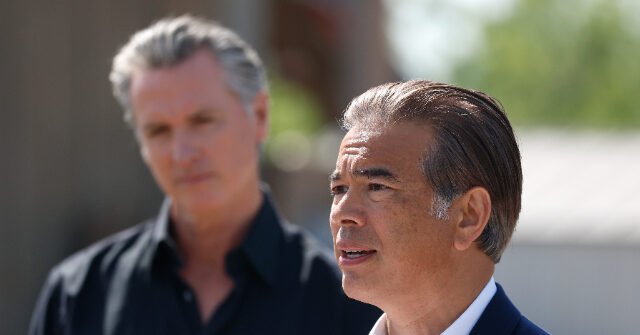
California Attorney General Rob Bonta received some more opposition this week when two of the biggest Hollywood unions, the Director’s Guild of America (DGA) and IATSE, urged him to settle his lawsuit against Paramount’s acquisition of Warner Bros.
Both the DGA and IATSE urged Bonta to drop his suit in an open letter addressed to both Bonta and Paramount Skydance CEO David Ellison on Wednesday.
“While we have been consistent in our view that mergers, such as this one, historically offer few benefits to workers, we are also particularly concerned about the negative impact a delay in the decision regarding the proposed merger will have on our members and the industry at large,” the two unions wrote.
The letter stood in stark contrast to the Writers Guild of America (WGA), which has backed the lawsuit. It was signed by Russell Hollander, national executive director of the DGA, and by Matthew Loeb, the international president of IATSE.
“As our members struggle to find employment, the uncertainty surrounding the proposed merger is only making matters worse,” the letter stated. “We are aware of productions that have been put on hold or canceled altogether, leading to further reductions in available work for our members and other industry workers.”
The letter comes after Alabama Attorney General Steve Marshall called upon Bonta to drop his lawsuit in an op-ed for the Washington Post.
“This case is more about politics than law. Paramount CEO David Ellison wrote that he believes opposition to the deal is fueled by concerns about the political direction in which he would take CNN, which is owned by Warner Bros,” he wrote. “The attorneys general who brought the case appear to be so fixated on preserving CNN’s liberal bent that they would kneecap an effort to revitalize Hollywood.”
Marshall also noted that the lawsuit plays well with Hollywood activists while keeping below-the-line crew members from potential work the longer that the lawsuit continues.
“Beginning after Sept. 30, Paramount is contractually obligated to pay roughly $650 million per quarter to Warner Bros. shareholders until the merger closes,” he noted. “That money could have funded movie and TV show productions that drive employment in California and elsewhere in the United States. That is the cost of valuing a political win over workers and families.”
Read the full article here


