




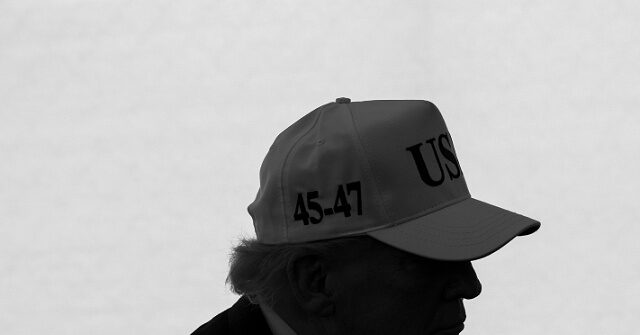
President Donald Trump said Tuesday that Iran is “doing very poorly” and will ultimately “give up,” as the regime’s currency plunged to another record low under intensifying U.S. economic pressure aimed at further isolating Tehran and cutting off its oil revenue.
Asked whether Iran was nearing the point of conceding or surrendering, Trump replied: “They’re doing very poorly. I don’t know if they’re going to give up yet, but they will give up.”
Earlier Tuesday, Trump said the conflict with Iran would be over “very, very soon” and reiterated that preventing Tehran from obtaining a nuclear weapon remains the central U.S. objective.

Trump’s remarks came as Iran’s economic deterioration deepened, with the rial crashing past 2.5 million to the U.S. dollar Tuesday — another record low after the currency had fallen to roughly 2.4 million just one day earlier.
Treasury Secretary Scott Bessent had pointed directly to the rial’s collapse Monday as evidence that the administration’s “Operation Economic Outcast” was tightening the financial pressure on Tehran.
“Operation Economic Outcast has caused the rial to hit record lows,” Bessent wrote Monday. “We will continue to degrade the Iranian regime’s ability to fund terrorism and develop a nuclear weapon.”
The rial stood at roughly 1.7 million to the dollar before the war began in February and has deteriorated sharply as Washington has combined sweeping financial sanctions with a blockade aimed at cutting off Iran’s oil revenue.
The Treasury secretary said Sunday that the blockade was rapidly exhausting the remaining Iranian crude already positioned outside the Strait, estimating that Tehran had roughly two weeks before its final available shipments reached China.
“Then they have nothing left to trade for anything,” Bessent said.
At the same time, Bessent said non-Iranian oil was again moving out of the Gulf at roughly prewar volumes while the U.S. blockade had reduced Iran’s own exports through the Strait of Hormuz to zero.
“The score is United States, one billion — more than one billion barrels have gotten out — and Iran, zero,” Bessent said.
Bessent said the objective was to turn that economic isolation into durable negotiating leverage — not simply to bring Tehran to an agreement, but to ensure it follows through on one.
“My job is to make sure that when they come with a deal, they want to stick to it,” he said. “They will stick to it because they are on their knees.”
The administration tightened that economic isolation further Tuesday, with the Treasury Department sanctioning ten individuals and entities across several jurisdictions that it accused of procuring weapons and components for Iran’s Ministry of Defense and Armed Forces Logistics.
Bessent said Treasury would continue targeting the networks providing the “material, technological, or financial support” that allows Tehran to sustain what he called its “terrorist enterprise,” vowing to “identify, expose, and isolate Iran’s enablers.”
Trump pointed to the same disparity Tuesday when discussing Hormuz, claiming that the volume of oil moving through the Strait under U.S. protection had reached unprecedented levels even as Iranian exports remain blockaded.
“We took more oil out of the Hormuz Strait over the last couple of days than at any point in history,” Trump said.
Trump later highlighted the widening disparity on Truth Social, posting, “Iran Has Lost Control of the Strait” while sharing an analysis by Swiss energy analyst and investor Alexander Stahel.
Stahel described an expanding U.S.-protected “Hormuz Shuttle” that has allowed Gulf producers to move oil through the strategic waterway despite Iranian threats, concluding that Iran had “failed to shut the Strait” and that “time is increasingly working against Tehran.”
Iranian officials have threatened to retaliate against the region’s energy trade if Tehran remains unable to sell its own oil.
“In a region where we cannot sell oil, no one else will sell oil either; or if our security is not guaranteed, no infrastructure will remain safe,” Iranian parliament speaker Mohammad Bagher Ghalibaf warned Tuesday.
Tehran’s threat comes as control of Hormuz remains at the center of indirect negotiations being conducted through Qatar, with Iran demanding U.S. concessions in exchange for reopening the Strait.
Iranian Foreign Minister Abbas Araghchi said Tuesday that Tehran was awaiting a formal U.S. response to its seven-point proposal, which was transmitted through Qatar, while insisting that Iran had made no concession on its nuclear position.
“Our position is clear, and the only issue under discussion is the Strait of Hormuz,” Araghchi said. “The reopening of the Strait is contingent upon the fulfillment of a set of conditions that we have conveyed to the other side.”
Araghchi separately rejected reports that Tehran had softened its nuclear position, saying there had been “no change in Iran’s positions.”
Trump publicly rejected the Iranian proposal Saturday, saying Tehran was seeking an agreement because “they’re losing so badly,” although Qatar has continued carrying messages between the two sides.
On Monday, Trump also flatly denied reports that he had offered sanctions relief or access to frozen Iranian funds to secure an agreement: “I offered them NOTHING!”
Vice President JD Vance nevertheless made clear Tuesday that Washington has not closed the door on an agreement, provided Iran demonstrates through its conduct that it will honor one.
“There is a universe where we can strike a deal with Iran, but that requires the Iranians to behave,” Vance said, adding that Washington would “negotiate but only negotiate around actions, not words.”
Secretary of State Marco Rubio on Monday explained that the prospect of Iran eventually obtaining such leverage was part of the reason the United States acted militarily when it did.
Rubio said Tehran had been amassing missiles, drones, and other conventional weapons in an effort to build a military shield so formidable that adversaries would eventually be unable to strike it. Had Iran reached that point, he argued, Tehran could have pursued a nuclear weapon from behind that protection.
A nuclear-armed Iran, Rubio warned, could then have used that deterrent to dominate the Strait of Hormuz and hold global energy supplies at risk.
“They would be able to control the straits, charge a toll, and decide who got energy and who did not get energy on this planet,” Rubio said.
Trump made clear Tuesday that he believes the campaign is approaching its conclusion, saying the conflict would be over “very, very soon” and reiterating that “Iran will not have a nuclear weapon.”
He also cast the decision to confront Tehran in historical terms, saying he believes that “in the years to come,” it will be remembered as “one of the most important things that we did.”
Joshua Klein is a reporter for Breitbart News. Email him at jklein@breitbart.com. Follow him on Twitter @JoshuaKlein.
Read the full article here


