


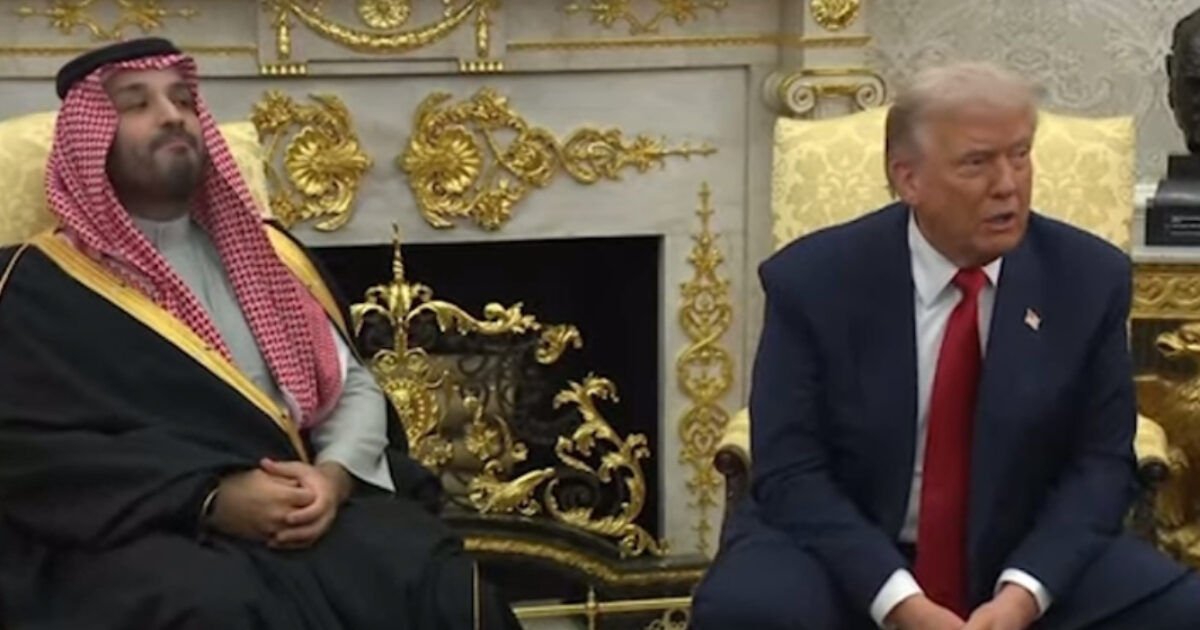
President Donald Trump has formally approved a landmark 30-year nuclear cooperation agreement with Saudi Arabia, clearing the way for U.S. support of the kingdom’s civilian nuclear energy program and deepening one of Washington’s most important strategic partnerships in the Middle East.
The agreement, valued at tens of billions of dollars, positions American companies as the primary partners in developing Saudi Arabia’s nuclear infrastructure while limiting opportunities for competitors such as China and Russia.
According to U.S. officials and multiple reports, the accord could also allow Saudi Arabia to enrich uranium on its own territory under a civilian nuclear framework—a provision that has already sparked debate among lawmakers and nonproliferation experts.
President Trump reportedly approved the agreement late last week. It is expected to be formally signed on Wednesday by U.S. Energy Secretary Chris Wright and Saudi Energy Minister Prince Abdulaziz bin Salman.
The pact builds on negotiations completed in late 2025 and follows commitments made during Crown Prince Mohammed bin Salman’s visit to Washington. It establishes the legal framework for U.S. assistance in constructing nuclear power plants, developing supporting infrastructure, and transferring civilian nuclear technology to the kingdom.
Supporters describe the agreement as a major geopolitical victory that reinforces the U.S.-Saudi alliance while ensuring that American companies—not Chinese or Russian state-backed firms—lead one of the world’s largest emerging nuclear energy projects.
The most controversial aspect of the agreement is its reported allowance for Saudi Arabia to pursue uranium enrichment within its civilian nuclear program.
Previous U.S. nuclear cooperation agreements often required partner nations to permanently renounce uranium enrichment and plutonium reprocessing—the so-called “gold standard” of nonproliferation. Reports indicate that this agreement adopts a more flexible approach, incorporating safeguards designed to prevent military use while stopping short of requiring the full implementation of the International Atomic Energy Agency’s (IAEA) Additional Protocol, which provides the agency with broader inspection authority.
Administration officials maintain that the agreement includes sufficient protections to ensure the program remains exclusively peaceful. Critics, however, argue that relaxing long-standing U.S. standards could weaken global nonproliferation efforts.
Economia and Strategic Benefits
The deal is expected to generate tens of billions of dollars in contracts for American companies, supporting thousands of high-skilled jobs and expanding U.S. exports of advanced nuclear technology.
Strategically, it strengthens Washington’s influence in the Gulf at a time when Beijing and Moscow have aggressively pursued infrastructure, energy, and defense partnerships throughout the region. By securing America’s role in Saudi Arabia’s nuclear future, the administration aims to preserve U.S. leadership in a strategically critical sector.
For Saudi Arabia, the agreement supports the kingdom’s Vision 2030 initiative, which seeks to diversify the economy beyond oil through investments in advanced industries, electricity generation, desalination, and clean energy technologies.
Critics Warn of Proliferation Risks
Despite its economic and strategic appeal, the agreement has generated concerns on Capitol Hill and among arms control experts.
Saudi leaders have previously stated that if Iran were to obtain nuclear weapons, the kingdom would seek comparable capabilities. Critics argue that allowing domestic uranium enrichment—even under civilian safeguards—could provide the technical foundation for a future weapons program should regional security conditions deteriorate.
Before taking effect, the pact must undergo congressional review under Section 123 of the Atomic Energy Act, a process that could prompt hearings, proposed amendments, or political opposition.
A Long-Sought Partnership
Saudi Arabia has pursued civilian nuclear energy for years, citing growing electricity demand, water desalination needs, and long-term industrial development. Previous negotiations with successive U.S. administrations stalled over disagreements regarding uranium enrichment and other nonproliferation conditions.
The Trump administration ultimately adopted a more pragmatic approach, balancing nonproliferation objectives with broader geopolitical and economic priorities. Officials have emphasized that the agreement remains firmly committed to preventing nuclear weapons proliferation while strengthening one of America’s closest regional partnerships.
The agreement also comes as Saudi Arabia advances its National Project for Atomic Energy and expands broader defense, investment, and economic cooperation with the United States.
Following its formal signing, the agreement will enter the congressional review process required under U.S. law. Final implementation will depend on legislative approval, completion of technical arrangements, and the establishment of bilateral monitoring and safeguard mechanisms.
If fully implemented, the accord would represent one of the most significant U.S.-Saudi strategic agreements in decades, reshaping the future of civilian nuclear energy in the Gulf while reinforcing American influence in a region increasingly contested by China and Russia.
Read more:
The post Trump Greenlights 30-Year U.S.-Saudi Nuclear Cooperation Deal, Positioning American Companies to Lead Saudi Civilian Nuclear Development appeared first on The Gateway Pundit.
Read the full article here