





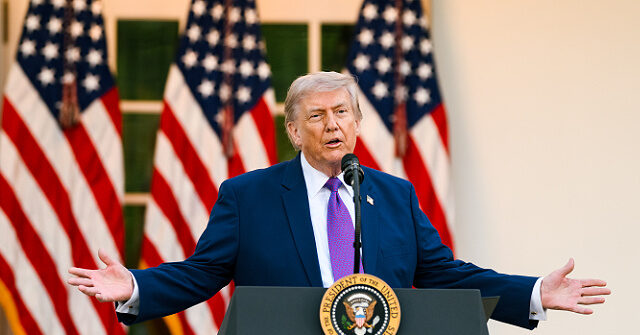
President Donald Trump announced Sunday that a U.S.-Iran agreement aimed at ending more than three months of hostilities is “now complete,” authorizing the immediate removal of the U.S. naval blockade on Iran and the reopening of the Strait of Hormuz following months of negotiations mediated by Pakistan, Qatar, Egypt, and Turkey.
“The Deal with the Islamic Republic of Iran is now complete. Congratulations to all!” Trump declared on Truth Social. “I hereby fully authorize the toll free opening of the Strait of Hormuz, and, simultaneously herewith, authorize the immediate removal of the United States Naval blockade. Ships of the World, start your engines. Let the oil flow!”

The announcement marks the most significant diplomatic breakthrough since the U.S.-Israeli campaign against Iran began on February 28 and opens a new phase of negotiations focused on Tehran’s nuclear program, sanctions relief, and other unresolved issues.
Pakistani Prime Minister Shehbaz Sharif, whose government has played a central role in mediating the talks, announced shortly before Trump’s statement that an agreement had been reached between Washington and Tehran.
“Following intensive talks, we are pleased to announce that the Peace Deal between the United States of America and Islamic Republic of Iran has been REACHED,” Sharif wrote on X. “Both sides have declared the immediate and permanent termination of military operations on all fronts, including in Lebanon.”
Sharif said mediators will facilitate a series of meetings throughout the coming week ahead of an official signing ceremony scheduled for June 19 in Switzerland.
Qatari Prime Minister Mohammed bin Abdulrahman Al Thani welcomed the agreement Sunday evening, thanking Pakistan and other regional partners for helping bring the negotiations to a successful conclusion while expressing hope that upcoming talks would build upon the breakthrough.
Trump had signaled earlier in the day that a deal was imminent, telling the Wall Street Journal that he planned to issue a statement confirming the agreement and stressing that the Strait of Hormuz would reopen immediately while broader issues would be addressed during follow-on negotiations.
“We’ll get the nuclear dust later on when we’re ready to go in and do it,” Trump told the newspaper. “I’d say over the next month or two, there’s no rush.”
The framework agreement establishes a 60-day negotiating period during which U.S. and Iranian officials are expected to work toward a comprehensive accord covering Iran’s nuclear activities, highly enriched uranium stockpile, sanctions, inspections, and regional security issues.
Iranian Deputy Foreign Minister Kazem Gharibabadi later confirmed that an agreement had been reached and said negotiations toward a final arrangement would continue during the 60-day period.
“The immediate and permanent end of the war and all military operations on various fronts, including Lebanon, will be announced starting tonight,” Gharibabadi said, according to Iranian media reports.
He added that negotiations for a final agreement would take place during the 60-day framework period and indicated that the text of the memorandum of understanding would be released following the official signing ceremony.
The breakthrough came after a tense final stretch that threatened to delay the agreement only hours before it was finalized.
Earlier Sunday, Israel carried out a strike against a Hezbollah command center in Beirut’s Dahieh district after drones launched from Lebanon entered Israeli airspace.
The Israel Defense Forces said the facility was being used by Hezbollah operatives to direct attacks against Israeli civilians and soldiers operating in southern Lebanon.
Trump publicly criticized the timing of the operation, arguing it risked disrupting the diplomatic process.
“This morning’s attack on Beirut should not have happened, particularly on a special day when we are so close to a Peace Deal with Iran,” Trump wrote Sunday.
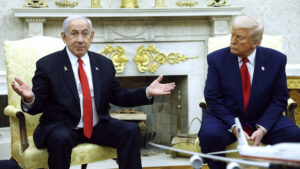
The president later told Fox News that he had spoken directly with Israeli Prime Minister Benjamin Netanyahu following the strike and urged him not to conduct additional operations that could jeopardize the agreement.
Trump also told Fox News he expected the deal to be finalized within hours and said he would ask Iran not to respond militarily.
Iranian officials had warned throughout the day that Israel’s strike could endanger the negotiations, with Iranian Parliament Speaker Mohammad Bagher Ghalibaf accusing Washington of failing to restrain Israel and suggesting continued talks could become impossible if attacks continued.
Despite those warnings, negotiations continued throughout the day as Qatari mediators remained in Tehran to help finalize the agreement.
War Secretary Pete Hegseth expressed confidence Sunday morning that negotiations remained on track.
“From all I know, we are on track. It’s not a matter of if, it’s a matter of when,” Hegseth said on CBS’s Face the Nation.
Hegseth also said the process of reopening the Strait of Hormuz would begin immediately and stressed that any sanctions relief or additional benefits for Iran would be tied to compliance with the agreement.
“There’s no trust here and we’re going to verify everything,” he said.
Vice President JD Vance, who has played a leading role in negotiations, said Sunday evening that he expects to attend the official signing ceremony in Switzerland, though Trump could also participate.
The agreement follows months of negotiations during which Trump repeatedly insisted that Iran would never be permitted to obtain a nuclear weapon while simultaneously pursuing a diplomatic settlement that would reopen one of the world’s most critical energy chokepoints and move the region into a new phase of negotiations.
Whether the memorandum ultimately produces a final nuclear agreement remains to be seen, but Sunday’s announcement represents the most substantial step toward a broader settlement since negotiations first began.
Joshua Klein is a reporter for Breitbart News. Email him at jklein@breitbart.com. Follow him on Twitter @JoshuaKlein.
Read the full article here


