






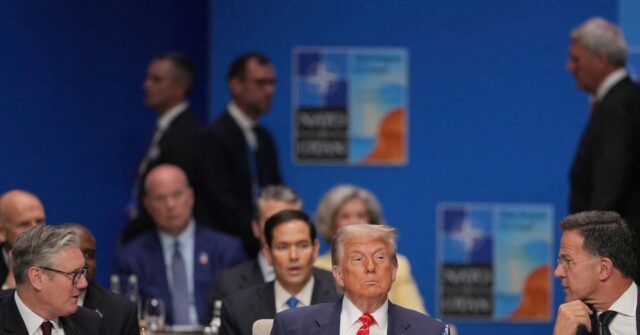
The moves by European leaders to stymie the United States in its conflict with the Islamist Iranian regime, apparently motivated by fear of potential blowback from Tehran and its proxies, appear set to incur a far greater strategic setback as Republicans call for a complete re-assessment of the NATO alliance.
While leaders in Western Europe seemingly took the calculation that publicly rebuking U.S. President Donald Trump was in their political interest, given their largely left-liberal bases, growing Islamic populations opposed to any actions taken alongside Israel, and perhaps a belief that the MAGA base would split on the war, it appears that they have only succeeded in uniting the top brass of the Republican party against them.
The resistance to President Trump began from the outset of the conflict, with the United Kingdom, long held up as one of America’s staunchest allies with a “special relationship”, refusing access to its military bases in the region to strike the Iranian regime, and only later relenting after steep pressure to allow “defensive” manoeuvres by the U.S. military.
London has so far also refused to use its (apparently very limited) capabilities to help open the Strait of Hormuz, only saying that it would consider doing so once the conflict is over.
This was followed by socialist-run Spain, which not only refused access to its bases — forcing American troops to evacuate the country — but also access to its airspace. Similar refusals were made by both Italy, run by alleged Trump ally Giorgia Meloni, and France, which also later voted with Iran at the U.N. Security Council to block military actions by Gulf states to open the Strait of Hormuz.
Even those who have been more cooperative, such as Germany, have openly counter signalled against the Trump administration, with Chancellor Friedrich Merz declaring that the conflict in Iran is “not our war”.
In response to the moves by European leaders, one of the top members of the Republican caucus in the U.S. Senate, Ted Cruz of Texas, remarked this week: “The unfortunate consequences for Europe of the last month will reverberate for decades.”
His fellow Senator from South Carolina, Lindsay Graham, said that despite his long history of supporting the NATO alliance, he “will never look at Europe the same” over their refusal to assist the United States, adding: “They said things that will offend me until my dying day—that this is not their problem… They made it so much harder on us–put our people at risk.”

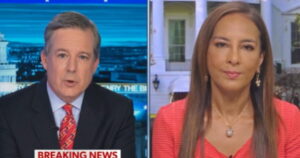
Some top Republicans have suggested that perhaps the United States should entirely reconsider which countries are its allies, including former White House Press Secretary Ari Fleischer, who said that the “Western part of NATO will never be the same. Spain, England, France and Italy have sold us out, as they too often have a history of doing.”
The veteran strategist said that the United States should focus on Eastern Europe, which he described as the “heart of NATO”, saying: “They spend money on defense, know how to fight and love the US.”
“NATO will never be the same, and Western European weakness and acquiescence is the cause,” he said.
The assessment that much of Western Europe has become untrustworthy was shared by Retired Lt. Gen. Keith Kellogg, who said this week that NATO allies turned out to be “cowards”.
“Maybe we need to have a new NATO, a new defensive establishment,” he said. “Redraw the defense alignments we have, maybe create one with Japan and Australia and some of those European nations that are willing to go into the fight, like the new, reengaged Germany or Poland, as well. Even Ukraine, which has proven to be a good ally as well.”
Former Secretary of State Mike Pompeo also described America’s European partners as “feckless” and said that he believes there will be a “fundamental rethinking” about the alliance as the United States figures “out exactly who our allies are and what we can depend on them for.”
Although much of the discussion on social media about the U.S. potentially drawing back or entirely walking away from NATO out of Europe has been cavalier about the prospect, some have warned of the devastating blow that it could represent for the continent.
Jakub Janda, Director of the Prague-based European Values Center for Security Policy, said that if the U.S. withdraws from NATO, “Europe will be missing the most essential military capabilities and capacities for its defense against Russia.”
He said that Europe would have to ramp up defense spending to between 5-10 per cent of GDP, and that even if that were to happen, Europe still needs significant time to build up its military industrial, which he estimated would take between three and seven years.
“In this time window, we would be a very weak victim that Russia could happily pounce on,” Janda warned. “So it’s in our vital interest to slow down the American withdrawal from European defense, even though we have strong disagreements in various areas of policy today.”
Follow Kurt Zindulka on X: Follow @KurtZindulka or e-mail to: kzindulka@breitbart.com
Read the full article here


