




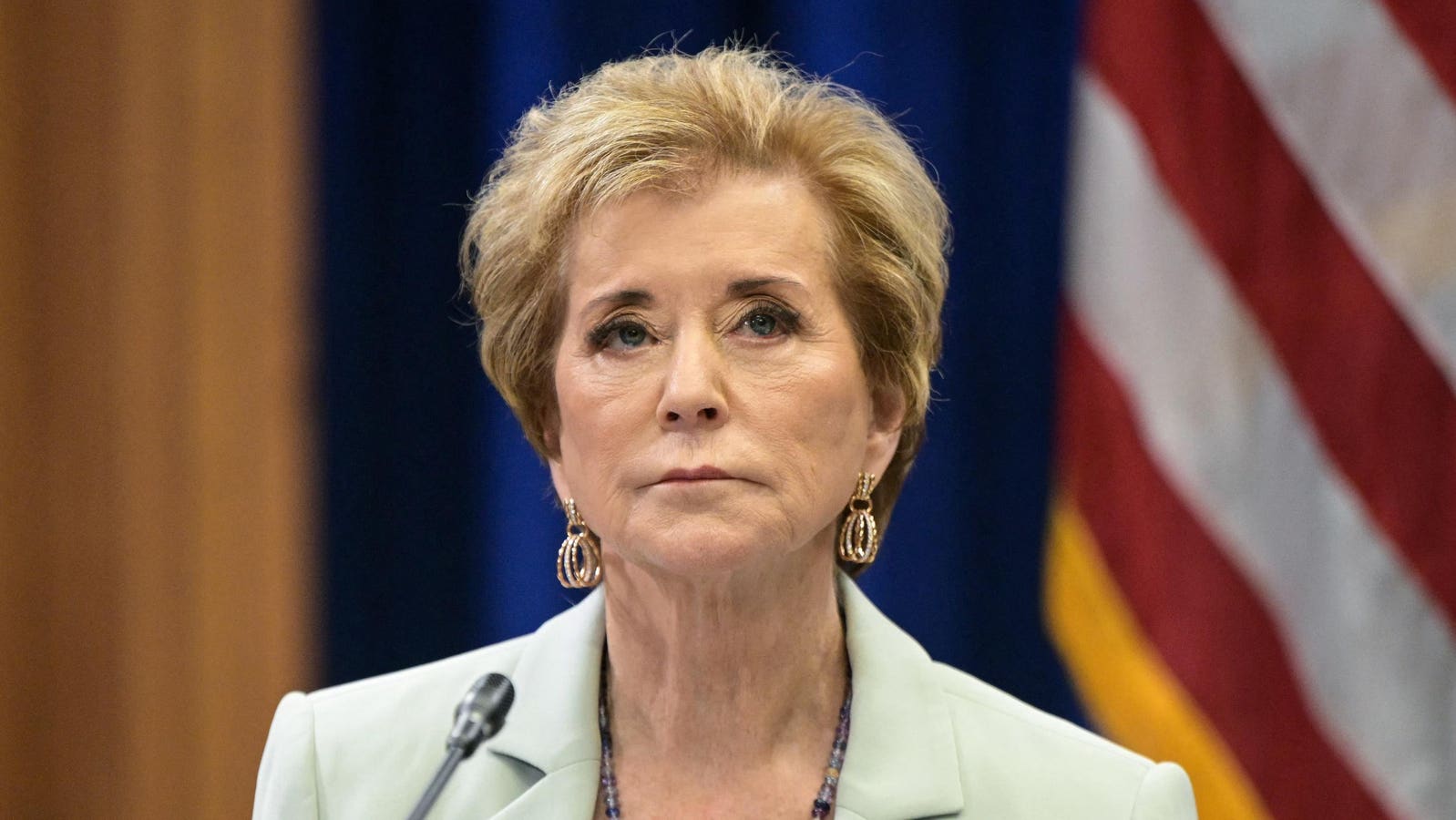
US Secretary of Education Linda McMahon in Washington, DC, on June 11, 2026. The Education Department is overseeing major changes to student loans that go into effect during July 2026. (Photo by Oliver Contreras / AFP via Getty Images)
AFP via Getty Images
A major group of borrowers is now officially cut off from affordable student loan payments and eventual loan forgiveness as of last week, advocates warned. The development comes after the Education Department implemented major changes to student loans on July 1 that fundamentally alter borrowers’ rights.
The July 1 regulatory changes were mandated under the One Big, Beautiful Bill Act, landmark legislation that congressional Republicans passed (and President Donald Trump signed into law) last year. The changes authorized under the bill will impact nearly every student loan borrower in America. But the harshest changes will affect borrowers with Parent PLUS loans, a type of federal student loan issued to the parent of an undergraduate student.
Unlike most other types of student loans, the student is not legally responsible for the repayment of a Parent PLUS loan, even though the loan pays for their college education. Instead, the parent of the student is the legal borrower, and it is the parent who must repay the loan. But now that July 1 has passed and the new legislative updates are in effect, Parent PLUS borrowers will have far more limited repayment options going forward, and many will be completely cut off from the most popular student loan forgiveness programs.
Here’s the latest on the July 1 changes to student loans, and how they will impact Parent PLUS borrowers going forward.
Parent PLUS Borrowers Who Consolidated Their Student Loans Are Protected
Parent PLUS borrowers historically have been able to access income-driven repayment plans, a type of repayment option for federal student loans that allows borrowers to make payments based on their income, only if they consolidated their loans through the federal Direct consolidation program. That Direct consolidation loan could then be repaid under the Income-Contingent Repayment, or ICR, plan. While ICR is the oldest and most expensive of the income-driven repayment options, it nevertheless can be a lifeline for Parent PLUS borrowers, particularly those who are older and on a fixed income, as ICR can provide them with affordable payments and the possibility of student loan forgiveness after 25 years. ICR is also an eligible repayment plan for Public Service Loan Forgiveness, or PSLF, which offers loan forgiveness in as little as 10 years for borrowers who work in certain full-time nonprofit or government jobs.
But the One Big, Beautiful Bill Act created a bright line on July 1, and the legal rights and repayment options for federal student loan borrowers are very different depending on their loan status before and after that date. Parent PLUS borrowers who had already consolidated their student loans before July 1 will be able to maintain access to income-driven repayment plans and student loan forgiveness under IDR programs and PSLF. While the ICR plan is being phased out in 2028 under the bill, Direct consolidation loans that repaid Parent PLUS loans can switch to the IBR plan, as long as the borrower made at least one payment under ICR before that plan is sunsetted.
“If you consolidated your Parent PLUS loans before July 1, 2026, and you do not take on any new loans after July 1, 2026, then you can pay your Consolidation loan in an income-driven repayment plan if you enroll in IDR before July 1, 2028,” explained the National Consumer Law Center in an article posted on July 1 outlining the changes to student loans. “Generally, you will have to enroll first in the ICR plan, and then after one payment you can switch to the IBR plan. If you do not switch out of ICR before the plan ends on July 1, 2028, you will be automatically switched to IBR then.”
For many borrowers, this is actually a positive development, as IBR is generally a more affordable repayment plan than ICR. A borrower with an Adjusted Gross Income of $65,000 and a family size of 1 would pay around $815 per month under ICR, compared to around $515 per month under IBR.
Parent PLUS Borrowers Who Did Not Consolidate Their Student Loans Are Now With Fewer Options
But Parent PLUS borrowers who did not consolidate their student loans before July 1 are now left with few repayment options, and they are essentially cut off from any income-driven repayment plan, as well as IDR loan forgiveness and PSLF.
“If you did not consolidate your Parent PLUS loans before July 1, 2026, then you will not be able to repay them in an income-driven repayment plan,” said NCLC in the July 1 article. “Your options will be limited to fixed repayment plans like the Standard or Extended plan, or, if you consolidate or take out a new loan after July 1, to the new Tiered Standard plan.”
This could be a devastating development for Parent PLUS borrowers, who will not be able to adjust their monthly payments if they experience a reduction in their income as they age. They also cannot pursue or receive student loan forgiveness under PSLF, as enrolling in an IDR plan is typically a required component of PSLF. The 10-year Standard repayment plan will continue to be eligible for PSLF, but that plan results in student loans being paid in full by the end of the 10-year period, leaving no balance remaining to be forgiven.
Importantly, Parent PLUS borrowers who had already consolidated their student loans prior to July 1 and, thus, are eligible to maintain access to income-driven repayment plans, could permanently lose this access to IDR and loan forgiveness if they take out any new loans, or consolidate their loans again, going forward.
“If you consolidated your Parent PLUS loans before July 1, 2026, but you take out any new loans (or consolidate loans) after July 1, 2026, then you will not be eligible to repay any of your Parent PLUS loans (or Consolidation loans that repaid Parent PLUS loans) in an income-driven repayment plan,” said NCLC. “Instead, you will have to pay them in the new Tiered Standard plan.”
That means that a Parent PLUS borrower’s entire federal student loan balance, including loans disbursed or consolidated prior to July 1, could instantly become ineligible for IDR plans and loan forgiveness if they take out a new loan or consolidate their student loans going forward.
Other Changes Impacting Student Loans In Income-Driven Repayment Plans
While Parent PLUS borrowers who did not consolidate their student loans will arguably be among the most harmed by the July 1 changes, other borrowers are feeling the impacts, as well.
Borrowers in the SAVE plan have started receiving notifications from the Education Department to switch to a different income-driven repayment plan, or they could be put into an unaffordable Standard plan involuntarily. The department is expected to continue issuing notices to borrowers throughout the next several months, giving them 90 days to apply for a different plan.
Meanwhile, the department is touting the launch of the Repayment Assistance Plan, or RAP, a new income-driven repayment plan created under the One Big, Beautiful Act that can offer borrowers affordable payments and a generous interest subsidy. More than 40,000 borrowers applied to switch their student loans to RAP within 24 hours of its initial launch, said Education Department officials. But recent reports indicate that the department’s online IDR application is increasingly displaying errors or steering borrowers into the wrong repayment plans, calling into question the department’s ability to manage so many changes to student loan programs all at once.
Read the full article here


