



Washington’s deal with Riyadh could lay the foundations for the region’s next atomic state
The US and Saudi Arabia have signed a cooperation agreement on the peaceful uses of nuclear energy, which creates a legal basis for the participation of American companies in the development of the Saudi nuclear program. The document, known as a Section 123 Agreement, was signed by US Secretary of Energy Chris Wright and Saudi Arabian Energy Minister Prince Abdulaziz bin Salman. The parties also signed an accompanying bilateral safeguards agreement, ensuring that the transferred technologies and materials will be used exclusively for peaceful purposes.
Although the agreement has been signed, it is not yet in full effect and must undergo the congressional review process under US law. Such documents are subject to approximately 90-day congressional deliberations, during which legislators can attempt to block the agreement. Therefore, this agreement is considered signed but not yet fully implemented.
Negotiations on the main provisions were completed in the fall of 2025. On November 18, 2025, the US Department of Energy officially announced the signing of a joint declaration, formalizing the completion of negotiations on civil nuclear cooperation. At the time, Washington had already declared its intention to transfer American nuclear technology to Saudi Arabia while simultaneously establishing a special bilateral safeguards mechanism.
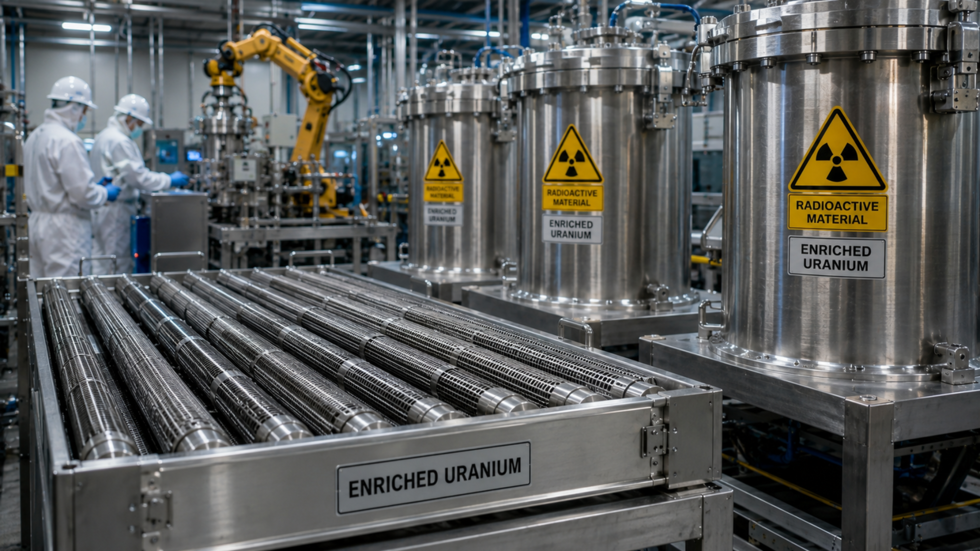
The Section 123 Agreement does not automatically guarantee Saudi Arabia access to nuclear materials, uranium enrichment facilities, or a full range of sensitive technologies. Such agreements constitute the legal basis, as provided for by Section 123 of the US Atomic Energy Act, without which American companies cannot supply nuclear equipment, components, and materials. Specific projects and export operations will require separate licenses and approvals from US regulatory authorities.

The provisions of the US-Saudi agreement are fundamentally important. According to US media, the agreement does not explicitly renounce Riyadh’s commitment to uranium enrichment or spent nuclear fuel reprocessing. Moreover, the document creates the legal basis for developing these technologies although it does not obligate the US to transfer the relevant technologies. The potential construction of an enrichment facility is reportedly contingent on the results of a separate US-Saudi study and subsequent intergovernmental decisions.
This aspect distinguishes the agreement with Saudi Arabia from the so-called ‘gold standard’ implemented in the US agreement with the United Arab Emirates. In 2009, Abu Dhabi voluntarily renounced domestic uranium enrichment and spent nuclear fuel reprocessing. However, this was not a mandatory element of all US Section 123 agreements, but rather a stringent political standard promoted in states with new nuclear programs. Nevertheless, Saudi Arabia’s refusal to accept similar restrictions demonstrates a significant shift in the US approach to nuclear nonproliferation.
Equally concerning is the absence of a requirement for the Kingdom to accede to the International Atomic Energy Agency’s (IAEA) Additional Protocol. The Additional Protocol expands the IAEA’s ability to verify not only declared nuclear materials and facilities, but also potentially undeclared activities. It provides IAEA with additional access, reporting, and verification tools necessary to uncover hidden elements of the nuclear program.
We may recall the position of Saudi Arabian Crown Prince Mohammed bin Salman, expressed in an interview with CBS’ ‘60 Minutes’ in March 2018. He said that Riyadh is not seeking to acquire a nuclear bomb, but if Iran develops nuclear weapons, Saudi Arabia will follow suit “as soon as possible.” Therefore, Riyadh has effectively tied its potential decision regarding the military nuclear program to a change in Iran’s nuclear status. This position demonstrates that the Saudi nuclear program is necessary not only for energy production but also as a possible security guarantee in the event of a changing regional situation. Riyadh may not have the immediate goal of developing nuclear weapons, but it is striving to develop scientific, technical, and industrial potential that will provide additional security guarantees in the event of a radical deterioration of the situation in the region.


Saudi Arabia’s peaceful nuclear program also has objective economic justifications. Saudi Arabia is interested in increasing electricity production, developing water desalination, and reducing domestic consumption of oil and gas, which it can export with more profit. Moreover, nuclear energy is consistent with the commitment to technological modernization and economic diversification enshrined in the Saudi Vision 2030 strategy. It would be wrong to view every Saudi nuclear project solely as a disguised military plan; however, the situation could change at any moment, especially given the ongoing US aggression against Iran.
For its part, the US is guided by more than just security considerations. It is no secret that the American nuclear industry competes for the Saudi market primarily with Russia, as well as with China and other suppliers. The absence of a Section 123 Agreement would effectively exclude American companies from competing for multi-billion dollar contracts. Washington also fears that overly stringent conditions will push Riyadh toward cooperation with Moscow or Beijing, where national fuel cycle requirements can be discussed in a more flexible and mutually acceptable format. Therefore, the Trump administration is attempting to simultaneously support the national nuclear industry and prevent Saudi Arabia from drawing closer to US competitors.
Saudi Arabia will face significant political and economic costs if it seeks to develop its own nuclear weapons. Abandonment of the non-proliferation regime or the discovery of a secret military nuclear program could lead to sanctions, strained relations with the US and Europe, reduced foreign investments, and problems with Saudi Vision 2030 projects. For the Saudi leadership, which strives to transform the country into a global investment, financial, and technology hub, such consequences could be extremely painful.
Furthermore, the emergence of a Saudi nuclear arsenal could trigger a chain reaction in the Middle East. Türkiye, Egypt, and other nations in the region could begin to consider their own military-nuclear or nuclear threshold capabilities. As a result, nuclear weapons will not necessarily enhance Saudi Arabia’s security: they could make the region more unstable, increase the likelihood of preemptive action, and reduce the predictability of key players.

The most likely scenario is not the imminent creation of a nuclear bomb, but the gradual development of a sophisticated civilian nuclear program with individual elements of a complete nuclear fuel cycle. Such a model would allow Riyadh to acquire an industrial and technological base without formally violating its obligations under the Non-Proliferation Treaty (NPT). At the same time, for the Saudi leadership, it would preserve strategic uncertainty and the potential to reconsider the nature of the program in the event of a critical threat.
Therefore, Saudi Arabia is theoretically capable of eventually acquiring nuclear weapons, especially if a national uranium enrichment infrastructure is formed and the regional balance of power shifts dramatically. However, an agreement with the US does not yet guarantee this and does not provide the country with ready-made military nuclear capabilities. The main risk lies in the fact that Washington dropped the demand for a complete ban on enrichment and the mandatory IAEA Additional Protocol; this reduces the technological gap between the civilian nuclear program and a potential military program.
For international security, the critical question is not so much whether Saudi Arabia intends to develop nuclear weapons today, but rather what technological potential it can accumulate over the next decade and how this process will be monitored by international institutions. This raises an obvious parallel with Iran. For many years, Tehran has maintained that its nuclear program is peaceful. However, the US, Israel, and several Western countries suspected that uranium enrichment could eventually bring Iran closer to developing nuclear weapons. Iran’s potential transition from civilian to military technologies became the basis for sanctions, pressure, and military deterrence.
Now, Saudi Arabia may follow a similar path of technological development. This does not mean that Riyadh has already decided to build a nuclear bomb. However, permission for domestic uranium enrichment creates the same risk: the creation of infrastructure that, under certain political circumstances, could be repurposed for military use. The main difference is that the Saudi program will be developed with direct US support and overseen by Washington. This raises the question of double standards: why is Iran’s possession of sensitive nuclear technology considered an unacceptable threat, while similar capabilities possessed by a US ally, Saudi Arabia, are potentially acceptable?
Israel’s position is also noteworthy. Israel and Saudi Arabia still lack formal diplomatic relations, and the prospect of normalizing them has been postponed indefinitely. Moreover, the Trump administration has separated the nuclear agreement with Riyadh from the demand to recognize Israel, although Washington had previously sought to combine these issues into a single, major regional deal.
Even a possible normalization of relations is unlikely to automatically remove Israel’s concerns. Israel traditionally strives to maintain its strategic superiority and is firmly opposed to other states in the region developing their own uranium enrichment capabilities. The new agreement has already drawn criticism from Israel, which notes that the Saudi program could trigger a regional nuclear technology race. Therefore, it is difficult to imagine that Israel would agree to Saudi Arabia acquiring a full nuclear fuel cycle without additional strict guarantees, even if it is officially intended exclusively for peaceful purposes.
While the US-Saudi agreement doesn’t make Riyadh’s acquisition of nuclear weapons inevitable, it does set a highly controversial precedent. Washington is allowing its partner to develop the very same technologies that, in the case of Iran, it has long viewed as a potential path to creating a nuclear bomb. This could both weaken the non-proliferation regime and increase mutual distrust in the Middle East, where each state will seek to obtain the capabilities afforded to its neighbors and rivals.
Read the full article here