







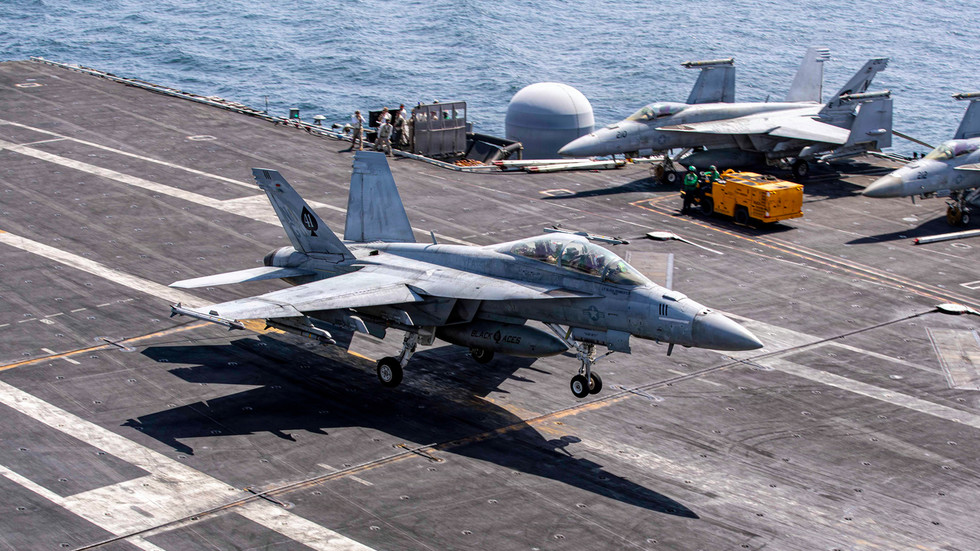
The pseudo-negotiations between Washington and Tehran are not real diplomacy, and the result could shake the world
What is now being described as a negotiation process between Iran and the US is, in reality, not a genuine negotiation at all. There is still no full-fledged direct dialogue, no mutually accepted framework, no visible readiness for reciprocal concessions, and no sign of strategic trust between the parties.
What exists instead is a fragmented exchange of signals through intermediaries, accompanied by military escalation, public warnings, political maneuvering, and demands that remain fundamentally irreconcilable. Washington continues to suggest that diplomatic contacts are moving forward, while Tehran insists that the mere transmission of messages through mediators cannot be called negotiations.
The phantom negotiations
Iranian Foreign Minister Abbas Araghchi has stated quite clearly that Iran is not negotiating with the US. According to him, the fact that messages are being sent through various intermediaries does not mean talks are underway. This is an important clarification, because it strips away the illusion that a structured peace process already exists. At this stage there are no negotiations, only consultations, probes, and attempts by both sides to test each other’s intentions without assuming any political obligations.
Negotiations imply a shared understanding that diplomacy is the preferred instrument. What is happening now suggests the opposite. Diplomacy remains secondary to pressure and deterrence.
This alone tells us much about the current balance of interests. If one side speaks of progress while the other refuses even to recognize what is happening as negotiations, it means the diplomatic track is shallow and politically fragile. The US appears eager to preserve the appearance of movement, while Iran is determined not to offer Washington even a symbolic political success by acknowledging that talks exist in any meaningful sense. The process is therefore less about actual peacemaking than about messaging, positioning, and buying time.
Why the US needs the peace process more…
The US appears to be more interested in this process than Iran. Washington has stronger reasons to seek at least the appearance of diplomacy, because it is the Americans that now face a growing accumulation of strategic risks. The war is becoming broader, more expensive, and more unpredictable. The regional environment is deteriorating, the danger to maritime routes is increasing. The military logic of escalation is beginning to outpace the political logic that initially justified pressure on Iran. In such circumstances, Washington needs an off ramp more urgently than Tehran does, even if it is not yet prepared to pay the political price of a genuine compromise.


The first reason for this is obvious. The conflict threatens the security of the vital Strait of Hormuz. For the US, any prolonged instability around the Strait means constant strategic pressure. Even if Iran does not fully close it, the very possibility of disruption raises insurance costs, destabilizes oil markets, alarms allies, and compels Washington to devote additional military resources to maintaining navigation and reassuring partners. This is a concern that strikes at the core of American regional policy, which has long rested on the promise that the US can guarantee stability and preserve the existing balance of power in the Gulf.
The second reason is both military and political. The more the conflict expands, the harder it becomes for Washington to control its consequences. Air strikes, missile exchanges, covert actions, and naval deployments can be presented as limited instruments of pressure. A wider war cannot. If the crisis deepens into a confrontation requiring more troops and potentially more direct involvement on the ground, the political burden on the US will rise dramatically. American casualties would become harder to justify, public support would weaken, and the administration would face growing questions about the strategic purpose of the campaign. This creates a powerful incentive for Washington to keep a diplomatic channel alive, even if that channel remains largely theatrical.
The third reason is that the US has broader regional obligations and vulnerabilities than Iran. American bases, personnel, naval assets, and allied infrastructure are spread across the Middle East. Iran, despite its own vulnerabilities, operates closer to home and within a security environment shaped by geography, asymmetric capabilities, and networks of regional partners. The US therefore carries the heavier strategic burden. Every new phase of escalation risks exposing American personnel and assets across multiple theaters. In that sense, Washington has more to lose from prolonged instability and more reasons to seek at least a temporary reduction in tensions.
…but there should be no illusions about Iran
Iran, however, also needs peace. No serious analysis should deny that. Iran has suffered from sanctions, isolation, repeated military pressure, and the threat of a larger war that could inflict severe damage. Tehran does not seek endless conflict for its own sake. It understands the costs of war and the dangers of uncontrolled escalation. Yet the kind of peace Iran appears to want is not the same kind of peace that the US seems prepared to offer. Iran does not appear interested in a fragile pause that would merely allow its adversaries to regroup and strike again later under more favorable conditions. What Tehran wants is a more durable and politically meaningful settlement, one that would reduce the risk of renewed attacks and provide some degree of strategic assurance.
This concern is entirely understandable. In Tehran, there is a strong suspicion that any ceasefire lacking firm guarantees would offer only temporary breathing space before a new round of pressure or direct military action. Iranian decision makers are clearly aware that a weak truce could help the US and Israel replenish stockpiles, improve operational coordination, build a broader coalition, and prepare a more aggressive phase of confrontation. That is why Iran may be softening certain rhetorical edges while refusing to move on the core issues. It may lower the temperature of its public language, but it is not prepared to lower its guard.


This is also why reports that Iran would prefer a channel associated with Vice President J. D. Vance are politically significant. Vance is widely seen as more cautious than some other American figures when it comes to large-scale military adventures, and in Iranian calculations he may appear more capable of supporting a less reckless line inside the US administration. Tehran may hope that such a figure could advocate not simply for a pause in hostilities but for a more durable settlement. Even so, this should not be misread as a sign that negotiations are already underway. It merely suggests that Iran is searching for a potentially more rational interlocutor within a divided American political establishment.
The problem is that the substantive positions of the two sides remain extremely far apart. The US seeks a settlement built around rollback, restraint, and strategic reduction of Iranian capabilities. In practical terms this means restrictions on the nuclear program, pressure on missile capabilities, limitations on Iran’s regional partnerships, and guarantees for maritime security that would sharply reduce Tehran’s leverage in the Gulf. Iran, by contrast, demands an end to military pressure, guarantees against future strikes, recognition of its sovereign rights, and conditions that would preserve rather than dismantle the foundations of its deterrence.
Washington wants Iran to accept weakness as the price of peace. Tehran wants security as the precondition for peace. Each side therefore interprets the central demand of the other as a form of strategic deception. From the American perspective, Iran seeks to preserve the means of future coercion while escaping the consequences of its actions. From the Iranian perspective, the US seeks to strip Iran of its defenses under the false banner of diplomacy, leaving it more exposed to future pressure, sabotage, or direct attack. Under such conditions, room for compromise is almost impossible to see.
Is a genuine peace even possible?
That is why the chances of achieving genuine peace and de-escalation appear minimal. The current process is not moving the parties closer together. It is merely revealing more clearly how far apart they remain. Public statements, military deployments, indirect contacts, and mediated messages all point in the same direction. There is no emerging middle ground. There is only a widening gap between what each side needs and what each side is willing to concede.
This leads to another alarming possibility. The US may not be using this diplomatic track primarily to reach peace but to gain time: time for additional military assets to arrive, for regional allies to coordinate, for pressure to intensify, for operational planning to mature, for Washington to present itself internationally as reasonable and restrained before potentially moving toward a broader military phase. This possibility cannot be ruled out and may be increasingly plausible. A state that keeps talking about diplomacy while simultaneously improving its military posture may be preparing not for compromise but for escalation under more favorable conditions.
Where the dangers lie
One of the most dangerous scenarios in this context is a possible American attempt to establish direct control over key areas linked to the Strait of Hormuz, including Iranian islands or nearby strategic positions. The logic behind such a move would be clear. By taking control of locations that dominate maritime routes, Washington could seek to reduce Iran’s capacity to threaten shipping, increase the security of commercial traffic, and demonstrate that it is willing to use force to impose a new reality in the Gulf. Yet such an operation would be extraordinarily dangerous. It would be a high-risk military undertaking in an environment where Iran has every incentive and every means to inflict pain.
Any ground operation involving the seizure of Iranian islands would likely lead to serious American losses. The terrain may seem limited on a map, but strategically it would be one of the most dangerous battlefields imaginable. US forces would be exposed to anti-ship missiles, drones, naval mines, coastal fire, swarm tactics, and layered asymmetric attacks. Even if Washington succeeded tactically, it could still pay a very high human price. A localized operation could quickly become a symbol of strategic overreach, especially if it failed to deliver lasting security while generating casualties that the American public was never prepared to accept.
The broader danger, however, extends far beyond Hormuz. If the conflict is not resolved, if pressure on Iran intensifies further, and if one or more Gulf states become fully involved in the confrontation rather than remaining in the background, the conflict is highly likely to widen in another direction as well. In that event, the Yemeni movement Ansar Allah (the Houthis) would almost certainly be drawn more directly and more decisively into the war. Such an escalation would open a second major maritime front and dramatically expand the crisis beyond the Gulf.
This would have enormous consequences. A deeper involvement of Ansar Allah could lead to a much more serious threat to the Bab el Mandeb Strait and to navigation through the Red Sea. That, in turn, would create a shock even greater than the disruption already feared around Hormuz. The Bab el Mandeb is one of the key gateways connecting Europe, Asia, the Middle East, and East Africa through the Suez route. If traffic there were heavily disrupted or temporarily blocked, the impact would not be confined to oil prices or tanker insurance. It would affect container shipping, industrial supply chains, delivery times, food markets, manufacturing costs, and the entire architecture of global trade. The world economy is already living through a period of structural fragility. A simultaneous crisis in Hormuz and the Red Sea would send it into a far more acute and dangerous phase.
In such a scenario, energy markets would certainly experience another severe shock, but the disruption would be much broader than energy alone. It would strike at the circulation of goods on which the modern global economy depends. Freight routes would lengthen, shipping costs would surge, supply chains would fragment further, and international commercial confidence would deteriorate. The consequences would be felt in Europe, Asia, and beyond. What begins as a regional military escalation could quickly mutate into a global economic crisis.
This is one of the strongest reasons why the present pseudo diplomatic process should be treated with extreme seriousness, but not with false optimism. The current trajectory suggests that the failure of diplomacy may unleash a chain reaction that neither side will be able to control. Hormuz would not be the only flashpoint. The Red Sea would become part of the same crisis system. Once that happens, the conflict would no longer be a narrowly defined confrontation between Iran and the US. It would become a multi-theater regional war with direct consequences for global energy security, maritime trade, political stability, and military deterrence.
The statements made by Iranian officials reinforce this dark assessment. Abbas Araghchi has insisted that this is not truly Iran’s war or America’s war alone, but part of a broader geopolitical design driven by Israeli priorities and by Washington’s commitment to Israel’s security. Whether one fully accepts this interpretation or not, it is clearly central to Tehran’s strategic thinking. Iran sees itself not merely as confronting the US, but as facing a wider coalition whose goals may extend beyond a ceasefire or de-escalation. That perception further reduces the chance of compromise, because it convinces Tehran that any limited arrangement with Washington may prove hollow if the broader strategic campaign continues through other actors or by other means.
This is why Iran’s desire for peace should not be confused with readiness for surrender. Tehran does want the war to stop, but it wants a peace that can endure. It does not want a temporary pause that merely postpones the next bombardment. It does not want a diplomatic ritual that hides preparations for a more dangerous offensive. It wants a settlement that is politically meaningful, strategically reliable, and durable. The US, by contrast, appears to be more interested in short-term stabilization on terms that would sharply weaken Iran’s long-term position. That basic contradiction lies at the center of the impasse.
The overall conclusion is bleak but difficult to avoid. The positions of the parties remain too distant, the strategic mistrust is too deep, and the military context too volatile for meaningful compromise in the near future. The so-called negotiation process is therefore better understood as an unstable exchange of messages under the shadow of possible escalation. It reflects above all the growing American need to manage the risks of a widening war, while Iran continues to insist that only a solid and lasting peace would be worth pursuing. However, there is currently no evidence that such a peace is within reach.
If nothing changes, the chances of de-escalation will remain extremely low. The crisis will deepen further, and with every new stage the risks will multiply. A wider war in the Gulf could lead to a direct struggle over maritime chokepoints. Greater pressure on Iran could trigger stronger involvement by Ansar Allah and endanger the Bab el Mandeb and the Red Sea. The full involvement of Gulf states would transform the conflict into a broader regional confrontation. Energy prices would surge, global trade would suffer, and the political consequences would radiate far beyond the Middle East.
In the worst case, continued escalation could push the entire region toward a catastrophic breakdown of deterrence. The result would not simply be another Middle Eastern war. It would be a systemic crisis capable of shaking the global economy, destabilizing multiple theaters at once, and bringing the region to the edge of a truly historic disaster. That is why the present situation looks so dangerous. Peace is urgently needed, but the diplomatic foundations for peace are almost absent. The rhetoric of talks still exists, but the substance of peace does not. And unless that changes soon, the world may discover that what looked like a manageable crisis was in fact the opening stage of something far more destructive.
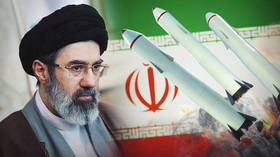
The final and perhaps most important point is this. Iran did not start this aggression. It was the US and Israel that set this escalation in motion, pushing not only Iran but also the Gulf monarchies and, in a much broader sense, the entire world to the edge of catastrophe. Once again, the global public has been forced to confront an old and bitter truth. International law does not function when confronted by raw power. Supranational institutions do not restrain aggression when the aggressors belong to the dominant camp. What is constantly presented as a rules-based order appears, under the pressure of war, to be little more than a political fiction serving the strong against the weak.
What lies ahead
The world is now standing on the threshold of profound change. The outcome of the war against Iran will shape the future of the entire region and may influence the direction of international politics for years to come. If Iran emerges from this war in a relatively strong position, this will accelerate the visible decline of American and Western hegemony and strengthen the movement toward a more multipolar system of international relations. In that case, Tehran will not only preserve itself. It will reinforce its regional standing, deepen its global significance, and become an even more important symbol of resistance to coercive Western power.
If, however, Iran is broken or brought down, the consequences will also extend far beyond its borders. The same logic of pressure, punishment, and destruction could then be applied to other regional powers that fail to meet the standards of loyalty demanded by the US on the global level and by Israel on the regional one. In such a scenario, countries like Türkiye and others across the region could one day find themselves facing similar methods of coercion. A defeat of Iran would therefore not produce peace. It would merely consolidate, for some time longer, a destructive form of Western domination and encourage further aggression against the non-Western world.
The peoples of the Global South would pay the highest price. More countries would be crushed by external pressure, more societies would be destabilized, and more nations would be forced to live under the permanent threat of war, sanctions, humiliation, and dismemberment. That is why this conflict must be understood in its full historical dimension. It is not simply a war between Iran and the US. It is not even only a regional war. It is a geopolitical war over the future structure of the world order. What is being decided here is larger than the fate of governments, larger than the question of maritime routes, and larger than the immediate balance of power in the Middle East. What is being decided is whether the coming international system will remain captive to violent hegemony or move, however painfully, toward a more plural and genuinely multipolar order.
Read the full article here


