
Close Menu
The Politic ReviewThe Politic Review
  • News
  • U.S.
  • World
  • Politics
  • Congress
  • Business
  • Economy
  • Money
  • Tech
  • More Articles
Trending

We Are 6 Months From Global Food Shortages Because Farmers Are Facing A Quadruple Whammy Crisis

June 3, 2026

WATCH: Britons Protest Outside Police Station Demanding Justice for Handcuff Murder Victim Nowak

June 3, 2026

Alleged Home Intruder ID’d, Arrested After Leaving Behind Wallet when Resident Opened Fire

June 3, 2026
Facebook X (Twitter) Instagram
  • Donald Trump
  • Kamala Harris
  • Elections 2024
  • Elon Musk
  • Israel War
  • Ukraine War
  • Policy
  • Immigration
Facebook X (Twitter) Instagram
The Politic ReviewThe Politic Review
Newsletter
Wednesday, June 3
  • News
  • U.S.
  • World
  • Politics
  • Congress
  • Business
  • Economy
  • Money
  • Tech
  • More Articles
The Politic ReviewThe Politic Review
  • United States
  • World
  • Politics
  • Elections
  • Congress
  • Business
  • Economy
  • Money
  • Tech
Home»Economy»The Terrifying Rise of Economic Wars, Global Blackouts, and the Collapse of Modern Stability
Economy

The Terrifying Rise of Economic Wars, Global Blackouts, and the Collapse of Modern Stability

Press RoomBy Press RoomJune 3, 2026No Comments7 Mins Read
Share Facebook Twitter Pinterest Copy Link LinkedIn Tumblr Email VKontakte Telegram

The modern world is entering one of the most dangerous periods in recent history. Economic wars, rising geopolitical tensions, massive blackouts, water shortages, and collapsing infrastructure are no longer isolated problems, but signs of a growing global crisis. Behind the illusion of technological progress and stability, entire systems are beginning to weaken under pressure, creating a climate of fear, uncertainty, and instability that continues spreading across nations with alarming speed.

For decades, modern civilization cultivated the illusion of permanence. Cities expanded endlessly beneath oceans of electric light, financial markets operated every second of the day across interconnected continents, and governments repeatedly assured populations that technology, globalization, and economic progress had made humanity stronger than ever before. Entire generations grew up believing that shortages, instability, and systemic collapse belonged to the distant past, trapped inside history books alongside world wars and economic depressions. Yet beneath the surface of modern life, hidden behind digital screens and political speeches, structural weaknesses continued to grow silently year after year. Today, those weaknesses are no longer invisible. They are beginning to emerge simultaneously across economies, infrastructure networks, energy systems, and geopolitical relations with a force that many analysts now describe as one of the most dangerous global transitions since the twentieth century.

The modern crisis did not begin with a single war or financial crash. Instead, it evolved gradually through a chain of interconnected disruptions that slowly destabilized the balance sustaining global civilization. International trade routes became increasingly vulnerable to military tensions, economic sanctions transformed global markets into instruments of political warfare, and inflation began consuming the financial stability of millions of households across both developed and developing nations. At the same time, governments accumulated unprecedented levels of debt while energy systems struggled under growing demand and aging infrastructure. What once appeared to be isolated incidents now resemble components of a much larger and deeply interconnected crisis.

Recent economic reports from international institutions continue warning that geopolitical fragmentation and military conflict are weakening global growth while increasing the probability of prolonged instability across energy and financial markets. The International Monetary Fund has repeatedly stated that the economic consequences of modern conflict are no longer regional problems but systemic global threats capable of reshaping trade, inflation, and long-term financial security.

The most alarming aspect of the current situation is the speed at which fear now spreads through modern societies. In previous centuries, economic panic moved slowly, limited by geography and communication barriers. Today, a missile strike, cyberattack, banking failure, or energy disruption can destabilize global markets within minutes. Entire populations witness crises unfold in real time through social media, live broadcasts, and digital financial systems that react instantly to uncertainty. This constant exposure has created a climate of psychological instability where ordinary citizens increasingly fear not only war itself, but the collapse of the systems that support daily life. Electricity, water access, food distribution, fuel supplies, internet connectivity, and banking services are no longer viewed as permanent guarantees. Instead, they are increasingly perceived as fragile mechanisms vulnerable to disruption at any moment.

https://images.openai.com/static-rsc-4/hl4zsTbDMI8GlTJiXCRdUpAMObIhoY3R7Sd-DhvItRpegi7szDmP1_mFHP82w59RTRJVTnCfm55oNA6HURrb1PPtwHpsMpzen1ixjuumkzbeEJfdWViUPEuFyL_w_A7lmdY4sI_G0smE0hEM9c-UdGqgYHXIZ3xl0KGZdfyRa25b9oDBe4uXEDr5us5zJRV9?purpose=fullsize

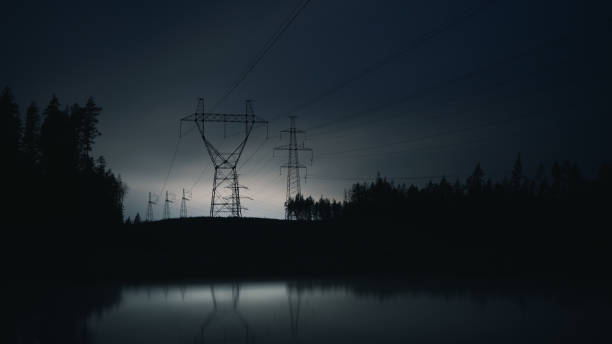
Across multiple regions of the world, governments and infrastructure experts have already begun warning about the rising vulnerability of electrical grids. Modern civilization depends almost entirely on uninterrupted energy networks, yet many of those systems were constructed decades ago for populations and technological demands far smaller than those of today. Artificial intelligence infrastructure, massive data centers, electrified transportation, digital economies, and extreme urban expansion are placing extraordinary pressure on national energy systems already weakened by climate stress, cyber threats, and underinvestment. A prolonged blackout in a major urban center would no longer represent a simple inconvenience. It could rapidly evolve into a humanitarian emergency capable of shutting down hospitals, freezing financial transactions, disabling transportation systems, contaminating water supplies, and paralyzing emergency response services.

Security agencies have increasingly expressed concern regarding cyberattacks targeting critical infrastructure. The fear is no longer theoretical. Modern warfare has evolved far beyond conventional military confrontation. Economists and geopolitical analysts now describe the emergence of economic warfare and cyber warfare as dominant features of twenty-first-century conflict. Nations are no longer fighting solely with armies and missiles; they are using sanctions, energy restrictions, digital sabotage, financial isolation, and technological blockades to weaken rivals from within. In such a world, a successful cyberattack against an energy grid or water system could create chaos more efficiently than traditional military operations.

Simultaneously, another crisis continues growing beneath global headlines with terrifying speed: the collapse of water security. Water scarcity is becoming one of the defining threats of the modern era as rising temperatures, prolonged droughts, pollution, overconsumption, and aging infrastructure place enormous pressure on freshwater reserves across the planet. Rivers that once supported entire civilizations are shrinking. Reservoirs are reaching historic lows in several regions, while underground aquifers are being depleted faster than they can naturally recover. The consequences extend far beyond environmental concerns. Water scarcity directly threatens agriculture, food production, industrial activity, and public health. Without stable water access, food prices rise rapidly, migration intensifies, disease spreads more easily, and social unrest becomes increasingly likely.

Recent humanitarian assessments continue warning that conflict and environmental instability are accelerating food insecurity and resource shortages across multiple continents. Millions of people already face conditions once associated primarily with wartime emergencies, including restricted water access, failing infrastructure, and severe pressure on food distribution systems.

What makes the current global situation especially disturbing is the convergence of crises occurring simultaneously. Economic instability increases political polarization. Political polarization weakens institutional trust. Weak institutions struggle to manage infrastructure failures and resource shortages. Resource shortages increase migration pressure and social unrest, which in turn intensifies geopolitical tensions. Each crisis amplifies the next, creating a chain reaction capable of destabilizing entire societies. Analysts increasingly warn that humanity may be entering an era defined not by isolated emergencies, but by overlapping systemic failures occurring at the same time.

Sector Under PressureCurrent Global ThreatPotential Consequence
Energy SystemsCyberattacks and fuel instabilityMassive blackouts
Water InfrastructureDrought and overconsumptionResource scarcity
Global EconomyInflation and geopolitical conflictFinancial instability
Food Supply ChainsWar and transportation disruptionRising hunger
Digital InfrastructureCyber warfare and system overloadCommunication collapse


The psychological impact of these developments may ultimately become as dangerous as the physical crises themselves. Civilizations survive not only through infrastructure and military power, but through collective belief in stability and continuity. Once populations begin losing confidence in institutions, economies, and governments, fear itself becomes destabilizing. Families begin stockpiling supplies, investors withdraw from markets, businesses delay expansion, and societies become increasingly vulnerable to misinformation, extremism, and social fragmentation. History repeatedly demonstrates that prolonged economic pressure combined with political instability often produces profound societal transformation.

https://images.openai.com/static-rsc-4/XyyeBpiSsDdKmbmkbYDG7-IwwScwsHa06IsGf-tZVJFciEyk3zX_-83LLDa6Zi79BjqKiVvOp20mBpeJF4-0M8VUSJ2Nd79AzizSPuTWOEaEQnvVRuDnhgrcav6wEKktNZbxabd39JgyN_x3Yg32r8Gp9RtI87m82cAORfGCc-RKXdHE6yJdE5f8akq8ztez?purpose=fullsize

The terrifying reality facing the modern world is that humanity has never been more technologically advanced while simultaneously remaining so deeply dependent on fragile interconnected systems. A single disruption can now spread globally with extraordinary speed because modern civilization relies on digital infrastructure, automated logistics networks, satellite communications, electronic banking systems, and uninterrupted energy distribution operating continuously without failure. The complexity that created modern prosperity has also created unprecedented vulnerability.

Many experts now believe the world is approaching a historic turning point. The fear is not necessarily that civilization will disappear overnight, but that the systems supporting modern life may gradually become less reliable, less stable, and increasingly vulnerable to cascading crises. Economic warfare, military conflict, cyber sabotage, infrastructure decay, water scarcity, and climate pressure are no longer isolated dangers discussed only by specialists. They are becoming visible realities influencing the daily lives of millions of people around the world.

Keywords

  1. Economic Warfare
  2. Infrastructure Collapse
  3. Global Resource Crisis

As governments continue struggling to contain inflation, secure energy supplies, stabilize financial systems, and prevent geopolitical escalation, one conclusion is becoming increasingly difficult to ignore. Modern civilization is entering a period of uncertainty unlike anything experienced in recent generations. Behind the illuminated skylines of modern cities and beneath the promises of technological progress, a silent crisis continues to grow — one capable of redefining the future of global society itself.


Read the full article here
Share. Facebook Twitter Pinterest LinkedIn Tumblr Email Telegram Copy Link

Related Articles

Economy

We Are 6 Months From Global Food Shortages Because Farmers Are Facing A Quadruple Whammy Crisis

June 3, 2026
Economy

Investing in a World in Turmoil

June 3, 2026
Economy

Breitbart Business Digest: What April Job Openings Tell Us About AI

June 2, 2026
Economy

Florida Lawsuit: Sam Altman and OpenAI Concealed ChatGPT Safety Concerns

June 2, 2026
Economy

Anthropic Files Papers for Potential $1 Trillion AI IPO

June 2, 2026
Economy

AI Fail: Meta’s Support Chatbot Helped Hijack High-Profile Instagram Accounts Including Obama White House

June 2, 2026
Add A Comment
Leave A Reply Cancel Reply

Editors Picks

WATCH: Britons Protest Outside Police Station Demanding Justice for Handcuff Murder Victim Nowak

June 3, 2026

Alleged Home Intruder ID’d, Arrested After Leaving Behind Wallet when Resident Opened Fire

June 3, 2026

Pentagon bars journalists from press office

June 3, 2026

The Terrifying Rise of Economic Wars, Global Blackouts, and the Collapse of Modern Stability

June 3, 2026
Latest News

Congo Reopens Airport in Ebola Outbreak Zone

June 3, 2026

Sen. Kaine Refuses to Denounce Platner’s Nazi Tattoo, ‘Maine Democrats Will Decide’

June 3, 2026

43 days and counting: Why the House is working way less than the Senate

June 3, 2026

Subscribe to News

Get the latest politics news and updates directly to your inbox.

The Politic Review is your one-stop website for the latest politics news and updates, follow us now to get the news that matters to you.

Facebook X (Twitter) Instagram Pinterest YouTube
Latest Articles

We Are 6 Months From Global Food Shortages Because Farmers Are Facing A Quadruple Whammy Crisis

June 3, 2026

WATCH: Britons Protest Outside Police Station Demanding Justice for Handcuff Murder Victim Nowak

June 3, 2026

Alleged Home Intruder ID’d, Arrested After Leaving Behind Wallet when Resident Opened Fire

June 3, 2026

Subscribe to Updates

Get the latest politics news and updates directly to your inbox.

© 2026 Prices.com LLC. All Rights Reserved.
  • Privacy Policy
  • Terms of use
  • For Advertisers
  • Contact

Type above and press Enter to search. Press Esc to cancel.