



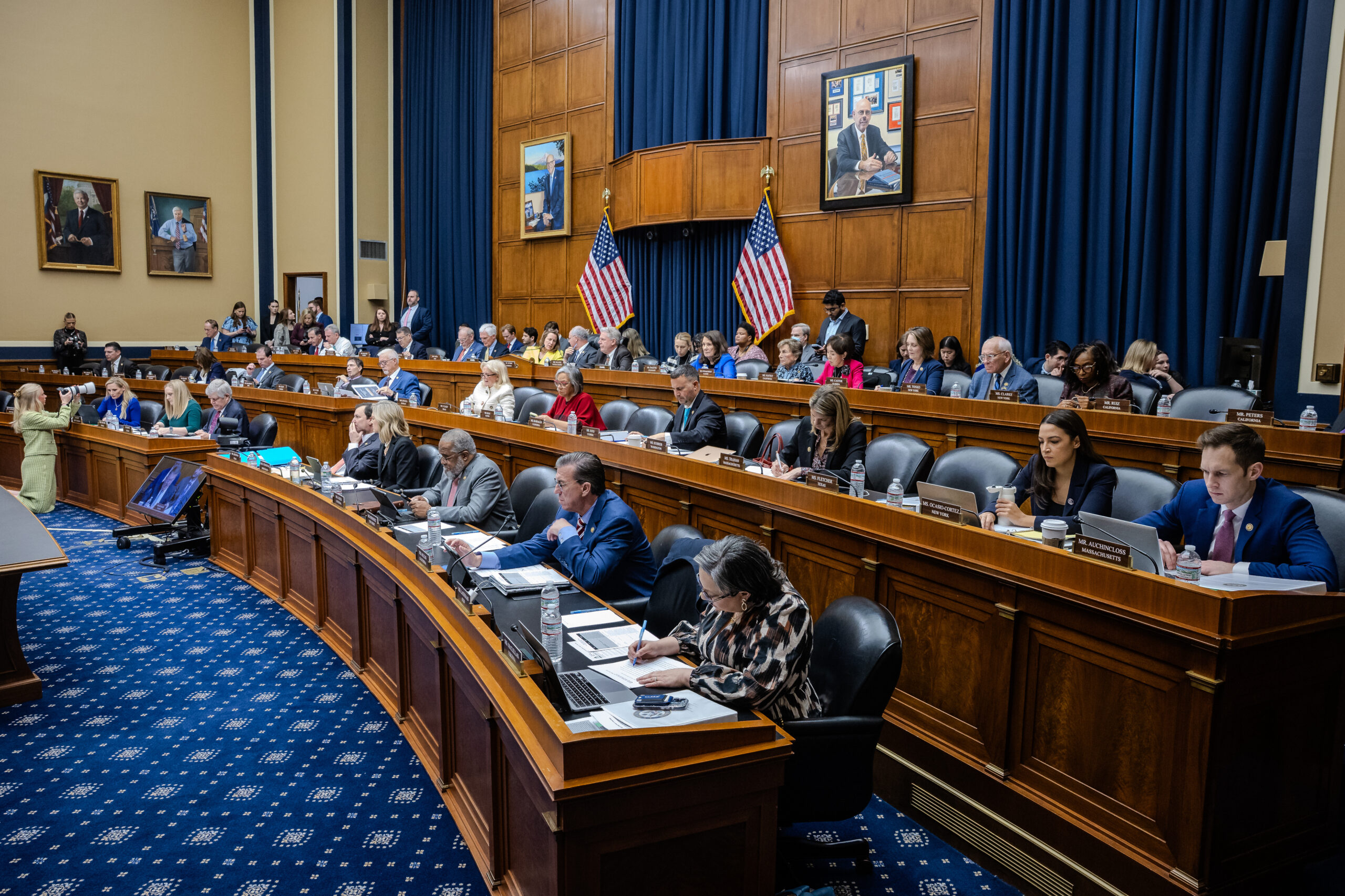
Lawmakers can spend years trying to land seats on the powerful House Energy and Commerce Committee. Several could finally get their chance in the next Congress.
The panel with vast jurisdiction over health care, artificial intelligence, energy and telecommunications will have at least eight empty slots in the next Congress — four on each side of the aisle — thanks to a combination of planned retirements, attempts to climb to higher office and primary election defeats.
Democrats are losing Reps. Jan Schakowsky of Illinois, Marc Veasey of Texas, Robin Kelly of Illinois and Diana DeGette of Colorado. Republican departures include Reps. Buddy Carter of Georgia, Neal Dunn of Florida, Dan Crenshaw of Texas and John James of Michigan. Some of these members also lead influential subcommittees, opening coveted spots that will need to be filled next year.
The intense interest in Energy and Commerce is leading to a high level of public campaigning, particularly among Democrats who believe they stand a chance of winning the majority in the midterms and are eager to influence major policy debates.
“Since I first arrived at Congress in 2021, Energy and Commerce has always been my number one committee that I’ve sought to serve on,” Rep. Melanie Stansbury of New Mexico, a progressive Democrat who is making a particularly concerted push, said in an interview.
The Democratic Steering and Policy Committee, made up of leadership and lawmakers from regions across the country, will make selections based on a variety of factors including years of tenure and geographical representation. But the current intraparty jockeying could also set the stage for a proxy battle pitting progressives against moderates, mirroring the ideological clash Democrats are watching play out on the campaign trail.
Democrats famously tied themselves in knots over this dynamic in 2020, when members of the Steering and Policy Committee were torn between progressive Rep. Alexandria Ocasio-Cortez and then-Rep. Kathleen Rice, a fellow New York Democrat and a centrist.
The panel ultimately gave the open seat to Rice, who in the closed-door meeting was perceived as likely to be more cooperative in advancing the party’s key legislative priorities. She ended up being among a trio of moderates who thwarted then-Chair Frank Pallone’s health care agenda by opposing a drug pricing provision, punting the issue to another committee of jurisdiction.
Four years later, Ocasio-Cortez finally made it onto the committee.
“The argument that some individuals in the caucus had made against my appointment in a previous term was this idea about being a team player,” Ocasio-Cortez said in a recent interview. “But ironically … not only did they deny me the seat on those grounds, but they appointed someone who actually voted with Republicans.”
“So when we talk about who’s going to be a team player,” she continued, “I think that especially if we are working with thin margins, it’s very important that on an issue as important as health care, energy, et cetera, and confronting a Trump White House … we need to have very strong Democrats on the committee that are going to fight forcefully for the caucus’s priorities.”
Pallone, a New Jersey Democrat who is in line to continue leading Energy and Commerce Democrats, has hinted he plans to pursue progressive policies — such as a crackdown on data centers that could involve a nationwide moratorium — should his party prevail in November. He’ll need buy-in on such plans from the left wing of his caucus, but he was not eager in July to discuss the committee assignment process.
“Let’s get elected in the majority first,” Pallone said in an interview. “I’m not going to deal with that until later.”
For now, Democrats now vying to be on Energy and Commerce are leaning less into their ideological leanings and more the policy expertise they would bring to the table — and the value their appointments would bring to constituents.
Stansbury, for example, called the committee a critical platform for tackling climate and energy policy, adding it was “very important to my district to address the rural health care crisis and the behavioral health crisis.”
Rep. Maxine Dexter (D-Ore.), a first-term lawmaker, is also making her case to get onto the committee, pointing to her experience as a critical care physician and pulmonologist.
“I’ve seen firsthand the enormous burdens patients, families, and healthcare providers face every day,” she said in a statement. “It’s part of the reason I ran for office — because so many of the problems I encountered couldn’t be solved in the exam room.”
Historically, members interested in joining Energy and Commerce tend to bide their time on the House Natural Resources Committee, which has jurisdiction over public lands, energy development, fisheries and Native American issues. Ocasio-Cortez made the leap, and Stansbury and Dexter are hoping to follow.
Rep. Jill Tokuda of Hawaii, who serves on the Agriculture and Armed Services committees, is also looking to be seated on Energy and Commerce. An aide said in a statement that she would be “first congressional delegation member from Hawaiʻi to join the committee” as well as only the second Asian American, Native Hawaiian and Pacific Islander.
An aide for Rep. Eric Sorensen of Illinois, who currently sits with Tokuda on Agriculture and Armed Services, said he is interested in joining Energy and Commerce next year, too. So is Rep. Luz Rivas of California, an engineer who appeared at the committee’s “Member Day” forum to speak about her STEM background and interest working on AI issues.
Republicans looking to get on the panel will be picked after the elections by the GOP Steering Committee, and Rep. Bob Onder of Missouri is making an especially forceful push. He said in an interview last week his more than 30 years as a physician would be an asset for the committee, which has traditionally had a handful of lawmakers with medical backgrounds and is set to lose two: Carter, a pharmacist, and Dunn, a urologist.
He also said he has made his interest known to Guthrie and that Reps. Greg Murphy of North Carolina and John Joyce of Pennsylvania — co-chairs of the GOP Doctor’s Caucus — wrote a letter last week to Speaker Mike Johnson on his behalf, saying that Onder’s “clinical experience, policy engagement, and demonstrated leadership make him exceptionally well qualified.”
Rep. Brad Knott (R-N.C.) is also making his interest known, saying he has “talked to a lot of folks” and is pursuing a “kind of whole committee wide approach” to convincing Steering members to put him on Energy and Commerce.
“North Carolina is one of the fastest-growing states,” Knott said in an interview. “Energy demand will at least double in the next 10 years. Got to get that policy right.”
Energy and Commerce Chair Brett Guthrie (R-Ky.) said in an interview in July “there’s a couple buzzing around” who want to join the panel but declined to elaborate.
“We have a lot of talented members, but I’ll let them say what they are interested in,” he said.
Read the full article here