




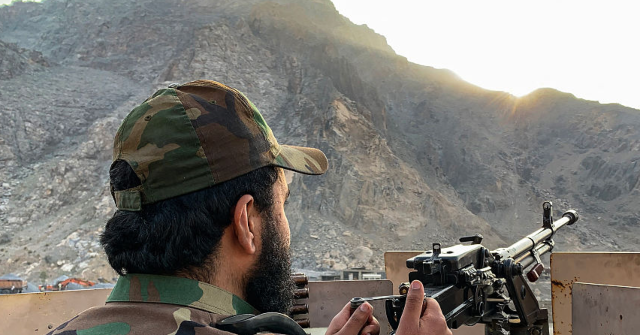
The Taliban regime in Afghanistan claims it launched “airstrikes” against an “ISIS center” and other targets in Pakistan on Tuesday, seemingly in retaliation for Pakistan’s deadly strike on alleged Tehreek-e-Taliban Pakistan (TTP) militants in Afghanistan on Monday.
The Taliban defense ministry said its “airstrikes” — almost certainly meaning drone attacks, since the regime only controls a handful of warplanes and helicopters — were directed against targets in the Pakistani border provinces of Balochistan and Khyber Pakhtunkhwa.
Pakistan has long accused Afghanistan of harboring TTP militants who are waging a decades-long terrorist campaign to overthrow the government in Islamabad. The Taliban junta conversely accuses Pakistan of allowing the Islamic State to operate a campaign to overthrow the regime in Kabul.
The Taliban claimed the sites it attacked were “being used to plan sabotage operations and attacks against civilians inside Afghanistan.”
According to the Taliban defense ministry, its strikes were “conducted with precision, inflicting heavy casualties and significant material losses on the group while causing no civilian casualties.”
Afghanistan’s independent Tolo News quoted Taliban defense ministry sources who admitted one of their targets was a school in Pakistan, but they claimed it was being used as a base by ISIS and other “agents of chaos and violence.”
The Taliban’s claims of precision targeting and zero civilian casualties seemed like a jab at Pakistan for its heavy airstrikes on Monday, which reportedly caused dozens of civilian deaths. Pakistan insisted it killed 29 “militants” in the attack.
The Pakistan military said on Wednesday that contrary to the Taliban’s boasts of devastating precision airstrikes, it launched only “four rudimentary drones across the border in Balochistan,” and all of them were intercepted.
“If the Afghan Taliban continue to provoke Pakistan, they would receive a befitting response which would cost them heavily,” the statement added.
Pakistani officials told Al Jazeera News on Wednesday they intend to pursue a strategy of “controlled escalation,” which means “responding forcefully to armed attacks from non-state groups while being more selective about how to retaliate against the Afghan Taliban government strikes.”
Pakistan actually declared “open war” against the Taliban on February 27, launching a military operation called Ghazab-lil-Haq or “Wrath for Justice” after Taliban forces attacked Pakistan border outposts. The war has thus far consisted mostly of skirmishes, limited airstrikes, and steady escalations. Neither side seems inclined to back down from the conflict.
“Pakistani aerial strikes in Afghanistan have become reactionary in nature, without any notable change in the frequency of militant attacks. Afghan Taliban officials, for their part, have failed to take any notable action to ensure Afghanistan does not serve as a launching pad for attacks in Pakistan,” Pakistan-based analyst Fahad Nabeel of consulting firm Geopolitical Insights told Al Jazeera.
Read the full article here


