




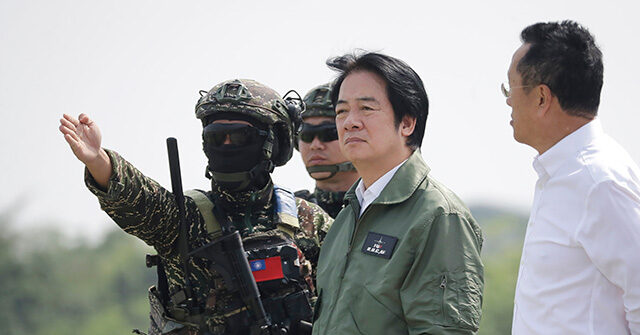
The Taiwanese cabinet on Thursday approved a supplementary defense budget that pushed total defense spending over $1 trillion in New Taiwan (NT) dollars for the first time.
The supplemental budget of NT $145.7 billion was intended to fill some shortfalls in military procurement after the Taiwanese opposition cut about a third of the NT $1.25 trillion requested by the government over the next eight years.
The New Taiwan dollar currently trades at around 0.0315 to the U.S. dollar, so the trillion-dollar milestone works out to $31.6 billion in U.S. dollars. This brings Taiwan’s defense spending for the year up to 3.83 percent of gross domestic product (GDP).

“There can be no gap in national defense,” the cabinet said in a statement Thursday. “National security cannot wait, the defence budget cannot wait, and defence self-reliance cannot wait either.”
The supplemental budget restored money for domestically produced systems that had been stripped from the original defense budget by opposition lawmakers, including the Strong Bow medium-altitude anti-ballistic missile system.
The Strong Bow is meant to build on the short-range interceptors Taiwan already fields, to create a multi-layered missile defense system. According to its designers, its radar can acquire inbound enemy missiles at longer ranges than the U.S.-made Patriot missile system.
The Taiwanese defense bill also includes more spending on drones and anti-drone defenses, plus some classified projects that could not be disclosed to the public.
“Investing in defence is investing in peace; we will continue to build a more solid defence force to maintain peace and stability in the Taiwan Strait and the region,” Taiwanese President William Lai Ching-te said earlier this week when discussing the defense budget.
Lai said increased defense spending “demonstrates to the international community Taiwan’s determination to strengthen its self-defense capabilities.”
Communist China’s Taiwan Affairs Office said Taiwan’s defense increase would “recklessly incite cross-strait confrontation and antagonism while lavishly squandering the people’s hard-earned money.”
China accused Lai of trying to “resist reunification through force,” and warned that Taiwanese leaders “overestimating their own strength” would “bring profound disaster to the people of Taiwan.”
The Trump administration wants Taiwan to spend even more. President Donald Trump and Undersecretary of War for Policy Elbridge Colby have suggested targets as high as ten percent of GDP. The de facto U.S. consulate in Taipei, the American Institute in Taiwan, said at the beginning of 2026 that it would like to see Taiwan spend at least five percent of GDP.
Read the full article here


