



The government of Syria, led by former al-Qaeda jihadist President Ahmed al-Sharaa, announced on Thursday that it would implement subsidies to lower the cost of diesel fuel after a price hike at the beginning of the week prompted widespread violent protests nationwide.
The Syrian government announced on Sunday that a massive increase in the price of diesel and gasoline would be implemented the next day, attributing the need for such an increase to a combination of domestic and international factors. Domestically, the government decided to shut down the large Baniyas Refinery to renovate it, which in the long term would result in more fuel for the country but in the short term would significantly cut supply. The ongoing war between Iran and the United States and subsequent disruptions of global shipping in the Strait of Hormuz had also dramatically increased the price of petroleum products around the world, the Syrian Energy Ministry explained.
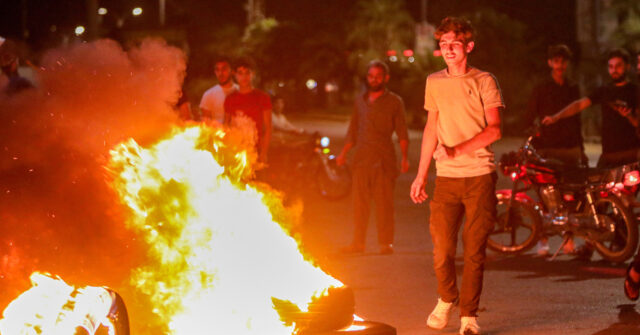
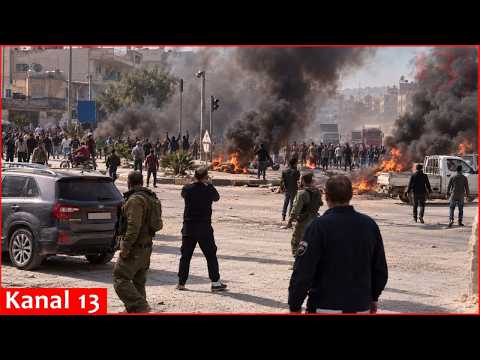
In response, Syrians in nearly every major city took to the streets, setting up roadblocks and starting fires. Many complained that they could not sustain their already poor livelihoods, particularly those working in agriculture or driving trucks or buses for a living.

The Sharaa administration initially responded by announcing that it would call Energy Minister Mohammad al-Bashir into parliament to answer questions at a hearing, but that hearing was postponed until Sunday. Bashir instead met with Sharaa on Wednesday before announcing the subsidies.
According to the state-run Syrian Arab News Agency (SANA), the Syrian government will subsidize diesel prices for “heating, agriculture, and eligible consumers” as well as “some productive and service sectors.” The first group would be able to buy diesel at $0.94 per liter, or $3.56 per gallon. The second would be able to buy diesel at $1.23 per liter, or $4.66 per gallon.
“Standard-specification diesel will remain at 175 Syrian pounds ($1.43) per liter, below its actual cost of 206 pounds ($1.69) per liter, al-Bashir told a press conference in Damascus alongside Syrian Petroleum Company CEO Youssef Qablawi,” SANA added. The cost of $1.43 per liter translates to about $5.41 per gallon.
On Sunday, Syrian authorities announced that 95-octane gasoline would now cost $6.06 a gallon, and 90-octane gasoline would cost $5.75 a gallon. The diesel price was raised to $5.41 a gallon, where most diesel would remain despite the subsidies for certain sectors. The diesel price represents about a 40-percent hike overnight, while gasoline increased in price by about 28 percent.
The state media report did not specify how the Syrian government could afford to subsidize the prices. Bashir did reportedly state that the program “was secured in cooperation with friendly countries,” but did not elaborate. SANA separately reported on a series of meetings that could suggest that Washington may be playing a supportive role. On Monday, Syrian Foreign Minister Asaad al-Shaibani met with U.S. Deputy Assistant Secretary of State Jake McGee to discuss, among other matters, potential American investment in Syria. President Donald Trump has been publicly supportive of Sharaa and his government despite their origins as a jihadist terror organization, and Sharaa’s personal status as a former wanted terrorist.
“The two officials discussed ways to deepen cooperation between the two countries and reviewed the latest regional and international developments of mutual interest,” SANA reported on Monday. “The talks also focused on prospects for broadening the Syrian-U.S. partnership and developing cooperation in areas of shared interest.”
On Thursday, shortly before the announcement of the subsidies, al-Bashir held a personal meeting with Sharaa. State media offered no details on the contents of their conversation.
During his press conference on Thursday, al-Bashir also announced a program to increase the supply of fuel, in time resulting in lower prices, by reopening small local refineries under the control of the Syrian Petroleum Company. The report did not note if these two measures alone would be enough to maintain the subsidies for an extended period of time, nor did the Energy Ministry give a time frame for how long the government would be subsidizing diesel.
While SANA did not report on the protests, it did note in its coverage of the subsidies that the initial price increases “prompted public dismay across the country.”
The Qatari news agency Al Jazeera observed in its reporting on Wednesday that the dramatic price increases this week did not occur in isolation.
“Since February, the price of 95-octane petrol has risen by about 86 percent, while diesel has more than doubled. Over the same period, benchmark Brent crude rose by about 44 percent,” it observed. As a result, the new announcement triggered widespread public outrage from many who could not see a path towards sustaining their lives with the new prices. Adding to the frustration in larger cities were visible signs of an influx of wealth into Syria, facilitated by Sharaa’s aggressive international push to attract foreign investment.
“Fuel prices went up, while at the same time people could see with their own eyes delegations coming and going, cars being replaced, new cars in the hands of a certain group of people,” Ayman Asfara, a resident of Idlib, told the Emirati newspaper The National in a report published on Friday. “At the same time, Syrians don’t have enough to eat, drink or to afford medical care.”
“People are frustrated and are waiting for realistic solutions to their problems in general,” Asfara lamented, predicting more protests if the situation worsens.
Follow Frances Martel on Facebook and Twitter.
Read the full article here