



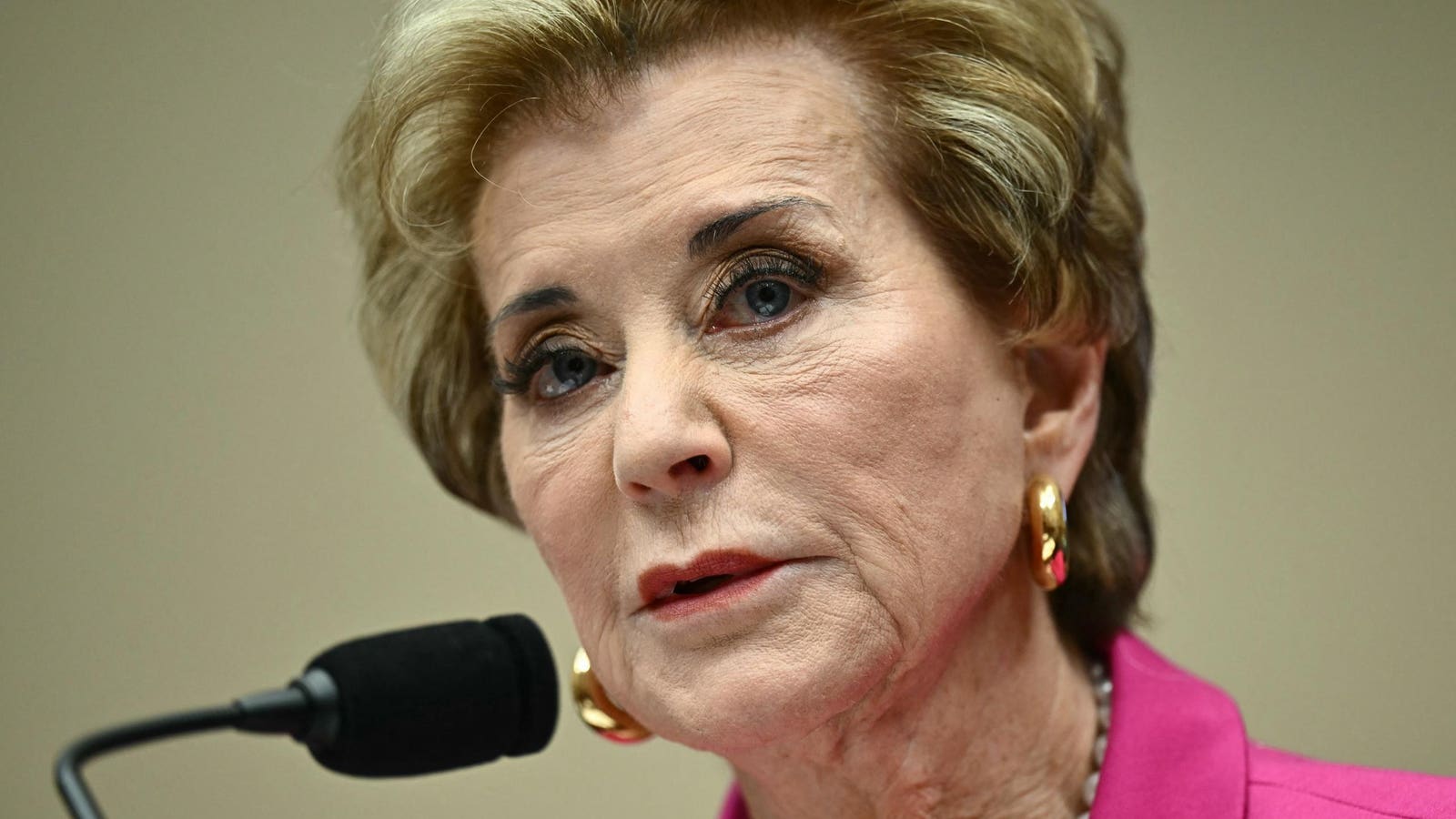
US Education Secretary Linda McMahon testifies on Capitol Hill in Washington, DC, on May 14, 2026. McMahon is overseeing the Education Department’s wind-down of the SAVE plan, which is causing some student loan borrowers to see their monthly payments jump. (Photo by Kent NISHIMURA / AFP via Getty Images)
AFP via Getty Images
Borrowers are seeing their student loan payments jump by $500 or more as they are forced out of a popular repayment plan, according to a new report released last week. The spike in payments is hitting borrowers who are trying navigate complex changes to federal student loans following legislative and regulatory updates that went into effect earlier this month. Meanwhile, the Education Department and loan servicers are increasingly being criticized for processing problems and errors.
“This is a huge wake up call and a desperately needed reality check for lawmakers,” said Natalia Abrams, President of the Student Debt Crisis Center, the organization that released the report, in a statement last week. “Student loan payments are increasing, and with 1 in 5 borrowers in default, those numbers will only continue to rise. Immediate action must be taken by the White House, Department of Education, and Congress to ensure these 7 million borrowers are not left behind due to a failing system they did not create.”
The report focuses on borrowers whose federal student loans had been in the SAVE plan. Earlier this month, the Education Department began the process of moving borrowers out of SAVE, forcing them to enroll in other repayment plans. At the same time, borrowers are reporting increasing problems and errors that are delaying or derailing their ability to maintain access to affordable repayment plan programs and student loan forgiveness. Here’s a breakdown.
Millions Of Student Loan Borrowers Are Being Forced Into More Expensive Repayment Plans
Starting in early July, the Education Department began notifying borrowers with student loans in the SAVE plan that they must apply for a different income-driven repayment plan within three months. If they don’t, the department said it would place borrowers on a Standard repayment plan, which typically has much higher payments and won’t count toward eventual student loan forgiveness. The department sent out a second batch of notices to borrowers in the middle of the month, and additional waves of notifications are expected to follow in the coming weeks until all borrowers are moved off SAVE.
The development comes as the department moves forward with its termination of the SAVE plan following a settlement agreement reached with a group of Republican-led states who had challenged the program, claiming it was unlawful. Following the implementation of that settlement agreement earlier this year, SAVE is essentially dead, and the department is forcing borrowers into other repayment plans.
“The most recent court action invalidated most of the July 2023 rule titled ‘Improving Income Driven Repayment for the William D. Ford Federal Direct Loan Program and the Federal Family Education Loan (FFEL) Program,’” which authorized the SAVE plan, said the Education Department in online guidance updated earlier in July. “Importantly, the most recent court action requires that borrowers who have loans in forbearance because they enrolled in or applied for the SAVE Plan must select a new repayment plan and begin repaying their loans.”
But aside from the lowest income student loan borrowers, payments under the other available income-driven repayment plans are almost universally higher than under the SAVE plan, because the formulas used to calculate monthly payments under those plans are less generous. Furthermore, many SAVE plan borrowers have seen their income increase since they first enrolled in SAVE several years ago. All of the plans factor in increases in income when calculating monthly payments, but they do not factor in simultaneous increases to the cost of living. As a result, many borrowers are now seeing substantial increases to their monthly payments due to higher income under a more expensive repayment plan that doesn’t make cost of living adjustments.
Student Loan Payments Jump By More Than $500 On Average
According to the new survey released by the Student Debt Crisis Center last week, borrowers are seeing their student loan payments jump by more than $500 on average.
“The report found that 51% of borrowers exiting the SAVE plan will see their monthly payments increase by $500 or more,” said the SDCC in its statement. “The new median estimated payment is $560 per month, a steep increase for the 27% of respondents who reported a $0 monthly payment on SAVE.” The SDCC survey had 842 respondents from all 50 states and 2 U.S. territories.
To illustrate, take a borrower with undergraduate federal student loans who was making $50,000 when they first enrolled in SAVE, and is now making $60,000 as the Education Department forces them out of the program. That borrower may have had a monthly payment as low as $110 per month under the SAVE plan. But now, between their higher income and the more expensive alternative income-driven repayment options, they could have payments of around $450 per month under Income-Based Repayment (or IBR), more than four times what they had been paying under SAVE. They could have a somewhat lower monthly payment of around $250 per month under the new Repayment Assistance Plan (or RAP), which just launched on July 1. But RAP would force them to be in repayment for as long as 30 years before they can qualify for student loan forgiveness, potentially costing them more in total over time.
“91% of respondents face a payment increase upon exiting SAVE, totaling to a projected $7.1 million in additional payments among respondents,” said the SDCC in its statement. “As servicers continue sending out formal 90-day notices instructing borrowers to leave SAVE, borrowers are seeing their monthly payment amounts skyrocket overnight.”
A group of student loan borrowers is currently challenging the Education Department’s process of moving borrowers off the SAVE plan, arguing they should be moved instead to the more affordable REPAYE plan, which was SAVE’s predecessor. But so far, that lawsuit has not led to a definitive court ruling.
Read the full article here


