


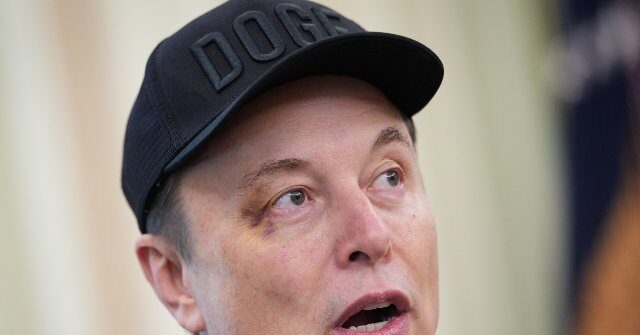
Billionaire Michael Saylor says AI may make life’s necessities cheaper or even free, but it will not eliminate money because people will always compete for scarce, status-conferring goods. Saylor refutes Elon Musk’s claim that money will be meaningless in the near future, stating: “Everybody doesn’t get a Hampton’s house. Everybody doesn’t get their own private jet.”
Fortune reports that Elon Musk has been among the most bullish voices on AI’s potential to reshape the world, predicting that work will eventually become optional, goods and services will become abundant, and money could become irrelevant as AI drives toward a “universal high income.” Fellow billionaire Michael Saylor disagrees.
“Everybody doesn’t get a Hampton’s house. Everybody doesn’t get their own private jet. They don’t get their own private yacht,” Saylor said in a Diary of a CEO interview published last week, after host Steven Bartlett asked if he agreed with Musk’s predictions.
Saylor, the 61-year-old founder of software firm Strategy, which has made Bitcoin central to its business, agreed that AI could make life’s necessities dramatically cheaper, or even free. But he argued it will not eliminate money’s value altogether. As basic goods become abundant, he said, people will shift their spending toward scarcer goods that confer wealth and status.
“If I give you universal healthcare, people want private healthcare. If I give everybody a house, someone’s going to want a house twice as big,” said Saylor, who has a net worth of $3.3 billion. “Everybody’s always going to have a reason to want something more because we’re status-oriented animals. That’s the cynical way to look at it.”
Saylor pointed to history as evidence. Technological advances have made many necessities far cheaper and more widely available. Clean water and advanced medicine are now commonplace across much of the developed world, despite once being luxuries even kings and queens could not reliably access.
“Henry VII didn’t have dental crowns. He didn’t have X-rays,” Saylor said. “[We] get modern medical care. The infant mortality rate has plunged. Life is safer. Clean water, clean air, right, clean food — and technology gave them to us.”
That abundance, he argued, does not eliminate the desire for something better. Instead, it raises the baseline for what people consider luxury.
“What happened with the explosion of affluence? Massive utilitarian entitlement,” Saylor said. “Everybody gets a car, but how many people get a Porsche? What happens with humanity is we always invent the luxury car — we come up with the trophy asset.”
He also cited modern food consumption as an example of how abundance does not erase demand for luxury. “In New York City, you can see that everywhere — why do we go to restaurants and pay $300 to eat at a restaurant because you can actually feed yourself on three bucks a day?”
While Musk and Saylor disagree over exactly how abundant AI will make the world, other Silicon Valley figures share the belief that the technology could radically reshape how people live. Demis Hassabis, who recently transitioned to chairman of Google DeepMind, has similarly predicted an era of unprecedented abundance driven by AI.
“In 10, 15 years’ time, we’ll be in a kind of new golden era of discovery that [is] a kind of new renaissance,” Hassabis previously said on Fortune’s Titans and Disruptors of Industry podcast. In that future, he said, breakthroughs will occur in medicine and energy, and eventually allow humanity to “travel the stars and … explore the galaxy.”
Some AI leaders, including Elon Musk, believe we are on the brink of a new society where work is a mere hobby and money is not required. Others take a more balanced view of AI’s impact on the economy. No matter where you fall on this spectrum, AI goes far beyond technology and economic power — it serves as political power. Breitbart News social media director Wynton Hall has written his instant bestseller Code Red: The Left, the Right, China, and the Race to Control AI to serve as the definitive guide on how the MAGA movement can create positions on AI that benefit humanity without handing control of our nation to the leftists of Silicon Valley or allowing the Chinese to take over the world.
Read more at Fortune here
Lucas Nolan is a reporter for Breitbart News covering issues of AI, free speech, and online censorship.
Read the full article here