

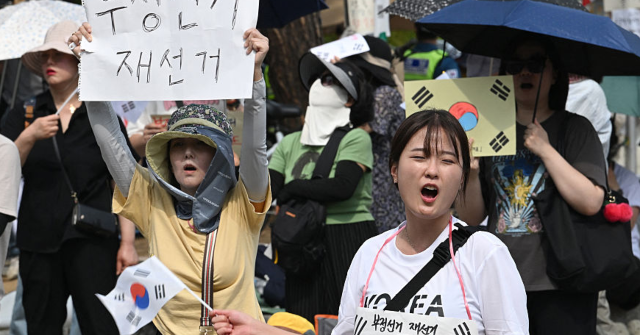
Large crowds in Seoul accusing the leftist-run government of South Korea of election fraud marked two weeks on Thursday of protests in front of an Olympic sports complex used to tally ballots in the June 3 election.
The ruling Democratic Party, led by leftist President Lee Jae-myung, won 12 of the 16 local elections that day, a decisive victory compared to the four wins by the opposition conservative People Power Party (PPP). The conservatives notably kept the mayorship of Seoul in the hands of current Mayor Oh Se-hoon, however, thwarting a full Democratic sweep. Complicating matters, and prompting protests, was the fact that several voting centers ran out of ballots, disenfranchising voters.
The NEC confirmed this week that 91 polling stations experienced ballot shortages, suspending voting entirely at 26 sites. The South Korean newspaper Dong-A Ilbo revealed shortly after the elections that NEC polling stations had extra ballots prepared to prevent such a situation, but for unexplained reasons never handed them out.
“According to the National Election Commission on June 4, the Songpa District Election Commission printed ballots equal to 50 percent of the district’s 565,638 registered voters ahead of Election Day,” Dong-A explained. “Rather than allocating all of them to polling stations, officials held some back as reserves in case of shortages. But as voter turnout climbed… The reserve ballots, however, were not delivered to affected polling stations in time.”
The election was the first since the 2025 special presidential election, which Lee won after narrowly being defeated by his predecessor, conservative former President Yoon Suk Yeol, in 2022. Yoon was impeached, removed from office, and sentenced to life in prison after attempting to impose martial law in December 2024, claiming it was necessary to overcome left-wing obstruction in the National Assembly. The impeachment of Yoon set off a wave of conservative protests by supporters who felt left-wing politicians were attempting to illegally oust a democratically elected leader.
Conservatives are calling for an investigation of the National Election Commission (NEC) and a redo of the June 3 election. Some are accusing NEC officials of conspiring with the Democrats to seize power from conservatives while others are demanding the NEC be shut down entirely.
Freedom University, a conservative youth organization in South Korea, published dramatic images on June 8 of peaceful protests organized to demand transparency in the election. These protests appear to remain ongoing as of Friday.
The crowds in the immediate aftermath of the election reportedly totaled upwards of 1,000 people, making it impossible for some staffers working to count the ballots collected to leave the counting centers without police intervention.
The main hub of protest activity is the South Korean Olympic Handball Gymnasium in Seoul, as it was used as a ballot counting center on June 3. Protesters have been blocking the use of the sports facility for two weeks as of Thursday, camping out and chanting slogans against the NEC. Footage from Thursday showed large crowds of people waving American and South Korean flags — American flags have become a fixture in conservative South Korean protests since Yoon’s ouster — and setting up to remain in the area for the long term. Some protesters assembled tents and mats for resting in between chants. The Korean news agency Yonhap observed that temperatures in Seoul are extremely high given the time of year, requiring shade and plenty of water to sustain a long-term outdoor presence.
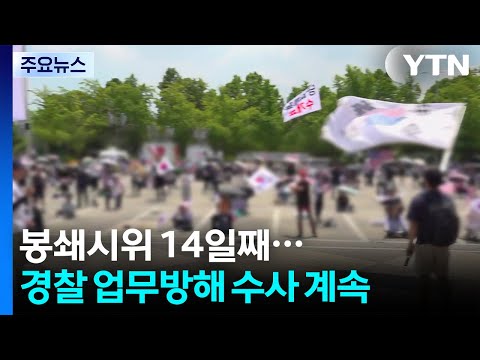
The left-leaning Korean newspaper Hankyoreh reported with some irritation that the athletes who typically use the facility have not been able to adhere to their regular schedules due to protesters blocking the use of the site. The newspaper also reported that, on Wednesday, Democratic Party lawmakers attempted to visit the site and meet with members of the Korea Sports Council, but the protesters objected to their presence, shouting, “commies, go to North Korea!”
PPP members have received a warmer reception. The leader of the party, Rep. Jang Dong-hyuk, visited the protest site on Tuesday to offer a message that the party is taking the election irregularities seriously. Jang reportedly complained that Seoul police were attempting to find ways around the blockade and investigating individuals involved, potentially causing violence and “threatening young Korean people… with the prospect of their financial ruin.”
“The PPP will stand with you to defend this place. We will join you as long as it takes to resist brutal attempts to force entry,” Jang reportedly stated.
The protesters have reportedly shouted slogans demanding a recount, if not a redo, of the election, and a full investigation with American support of the NEC and federal government’s involvement in vote counting.
The protest appeared to continue unabated on Thursday.
“Since the protest has no leaders or organizers, there’s nobody with whom to discuss gaining access to the offices,” Hankyoreh’s reporting lamented. “That suggests the standoff will continue, with no sign of an offramp. Organizations affiliated with the Korean Sport & Olympic Committee are struggling to help Korean teams prepare to compete in international tournaments.”

The National Assembly, in part in response to the protests, announced on Thursday that it would launch a bipartisan investigation led by PPP Assemblyman Yoon Sang-hyun in the next 45 days to understand how multiple election stations ran out of ballots.
“The ballot shortage is a debacle serious enough to warrant considering disbanding the NEC,” Yoon said on Thursday, chairing the first meeting of the commission leading the investigation.
Follow Frances Martel on Facebook and Twitter.
Read the full article here