






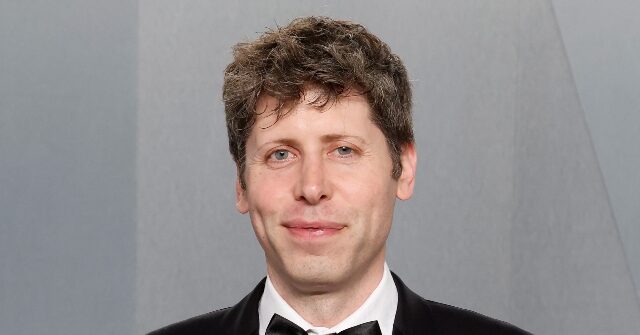
OpenAI CEO Sam Altman completed roughly four hours of testimony in federal court yesterday, denying he ever committed to keeping the AI company structured as a nonprofit.
CNBC reports that Sam Altman took the witness stand in Oakland, California on Tuesday to address allegations brought by Elon Musk in a lawsuit against OpenAI, the charity Altman co-founded with Musk and Greg Brockman in 2015. The case centers on Musk’s claim that the founders broke their promise to maintain OpenAI as a nonprofit organization dedicated to its charitable mission.
During his testimony, Altman stated clearly that he made no commitments to Musk regarding OpenAI’s corporate structure. Musk, who donated approximately $38 million to OpenAI before departing the board in 2018, alleges these funds were misused for unauthorized commercial purposes. The lawsuit names OpenAI, Altman, Brockman, and Microsoft as defendants.
Altman’s demeanor on the stand contrasted sharply with Musk’s earlier testimony. While Musk had engaged in heated exchanges with OpenAI’s attorney William Savitt, openly clashing and raising his voice, Altman remained calm throughout the proceedings. He appeared slightly nervous as cross-examination began but grew more comfortable as questioning continued.
The OpenAI CEO addressed several sensitive topics during his testimony, including the tumultuous events of 2023 when the company’s board briefly removed him from his position. Altman described being “completely caught off guard” by the decision and said he received little explanation beyond claims he had not been consistently candid with the board. He characterized the period as watching something he had poured years of his life into “about to be destroyed.”
Regarding Musk’s departure from OpenAI, Altman testified that the exit proved to be a “morale boost” for some researchers. He stated that Musk’s management style had “demotivated” some employees and said, “I don’t think Mr. Musk understood how to run a good research lab,” adding that Musk’s approach might work better in his factories.
Altman also discussed why OpenAI rejected various proposals from Musk, including a suggested merger with Tesla. He testified that joining Tesla would have destroyed OpenAI’s ability to follow its mission, explaining that Tesla is primarily a car company without OpenAI’s mission. He expressed concerns about Musk’s insistence on holding a controlling stake in the company, noting that Musk had suggested his controlling interest could pass to his children.
During cross-examination, Musk’s attorney Steven Molo attempted to challenge Altman’s credibility, referencing concerns about honesty raised by various individuals who had worked with him, including employees from his previous startup Loopt, Anthropic CEO Dario Amodei, and former OpenAI board members. When asked directly if he was completely trustworthy, Altman responded, “I believe so,” later amending his answer to simply “yes.”
Breitbart News previously reported that Altman’s sociopathic behavior was described as being “unconstrained by truth” in a long-form profile written by Ronan Farrow:
Yet most of the people we spoke to shared the judgment of Sutskever and Amodei: Altman has a relentless will to power that, even among industrialists who put their names on spaceships, sets him apart. “He’s unconstrained by truth,” the board member told us. “He has two traits that are almost never seen in the same person. The first is a strong desire to please people, to be liked in any given interaction. The second is almost a sociopathic lack of concern for the consequences that may come from deceiving someone.”
The board member was not the only person who, unprompted, used the word “sociopathic.” One of Altman’s batch mates in the first Y Combinator cohort was Aaron Swartz, a brilliant but troubled coder who died by suicide in 2013 and is now remembered in many tech circles as something of a sage. Not long before his death, Swartz expressed concerns about Altman to several friends. “You need to understand that Sam can never be trusted,” he told one. “He is a sociopath. He would do anything.” Multiple senior executives at Microsoft said that, despite Nadella’s long-standing loyalty, the company’s relationship with Altman has become fraught. “He has misrepresented, distorted, renegotiated, reneged on agreements,” one said. Earlier this year, OpenAI reaffirmed Microsoft as the exclusive cloud provider for its “stateless”—or memoryless—models. That day, it announced a fifty-billion-dollar deal making Amazon the exclusive reseller of its enterprise platform for A.I. agents. While reselling is permitted, Microsoft executives argue OpenAI’s plan could collide with Microsoft’s exclusivity. (OpenAI maintains that the Amazon deal will not violate the earlier contract; a Microsoft representative said the company is “confident that OpenAI understands and respects” its legal obligations.) The senior executive at Microsoft said, of Altman, “I think there’s a small but real chance he’s eventually remembered as a Bernie Madoff- or Sam Bankman-Fried-level scammer.”
The testimony also covered OpenAI’s investment structure. Altman revealed that Amazon, Nvidia, and SoftBank each invested more money in OpenAI than Microsoft, despite Microsoft being named in the lawsuit. SoftBank’s investment of $30 billion was approximately 2.5 times larger than Microsoft’s $13 billion contribution.
Earlier in the day, Bret Taylor, chairman of OpenAI’s board, testified that the board unanimously voted to reject Musk’s bid to acquire OpenAI last year. Taylor, who assumed his role during the 2023 leadership crisis, described that period as “dire” and said it felt like the organization might collapse without resolution.
The trial also heard from Zico Kolter, an OpenAI Foundation board member and chair of the company’s Safety and Security Committee, who spoke about his role in evaluating AI model safety. He testified about two instances involving formal requests to delay model releases and numerous other occasions when he requested additional information before releases proceeded..
Read more at CNBC here.
Lucas Nolan is a reporter for Breitbart News covering issues of AI, free speech, and online censorship.
Read the full article here


